A long-discussed vision to restore rail service between Port Alberni and Parksville has been complicated by wildfire damage, raising new questions about whether the corridor can return to its historic role as a vital transportation link or shift toward tourism-focused use.
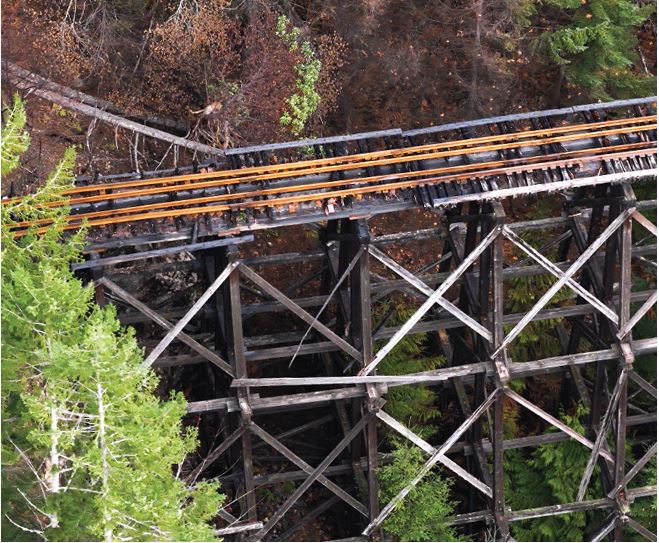
A final report on the vision for the Alberni Valley rail corridor, released in March, outlines both the promise and the limitations facing the line after the 2025 Wesley Ridge wildfire destroyed two historic trestle bridges and damaged a third near Cameron Lake.
The study, led by a working group that includes the Alberni-Clayoquot Regional District (ACRD), Tseshaht First Nation, Hupačasath First Nation, and the City of Port Alberni, identified low-speed freight rail as a top long-term priority. However, the extent of wildfire damage has made restoring service beyond Cameron Lake “challenging in the near term.” The damage to the trestles are estimated to be in the tens of millions, according to a video by the Working Group and ACRD.
“While the wildfire changed the opportunities available in the short-term, the group remains in agreement that opportunities for the rail line should be pursued,” said Daniel Sailland, chief administrative officer for the ACRD.
The rail corridor has deep historical roots in the region. Originally completed to Port Alberni in 1911 as part of the Esquimalt and Nanaimo Railway expansion, the line was built to support forestry and resource industries, transporting logs, lumber, and industrial goods across Vancouver Island.
For decades, the railway served as a critical economic route. At its peak, thousands of carloads of forest products and industrial materials moved annually along the corridor. However, declining freight volumes, deferred maintenance, and competition from improved highway infrastructure led to a gradual decline. The Port Alberni branch has been out of service since the early 2000s, while Vancouver Island passenger service on from Victoria to Courtenay was stopped in 2011 due to safety concerns and deteriorating track conditions.
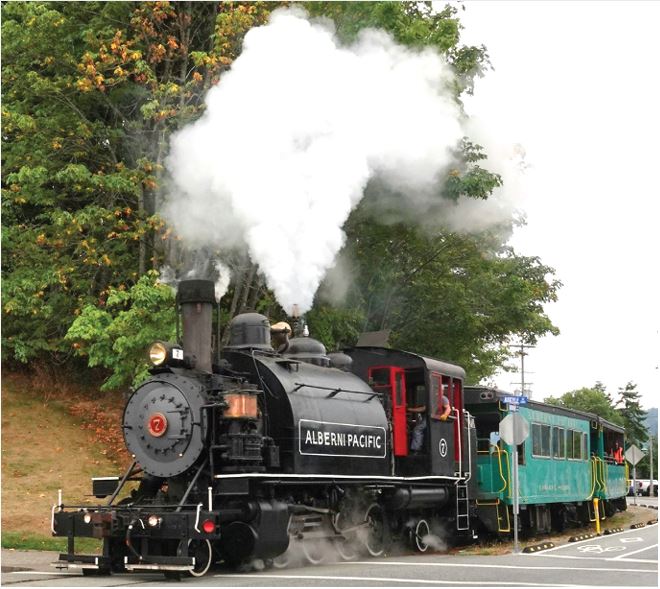
Despite the long-term ambitions released in the March 2026 report, the wildfire has forced a shift in focus. In the short term, the working group is exploring expanded tourism uses for the rail corridor, building on existing operations that offer limited rides around Port Alberni’s Harbour Quay.
Representatives from both Tseshaht and Hupačasath First Nations have highlighted the importance of ensuring the rail corridor serves local communities and aligns with Indigenous priorities.
“Freight would be challenging given the damage to the trestles and the huge costs to reconstruct,” said Tseshaht Chief Councillor Ken Watts. “We have considered all options including pedal cart and passenger train.”
However, Watts noted that the study released this March was undertaken before the damage from the 2025 wildfire.
“We have partnerships between us at Tseshaht and Hupačasath First Nation, but we won’t know the final answer for what’s possible until we do another study that includes considering the damage and the cost to repair,” he said.
Watts noted that a business case will be needed to determine how much more of the railway can be used. Since 2018 the train has ceased to run from the Harbour Quay to the historic McLean Mill, instead just doing short trips along Port Alberni’s waterfront.
“We will work with ACRD and the city to come to a solution, but we have homework to do before we can decide since the fire happened,” he said. “We know restoring rail to McLean Mill is important but recognize the need to plan for Harbour Quay to Cameron Lake.”
The Island Corridor Foundation, which has been involved in discussions around rail use across Vancouver Island, also contributed to the study.
Looking ahead, the report highlights the needs for continued collaboration among local governments, First Nations, and provincial partners to determine what’s feasible, both financially and logistically, for restoring the corridor.
Key questions remain about the cost of repairing damaged infrastructure and whether investment in the line can be justified given competing transportation priorities.
For now, the future of the Alberni Valley rail corridor is at a crossroads between its past as a working railway and an uncertain path forward shaped by climate impacts, economic considerations, and community priorities. Whether it will once again carry freight through the valley or remain a limited tourist attraction is a question that may take years, and significant investment, to answer.