
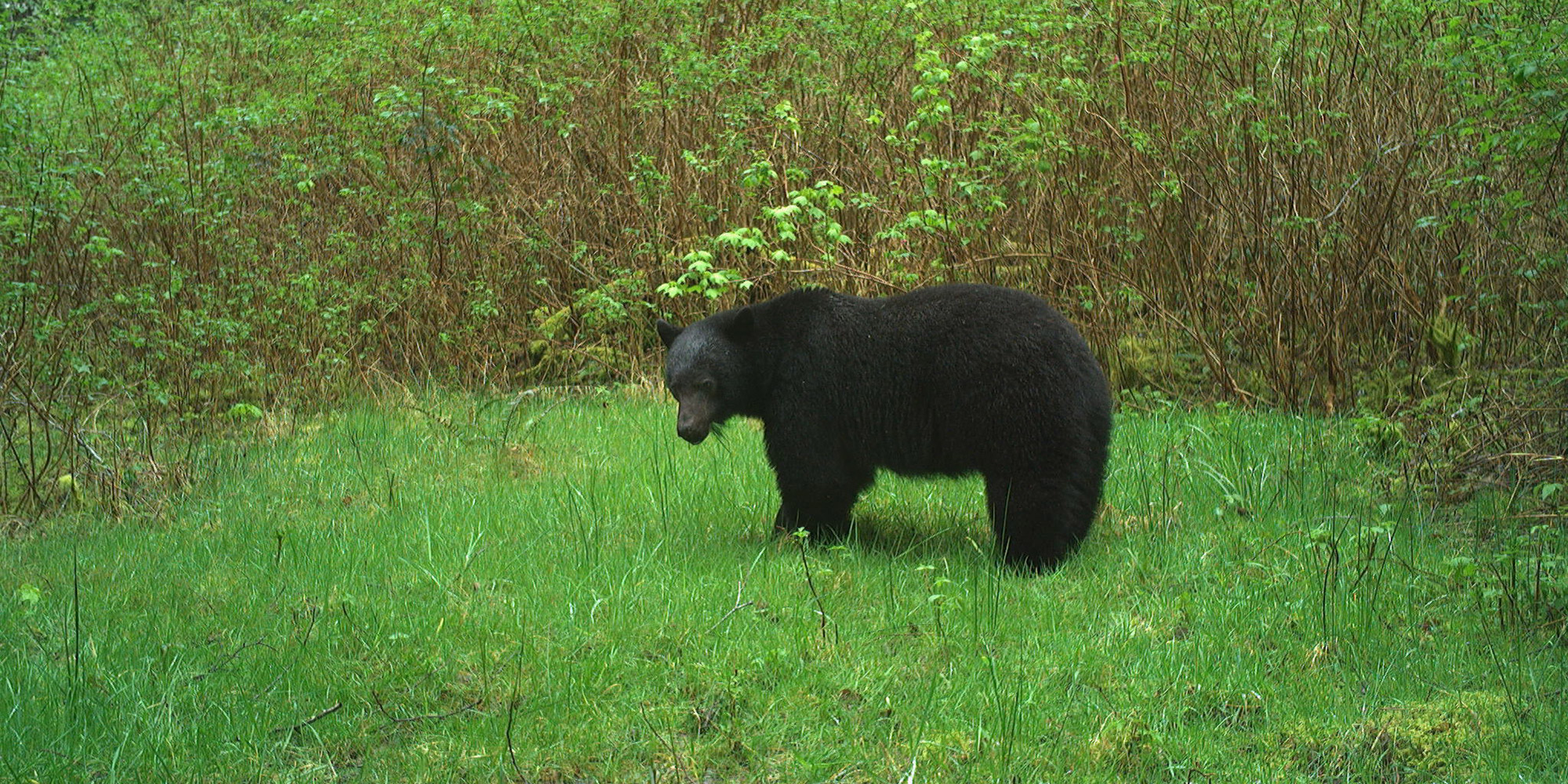
As Vancouver Island black bears emerge from hibernation, Ucluelet residents and businesses are also waking up to the reality that fines are coming for not being bear aware when it comes to garbage disposal.
Violation of a Wildlife Attractant Bylaw - which was adopted on March 17, 2026 - is punishable by a fine of up to $50,000.
Violations include putting cooking fat/grease directly in refuse containers instead of a “metal grease collection bin with a secured metal lid”, leaving bins outside overnight and using damaged bins.
“Our Wildlife Safety Response Officer has started, which is great news. We will be issuing a joint press release shortly,” said Ucluelet’s director of community services Abby Fortune.
Wildlife activity in the tourist town of roughly 2,000 residents is high. An off-leash dog was lured and killed by wolves at a popular walking spot in early April. Last year, BCCOS killed 13 habituated black bears for public safety.
But the community appears to be making a collective effort to turn things around to co-exist peacefully with wildlife.
Inspector Drew Milne, officer In charge of the West Coast Region BCCOS, said since the tragic killing of a dog, there has been there no new reports of wolves in or around local communities that have warranted a response from conservation officers.
“This is largely due to the prompt education and outreach efforts by organizations - such as the District of Ucluelet, Tourism Ucluelet, WildSafeBC, Parks Canada, the RCMP, and the BCCOS - as well as strong compliance and accountability from local residents and visitors,” said Milne.
The District of Ucluelet is contributing roughly $50,000 a year for five years to the salary of the Wildlife Safety Response Officer. The position is contracted under BCCOS.
Lesley Fox, executive director of the Association for the Protection of Fur-Bearing Animals, praised the district for investing in enforcement and “trying to do the right thing” at a time when the Government of B.C. has seemingly bailed on wildlife education and prevention programs like Bear Smart.
There are 12 communities in B.C. that are certified Bear Smart under the province, including Port Alberni and Tofino within Nuu-chah-nulth traditional territory. In 2025, Tofino had two bears dispatched. Port Alberni was zero.
To be certified, a community needed to meet six established criteria including a bear hazard assessment, prepare a bear-human conflict management plan, implement an education program and develop and implement bear-safe bylaws.
The Ministry of Water, Land and Resource Stewardship says Bear Smart is a valuable program that has helped accredited communities reduce conflicts with bears.
“Unfortunately, the province is not in a position to expand the program at this time. When the program is in a position to complete reviews and accept new applications, regional staff will update communities,” said the ministry, adding that the province does not provide funding to communities for the Bear Smart program.
“Bear Smart was a well-established and well-known program that focused on preventing. Not investing in these programs leaves those communities in limbo,” said Fox.
Regardless of whether a Bear Smart program is in place, Milne says BCCOS assesses and responds to all reported wildlife conflicts in accordance with a provincial response matrix.
“Public safety is the priority. Conservation officers will also continue to liaise with and provide guidance to communities to address wildlife conflicts and welcome opportunities for further discussion. Communities are encouraged to continue managing attractants wherever possible, as this is a key factor in reducing bear conflicts,” said Milne.
Fox says this hiatus from the usual ministry to support the Bear Smart program could be an opportunity for the Ministry of Tourism to take a more active approach.
“We live in the most biodiverse province in Canada. We have a really unique geography and landscape, ocean and rainforest, we have a desert with Osoyoos, mountains. Wildlife requires an investment and we’re just not seeing that with this government unfortunately,” said Fox.
Many human-wildlife conflicts are preventable, says the Ministry of Water, Land and Resource Stewardship.
“The province actively works with the public, organizations, businesses and communities to support safety and prevent wildlife conflicts, including public education and outreach on how to reduce human-wildlife conflicts,” said the ministry.
Resources and tips for managing attractants and reducing bear conflict can be found at WildSafeBC.com.