
A new driving school based out of Nanaimo is aiming to bridge a long-standing transportation gap for rural and remote First Nations communities across Vancouver Island.
Routes Driving Academy, founded by Hupacasath First Nation member Randi-Leigh Macnutt, officially opened earlier this spring after nearly four years of planning, training, and navigating regulatory hurdles. While the school offers driving lessons to anyone seeking licensing supports, its primary focus is making driver education more accessible to people living in remote Indigenous communities.
“For a lot of rural nations, getting driving lessons isn’t simple,” said Randi-Leigh. “People have to pay for ferries, taxis, hotels, gas, and time off just to access an hour-long lesson. I wanted to create something that could actually come to the communities instead.”
The idea for the business began while Randi-Leigh was working with the Warriors Program, a youth initiative serving Nuu-chah-nulth nations. Around four years ago, the program organized a driving initiative to help community members work toward obtaining their Class 5 licenses. Randi-Leigh helped coordinate learners from participating nations and quickly noticed a major issue: very few driving instructors were willing to travel outside urban centres.
“It became really obvious that instructors generally stay in the cities where they’re based,” she said. “Communities like Clayoquot and other rural nations were struggling to access services because of the distance and cost involved.”
For many families, the logistics alone made driving lessons nearly impossible. Learners from remote communities often face long logging road trips, ferry rides, and overnight stays just to attend a short lesson in a city such as Campbell River.
“If you’re transporting multiple learners, suddenly you’re looking at a six-hour day or overnight trip,” Randi-Leigh explained. “The costs can easily reach hundreds, sometimes close to a thousand dollars.”
Encouraged by the need she witnessed first-hand, Randi-Leigh began researching how to become a licensed driving instructor. The process, she said, was far more intensive and expensive than many people realize.
To qualify, she completed a three-week instructor training course in Vancouver, costing approximately $7,500 before accommodations, fuel, and travel expenses were included. Spaces in the program are limited, with only a handful of students accepted at a time, forcing her to wait nearly a year for entry.
“There’s a huge demand for instructors already,” she said. “And there really wasn’t funding available because it doesn’t fall into post-secondary or trades funding categories.”
Without outside financial support, Randi-Leigh funded the process herself while continuing to work toward opening the business. The first planning documents for Routes Driving Academy were written in 2022, and she officially earned her instructor certification in 2024.
But the process did not end there. After completing training, instructors must still receive approval from ICBC and operate under the insurance corporation’s approved driving school before they can begin teaching. Rather than work under another company, Randi-Leigh chose to continue pursuing her own independent business model.
“I knew my focus was different,” she said. “I wanted the flexibility to serve rural and remote communities in a way that worked for them.”
The vision eventually became Routes Driving Academy. After securing a business loan and outfitting her vehicle to meet ICBC requirements, the school officially received approval to operate at the end of April this year.
Now licensed to operate throughout much of Vancouver Island, Randi-Leigh says one of the academy’s standout features is its mobility. Instead of requiring learners to travel to larger cities, she brings lessons directly into communities.
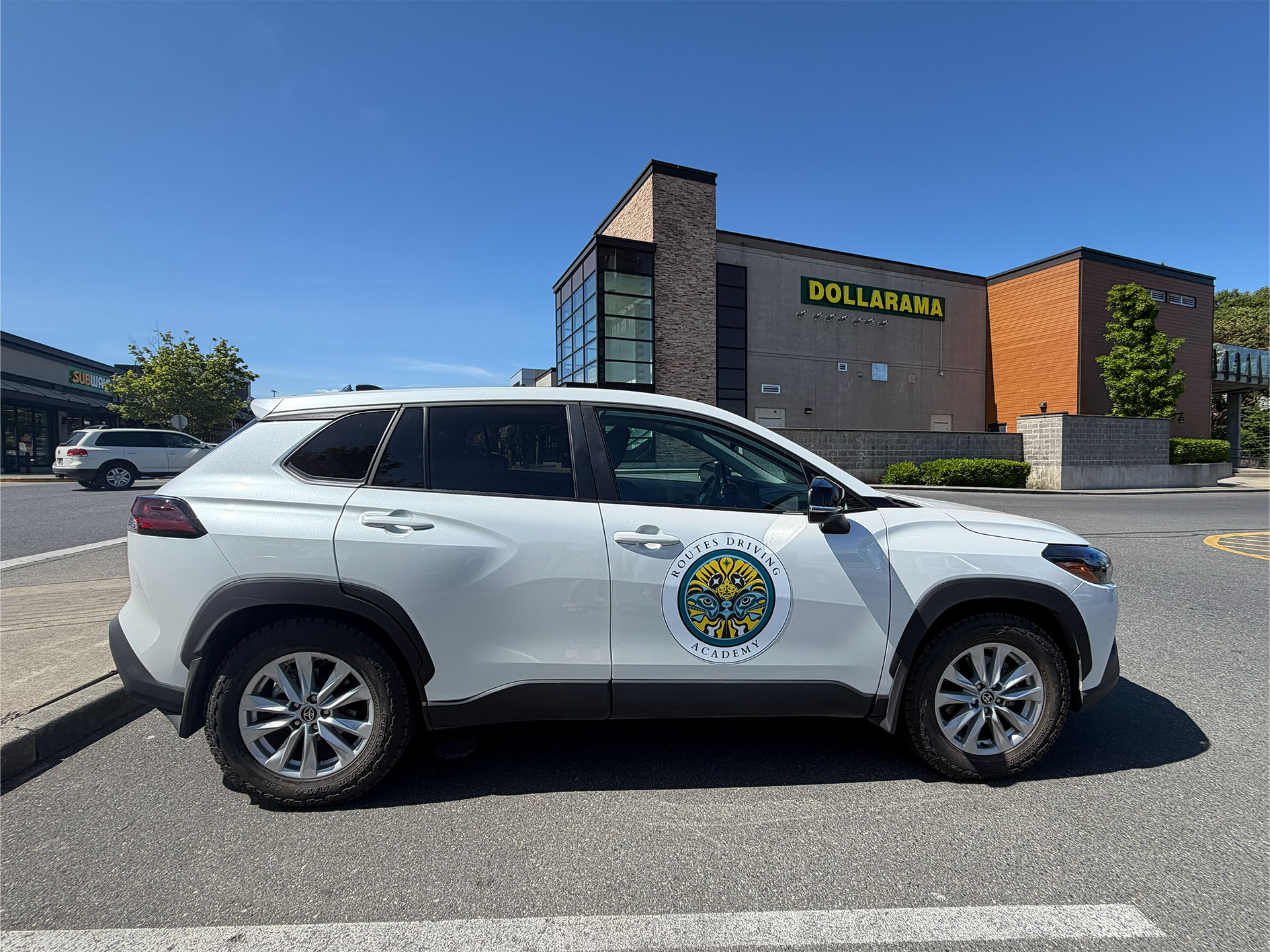
Her vehicle, a Toyota crossover equipped with upgraded tires for logging roads and rural terrain, allows her to safely access harder-to-reach areas. She has also invested in portable pylons and equipment to create temporary practice driving spaces within communities themselves.
“Being pulled from a small community and suddenly trying to learn to drive in a busy city can be overwhelming,” she said. “I can come directly to the community, set up a safe practice area, and help people build confidence where they’re comfortable.”
The school currently offers practical on-road lessons for Class 5 and Class 7 drivers, with lessons scheduled in hour-and-a-half blocks to allow learners a full hour behind the wheel along with pre-lesson planning and post-lesson feedback.
Randi-Leigh is also working toward the Graduated Licensing Program (GLP), which provides high school students with extracurricular graduation credits while shortening the time required between license stages.
Her long-term goal is to eventually expand into Class 4 licensing instruction as well, helping learners train for jobs involving taxis, shuttles, and small buses - areas where many communities also face barriers.
Beyond licensing, Randi-Leigh says the broader goal is empowerment and accessibility.
“There are households where four people live together and only one person has a license,” she said. “Why wouldn’t we want to give more people the opportunity to drive safely and independently?”
Though still in its early stages, Routes Driving Academy has already generated interest from several communities and organizations. For Randi-Leigh, the business represents creating opportunities and reducing barriers for people who have historically had limited access to driver education.
“I just want people to have the same opportunities and the same tools,” she said. “If I can help someone gain confidence, independence, and access to more opportunities through driving, then that’s what matters.”