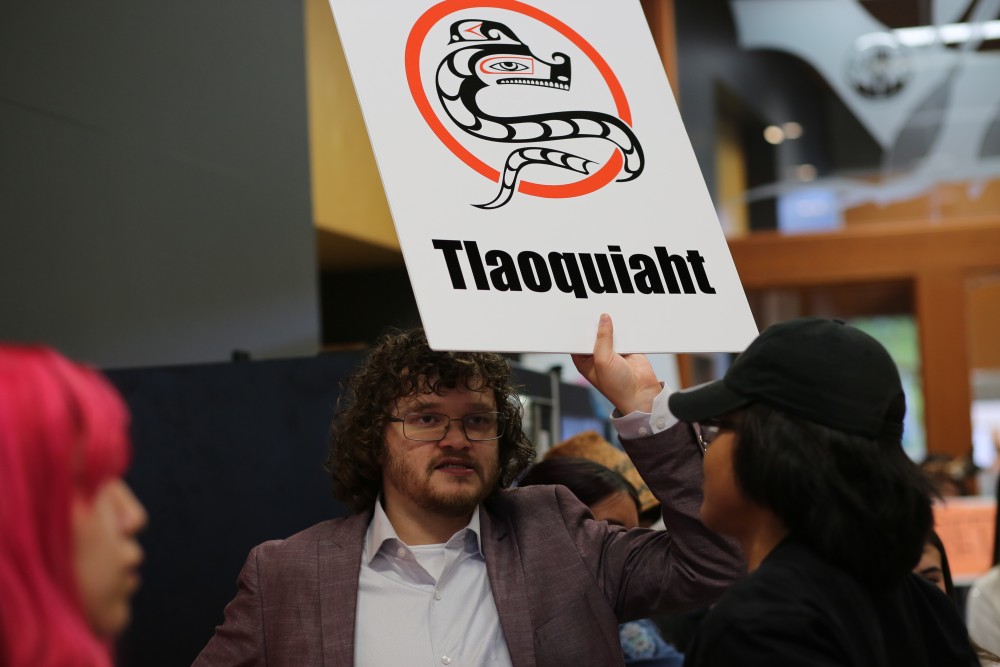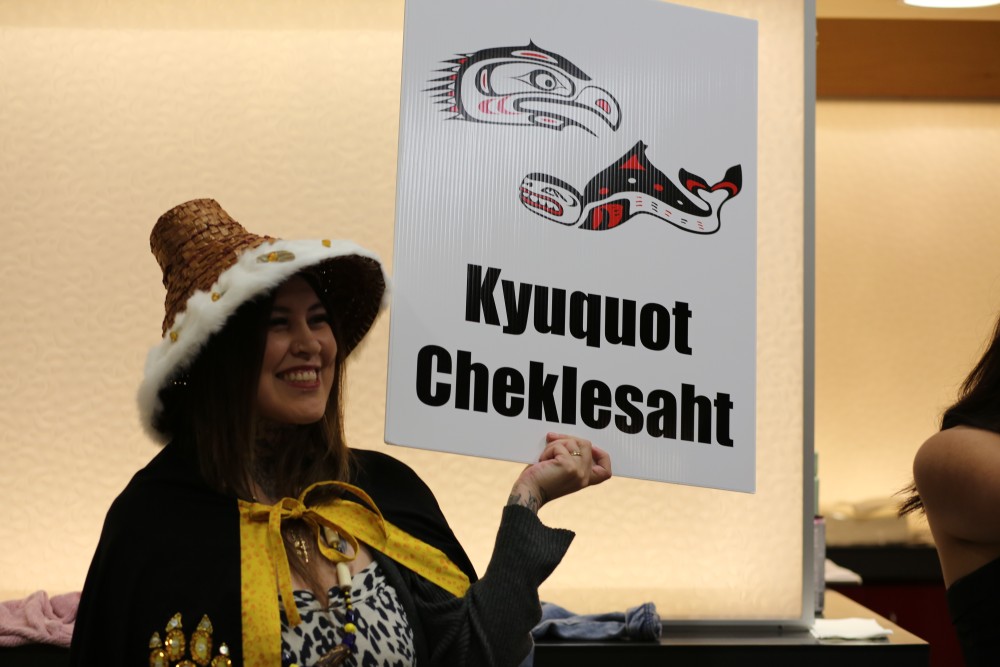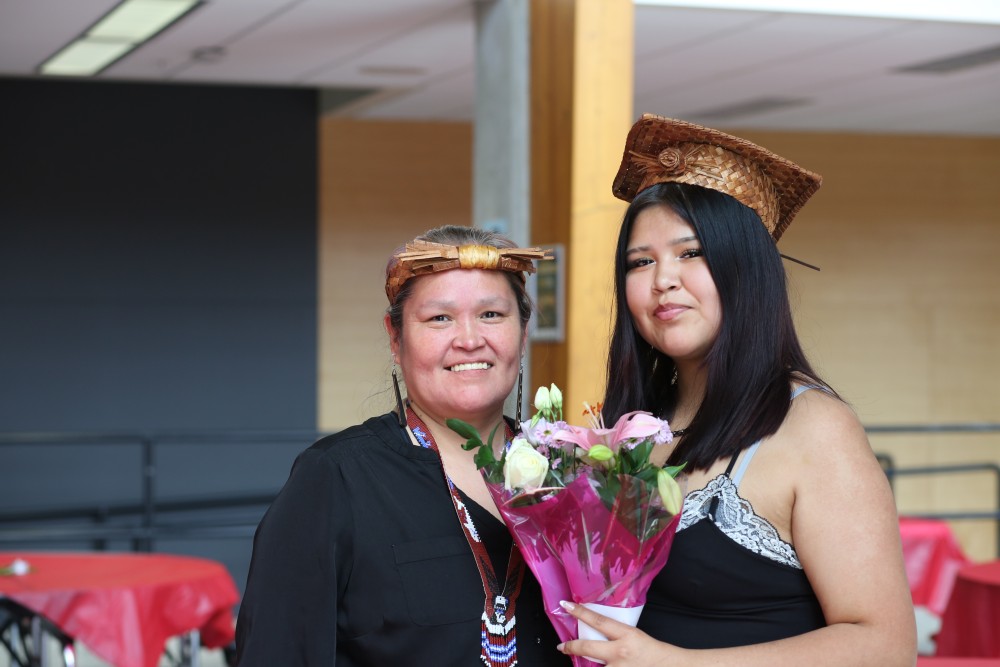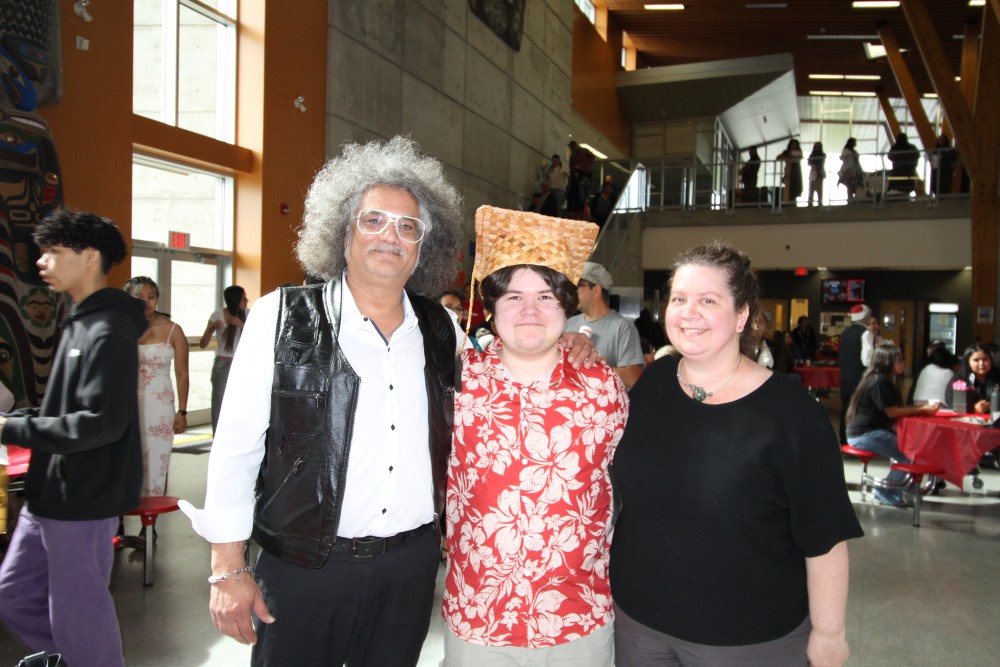
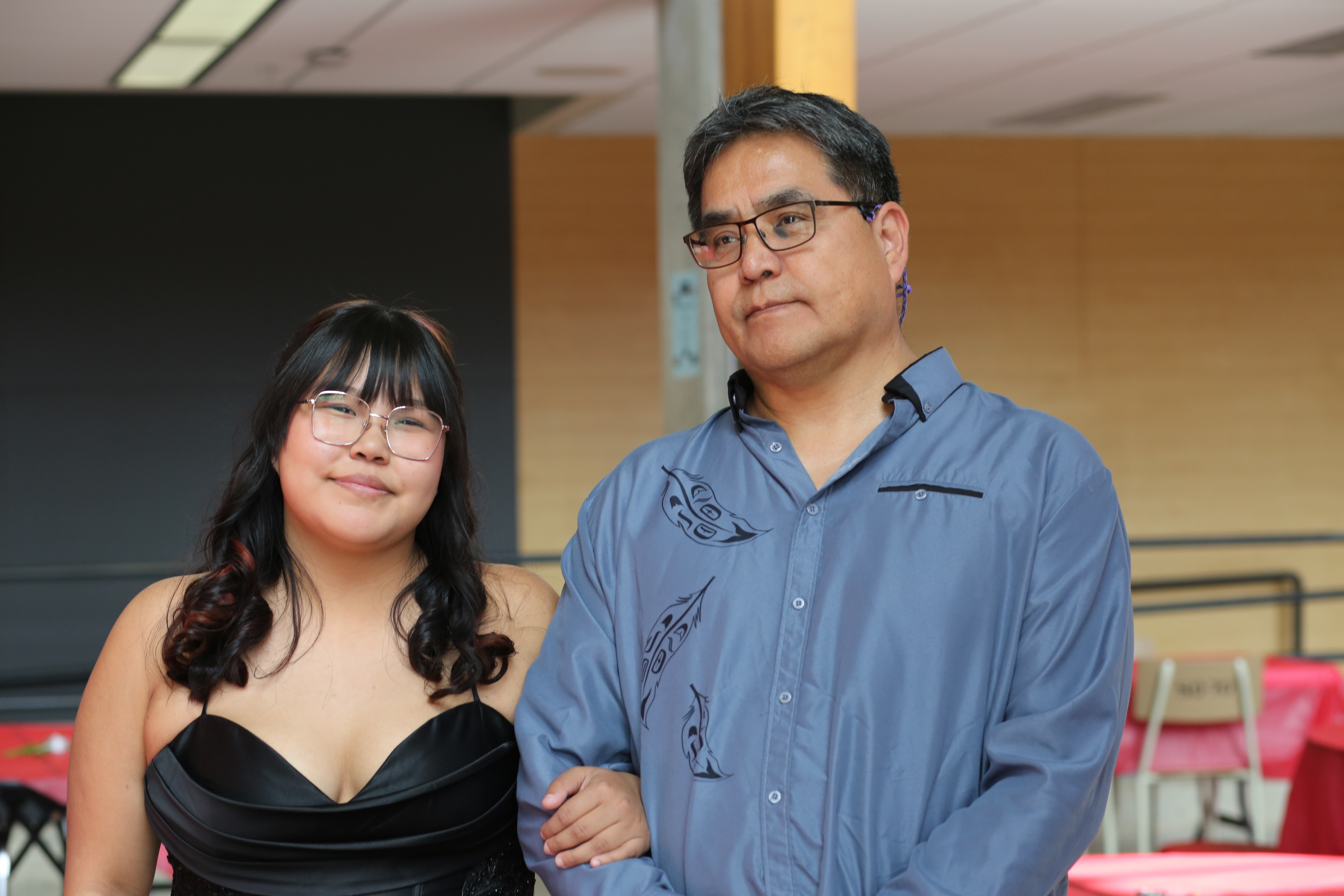
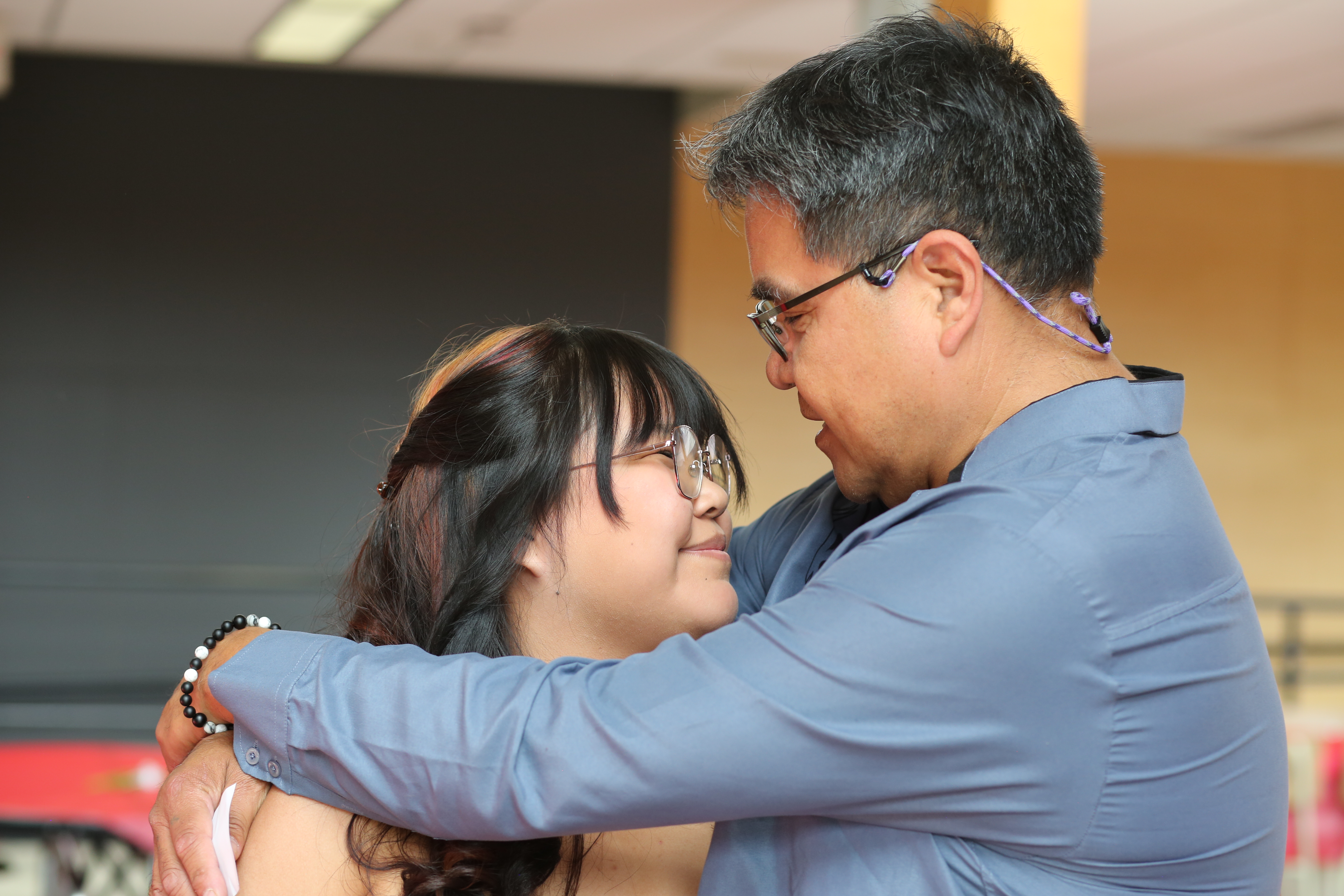
For Anika Jensen, graduating this June has been a family affair. The 17-year-old is allowed to invite half a dozen people to watch her cross the stage at the Alberni District Secondary on June 25 – but this month an earlier graduation event put on at the high school by the Nuu-chah-nulth Tribal Council allowed even more relatives.
“I got to have a lot of my family there because at my actual graduation for Alberni I can only have six people, so I tried to invite as much people as I could,” said Jensen after being recognized at the NTC event on June 6.
This year 56 graduates of high school and various forms of post-secondary studies were celebrated by the Nuu-chah-nulth Tribal Council, encompassing adults of all ages from the Tseshaht, Hupacasath, Ditidaht, Tla-o-qui-aht, Hesquiaht, Ehattesaht, Toquaht, Mowachaht/Muchalaht, Nuchatlaht, Yuułuʔiłʔatḥ and Ka:'yu:'k't'h'/Che:k'tles7et'h' First Nations – tribes that are connected to the NTC’s education program.
For those in high school, the June 6 celebration served as a lead-up to their graduation day on June 25. And data from recent years shows that a growing number of First Nations students are graduating, according to reports from the B.C. Ministry of Education. The ministry tracks high school completion rates, which is the percentage of students who finish their Grade 12 studies within six years of starting Grade 8. Back in 2010 this rate was a dismal 34 per cent for Indigenous students in the Pacific Rim School District, but this has since gradually risen to 83 per cent in 2025. Meanwhile the graduation rate of other students has gone up as well, from 64 per cent in 2010 to 89 per cent last year.
The gap between Indigenous and non-Indigenous students completing high school has also been closing to a similar degree in the nearby Nanaimo-Ladysmith School District, but the historical disparity is undeniably important for Pacific Rim, where 37 per cent of its students identify as Aboriginal.
“Parents, your kids made it,” declared Tseshaht speaker Martin Watts during the NTC celebration on June 6.
Mentioning the rise of artificial intelligence and the online presence of material of a questionable authenticity, at the event NTC President Cloy-e-iis, Judith Sayers, stressed the need for Nuu-chah-nulth voices to be heard in the future.
“We need our own people to write our own stories from our own perspective,” she said.
Watts reflected on the time when he was failing Grade 10, but he persevered through high school. He still remembers the words of Winston Joseph, his former teachers at ADSS.
“’Be the person you want to be’,” Watts recalled his teacher saying. “The words stuck in my mind when he told me.”
As she looks beyond high school, Anika Jensen sees herself as someone who takes care of others, which led her to secure a spot in North Island College’s healthcare assistant program.
“I just like helping people and taking care of people,” she said. “I feel good, I’m happy I get to go to college.”
Through high school she’s been most confident in English and social studies classes, although the young Tseshaht member recalls a tough transition when she started at ADSS in Grade 8 after spending most of her prior school years at Haahuupayak elementary, where more of a focus was placed on learning Nuu-chah-nulth culture.
“In eighth grade it was really hard because I went to Haahuupayak and we didn’t learn with much math and science, so I struggled in that,” said Jensen, who found it easier to focus on these areas during online studies offered through the high school, so that she would not be distracted by 30 other students in a classroom.
“Online was better for me,” she recalled. “I just talked to the teachers and they helped me. I figured it out on my own, but it was harder to do it in class.”
Despite these early challenges with her high school studies, Jensen come out on top, earning a $1,000 heecis award from the NTC. This is part of the over $45,000 in scholarships that the tribal council’s education department awarded to students this year, with winners ranging from early elementary grades to those in post graduate studies. Kindergarten to Grade 12 scholarships totalled $34,150, while those in post-secondary were awarded $11,750.
The tribal council also covers post secondary tuition for Tseshaht, Tla-o-qui-aht, Hesquiaht, Hupacasath, Mowachaht/Muchalaht, Nuchatlaht and Ditidaht members, and for full-time students a monthly living assistance is available that typically adds up to $1,600 for a single person with no dependents. This support comes from Canada’s Indigenous Post Secondary Student Supports Program.
Another scholarship winner is Kelcie Sam, who has just completed her second year at Simon Fraser University in Vancouver. She’s focusing on psychology, delving into her fascination with the dynamics that drive the human mind.
“I find a particular interest in how certain events in life affect behaviour,” said Sam.
Although she knows that she wants to help people, the psychology student has yet to decide which path in the field to take.
“Do I want to lean into the biopsychology of it and learn about the chemistry and give prescriptions to people?” pondered Sam. “Or do I want to go the counselling route and be like a therapist? Those are the two major paths that I’m in between, but thankfully I don’t have to choose just yet.”
After growing up in Port Alberni, transitioning to life in Vancouver hasn’t been easy, and a former teammate from the ADSS wrestling team was the only person she knew at the university when she started. At times mental health has been a challenge, admitted Sam, but she found support at SFU’s Indigenous Student Centre.
“There are some challenges, but with the resources at SFU and my friends here I’ve been able to figure it all out,” she said. “Thankfully now I have some really great friends and I have a partner now.”
For the time being, Sam is looking forward to coming home to cheer on her younger sister Kelly when she graduates from Alberni District Secondary on June 25.
“I can’t wait to go back home and swim in the river,” said Sam.