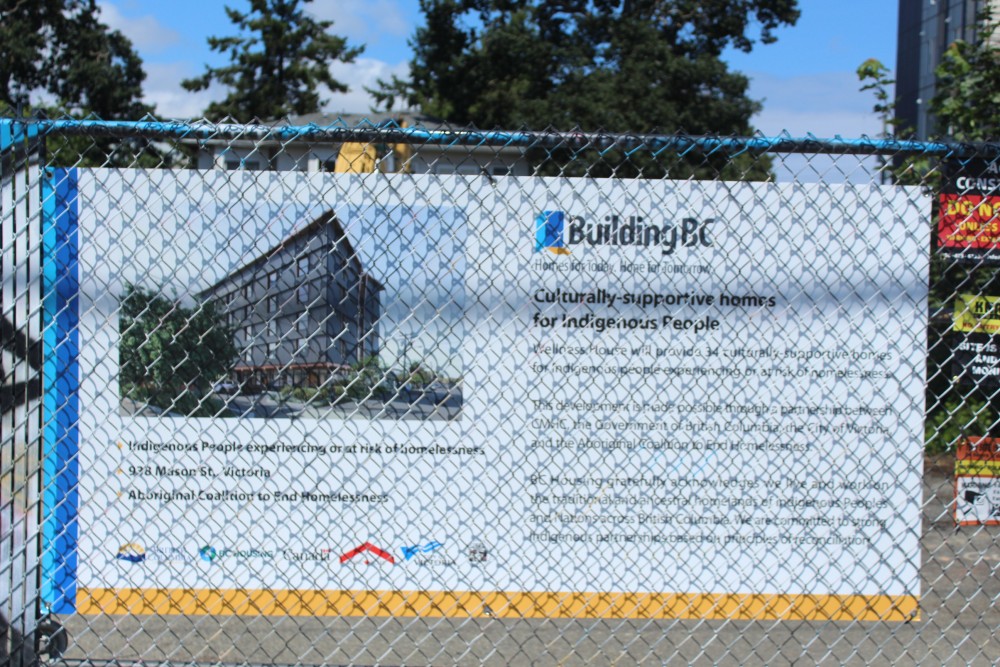
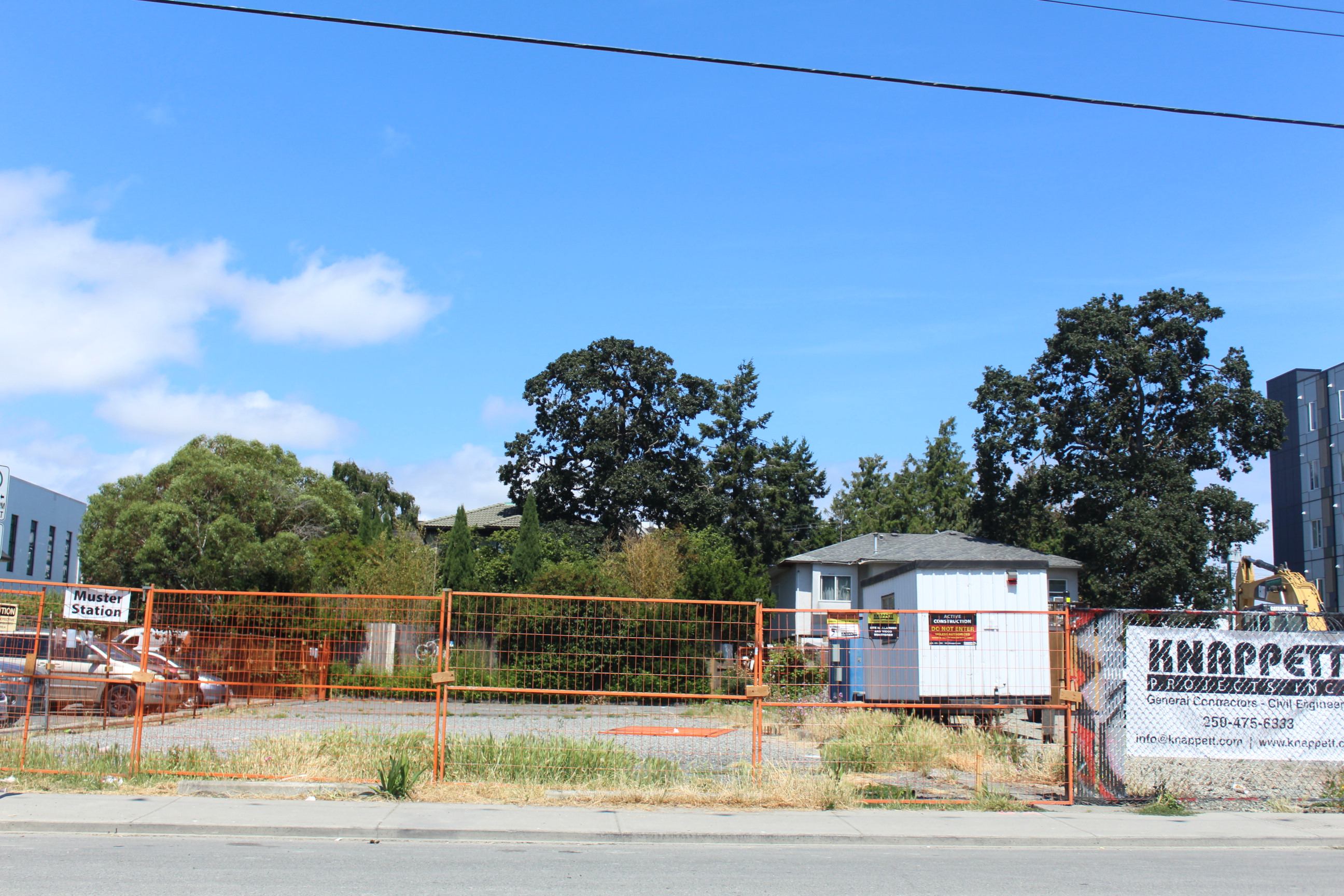
A new five-storey housing development supporting Indigenous peoples experiencing or at risk of homelessness is currently undergoing construction in downtown Victoria. The site will have 34 units, 33 of them being studios and one reserved for a two-bedroom family sized unit.
The Aboriginal Coalition to End Homelessness (ACEH) partnered with the BC Housing to develop the Wellness House currently being built at 938 Mason St. The House will focus on providing culturally supportive housing services for Indigenous peoples by providing 24/7 on-site staff, daily meals and access to health supports.
Each unit will have a private bathroom and kitchenette, and the building will have a communal dining room, amenity room, office space and a dedicated cultural room. The aim of supportive housing is to provide tenants with wrap-around support. In the case of Indigenous peoples experiencing homelessness, the ACEH will provide support that helps strengthen both Indigenous identity and residents' physical, emotional, mental and spiritual health.
"Many partners have worked for years to make this a reality, reflecting what's possible when we come together to meet the needs of our neighbours and community,” said Victoria-Beacon Hill MLA Grace Lore. “Continued collaboration will help ensure more people can find stable homes along with culturally relevant care and support."
Fran Hunt-Jinnouchi, CEO of the Aboriginal Coalition to End Homelessness Society, said that the initiative is eight years in the making.
"Groundbreaking of the Wellness House marks the realization of a vision that was first mandated during the Wisdom of the Elders Gathering in 2018,” said Hunt-Jinnouchi in a press release. “At that gathering, our elders provided clear direction: to create a light at the end of the tunnel through housing for those experiencing homelessness and substance use. Housing that is more than shelter, but a foundation for long-term wellness, centering land-based healing, family reunification, life-skills development and cultural connection."
BC Housing provided both land and $9 million through the Building BC program from the Homelessness Action Plan Enhanced Fund. The federal government will also provide $9 million through the Canada Mortgage and Housing Corporation (CMHC).
The BC-based First Nation Health Authority provided $474,000. The City of Victoria has pledged $262,500 from its Housing Reserve Fund, and the local Victoria Native Friendship Centre will pitch in $150,000.
The 2025 Greater Victoria Point in Time Homelessness Count and Survey reported at least 1,749 individuals were experiencing homelessness out of about 400,000 people living in Greater Victoria. One in three, or 29.7 per cent, were Indigenous, which is disproportionately high considering the estimated Indigenous population in Greater Victoria is five per cent.
Victoria is one of the least affordable Canadian cities, with high rent prices and low income being the greatest barriers for people experiencing homelessness to access housing.
According to the survey, 60.8 per cent of Indigenous respondents have applied for subsidized, supportive, or Indigenous culturally supportive housing.
The monthly rent for the studio units will cost $500, while the two-bedroom unit will be up to $695.
“At [the initial meeting for the project], our elders provided clear direction: to create a light at the end of the tunnel through housing for those experiencing homelessness and substance use,” said ACEH CEO Fran Hunt-Jinnouchi. “Housing that is more than shelter, but a foundation for long-term wellness, centering land-based healing, family reunification, life-skills development and cultural connection."
The development is set to open in 2028. Once the building opens, an advisory group consisting of elders and knowledge keepers will provide a name in the local Indigenous language for the Wellness House.