Retired Canadian tech millionaire Avi Bryant is transforming the site of Ucluelet’s Second World War seaplane base into a hub for building electric boats.
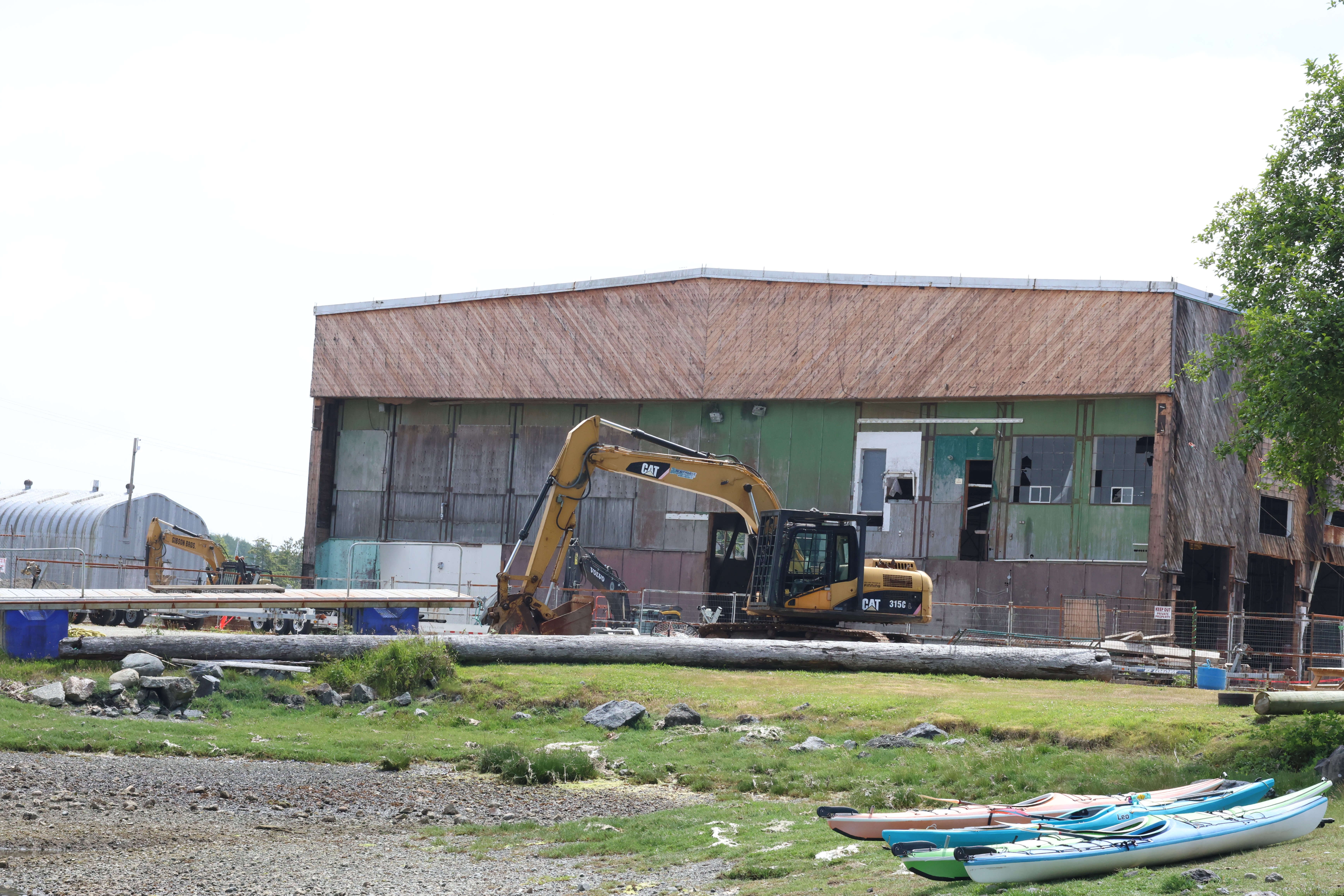
The company is called Rising Tide Boat Works, and Bryant’s vision for the six-acre waterfront industrial lot includes a boatyard, boatshed, electrified pier for a 100-ton travel lift, office space and solar electric parking.
Bryant says his dream is to build a marina similar to Boat Haven in Port Townsend, Washington – except for electric boats.
“I was really struck by Boat Haven in Port Townsend, Washington as a community and an ecosystem rather than just one business. I think that is very much our vision for Rising Tide Boat Works in Ucluelet,” said Bryant, who is a member of the Patriotic Millionaires, a group of wealthy Canadians who have registered as federal lobbyists to advocate for changes to the country's taxation system.
“We want to make the capital investment to have the infrastructure there, but we’re not trying to build a factory where we’re doing everything. What we want instead is to welcome other businesses, other trades, DIYers, whoever want to work on electrification to come in and use the facility. We hope to build a community there that goes much beyond whatever activities we are doing on the site,” he said.
Vancouver-based Michael Green Architecture propelled Bryant’s dream through design, while Saltwater Building Co. out of Ucluelet is currently on site carrying out the roughly two-year build.
“We are moving quickly,” said Tamara Summers, vice-president of business development for Rising Tide Boat Works.
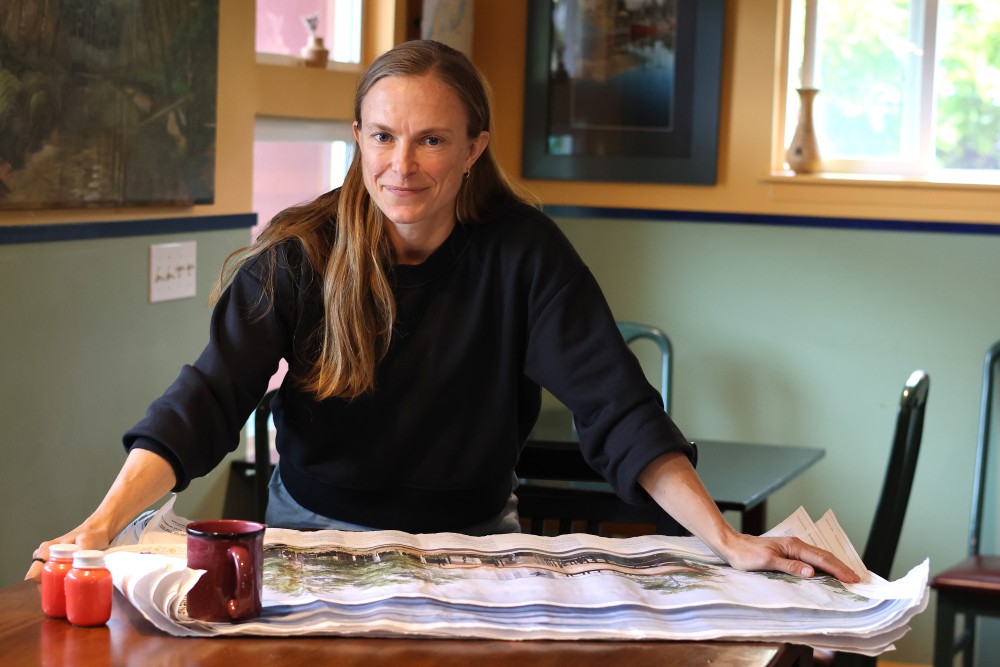
Over coffees at the local lunch spot Huckleberry’s Coffee Shop and Bakery, Summers shared that she met Bryant through the Centre for Ocean Applied Sustainable Technologies (COAST). COAST is a Canadian non-profit that supports innovation and commercialization of Pacific Canada's ocean economy.
“There’s been a lot of synergetic moments throughout this whole process. Avi is super progressive. We are looking to build an EV boating industry where one doesn’t exist,” said Summers.
She travelled from her home base in Victoria to Ucluelet on June 25 for a couple of site visits, with a surfboard strapped to the roof of her car.
From a structural, environmental and renovation cost perspective, Summers originally told Bryant he would be “crazy” to buy Ucluelet’s historical flying boat hangar and former fish processing plant.
“But it was perfect in many ways,” she said, noting that one of the key conditions on the property is foreshore access.
According to BC Assessment, the Rising Tide Boat Works lot at 1970 Harbour Crescent, Ucluelet, was sold in November 2025 for $6 million. Summers said the lease on the property still allows for seaplane use.
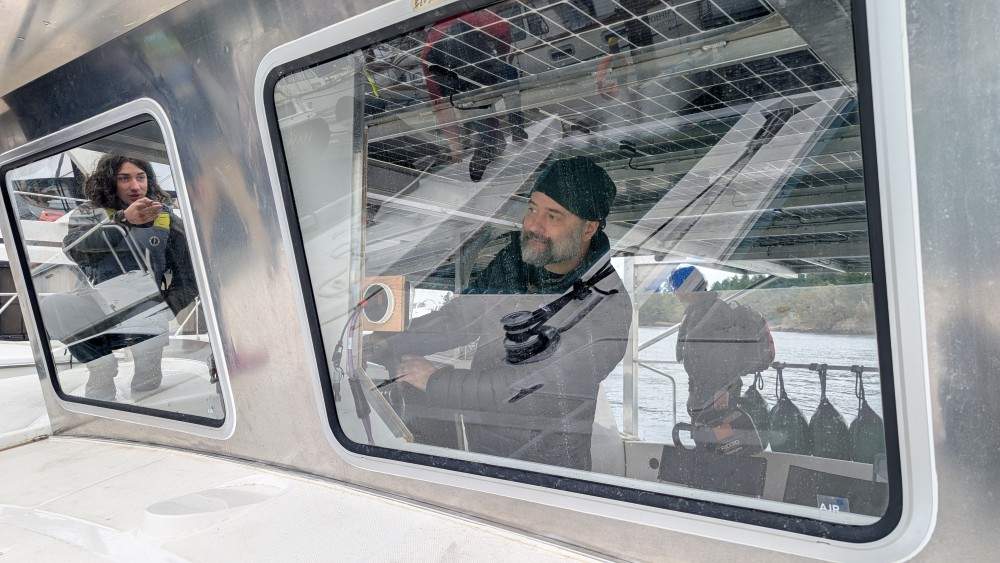
The catalyst for the project was Bryant’s personal vessel, a catamaran aptly called Catalyst. Summers shared that he was wanting to build an electric boat to “putter around the Gulf Islands”, which led to a journey to build a self-sufficient, solar-electric powered boat.
On Oct. 16, 2025, Bryant launched and tested the Catalyst on a maiden voyage from Canoe Cove in North Saanich to Montague Harbour in Galiano Island. He said the battery charged to 100 per cent after mooring it at the dock for a day.
“It felt magical; just leaving (the vessel) there and the energy just gets magically restored,” said Bryant.
“After a few years of design iterations and working with various designers and engineers and builders and it still never seizes to be surprising and cool when something that you’ve worked on a computer, on drawings, you’re actually then inside and experiencing and seeing as a real-world physical object. That’s just a really cool feeling,” he continued.
As a software engineer, he said he “lived in abstractions” whereas everything he built before were pieces of software that “ephemerally exist”.
“To work on something that is physical and real and in an area that has an impact on our physical and natural world is really new for me and exciting,” he said.
Locals are on board
Seventy-three-year-old Keith Nakagawa says he’s the oldest fishing guide on the dock. He spent 18 years commercial fishing, 34 years running the Canadian Princess boats and is currently cruising into his 11th season as a guide for Salmon Eye Charters.
While Nakagawa has never driven an electric vehicle or vessel – although he has driven an electric golf cart – he thinks Vancouver Island’s new marine electrification hub is going to be a “great thing for the community”.
“The travel lift will be really good. It will save a lot of money. We need more marina space too,” said Nakagawa, a third generation Japanese Canadian. “I’m glad they are restoring the old seaplane base. It’s part of our history.”
He says it’s common practice for guides to fill up jerry cans by the wheelbarrow at the Co-op gas bar to save the roughly 40-cent premium charged at the fuel dock. Depending on where he takes clients out fishing, Nakagawa says he burns at minimum about 500 litres of marine fuel in a week.
“I was talking to one friend of mine and he figures, in a season, he probably saves $5,000 from jerry canning,” said Nakagawa.
Owner of Salmon Eye Fishing Charters Sam Vandervalk also thinks marine electrification is a good concept.
“It will hopefully get rid of petroleum products on the water. Unfortunately, some of them have diesel spill outs. It might actually clean some things up on the water which would be great for the environment,” said Vandervalk, who drives an electric truck.
But Vandervalk said there are still a lot of “unknowns” with electrification and he was curious about where the lithium batteries will be disposed of once they come to the end-of-life.
“Not having gas on the boat, you don’t have the possibility of blowing the boat up, but lithium battery fires are toxic,” said Vandervalk.
Rising Tide Boat Works purchased the Nootka Princess, a 13-metre-long former tourism vessel, and is converting the powertrain to electric. The company estimates the two, new 100kw electric motors and 400kWh battery will be able to travel 35 miles at 10 knots cruising speed or 70 miles at a seven knots cruising speed. The converted boat would have a roughly three-hour charge time.
Brent Baker, general manager of Tofino-based, Indigenous-owned Ahous Adventures, says the use of electric vessels is something the tour company has been exploring for a while, but there are logistical challenges that need to be worked through first.
“The primary challenges for a business such as ourselves aside from the cost of equipment are battery life and distance that can be covered on a single charge, location of charging equipment, space required for the equipment and the general maintenance of the engines,” said Baker.
“With a tour schedule that can have the vessels running 10-12 hours per day with only minutes between trips to offload and reload passengers the opportunity for a recharge is very limited,” he continued.
With regards to maintenance, Baker says they are currently able to service their own fleet, but if they were to make the switch to electric, there may be challenges finding local technicians.
“We have met with one or two distributors from the industry and would be very excited to continue to move forward at a time that we feel comfortable that the move can support the current and future needs of the business,” said Baker.
Passenger vessels like water taxis and whale watching boats can use electrical propulsion, as long as they meet Transport Canada policy and the electric standards as outlined in the Tier I Policy – Accepting alternative electrical standards for small electric and hybrid vessels.
“I think it’s fair to say that a repower to electric will be more expensive than repowering with a new diesel engine. The flipside is the operational costs will be much, much less. Where you would be spending $100 on diesel fuel for one trip, you might be spending $5 or $10 in electricity and the maintenance costs are also a lot less,” said Bryant.
“We know that it’s a big upfront cost to put electric propulsion into a boat, but we believe it should more than pay for itself,” he said, adding that they’d like to figure out how to work with banks or governments to make converting to electric easier for boat operators.
Rising Tide Boat Works will have a booth at the Ukee Days fairgrounds on July 25-26.
“You can meet the whole team,” said Summers. “(The company) should help the local economy. It is the next evolution of a fishing and boating town that has historically supported boating and fishing.”
They will also exhibit the Catalyst solar-electric catamaran at the Vancouver International Boat Show on Sept. 18-20.
For more information on the project, visit: www.risingtideboatworks.com.