Most small communities tend to lean on ferris wheels and bouncy castles to amuse kids at summer fairs.
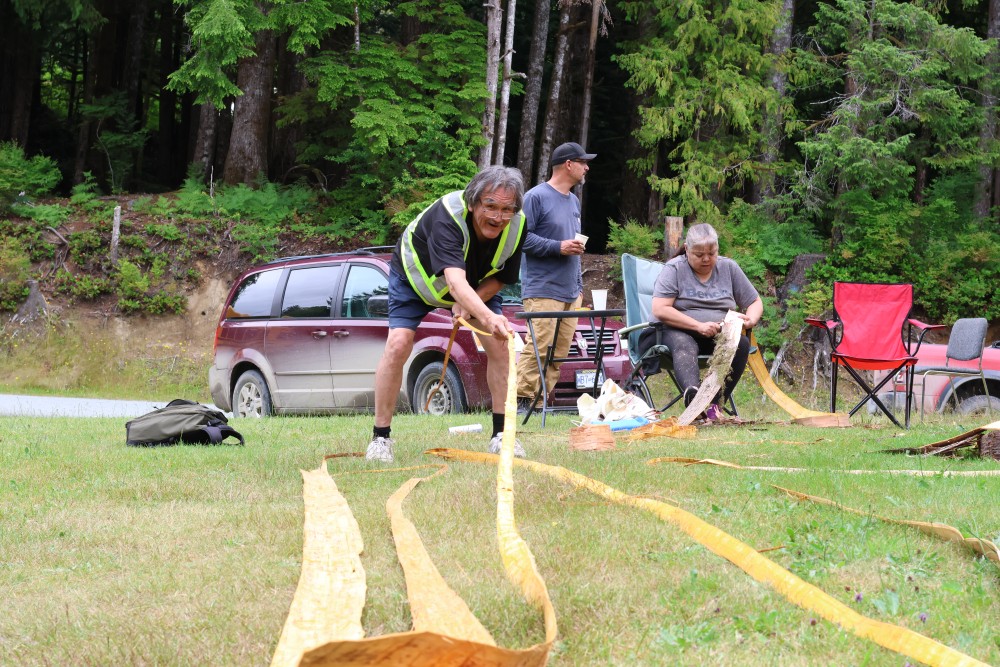
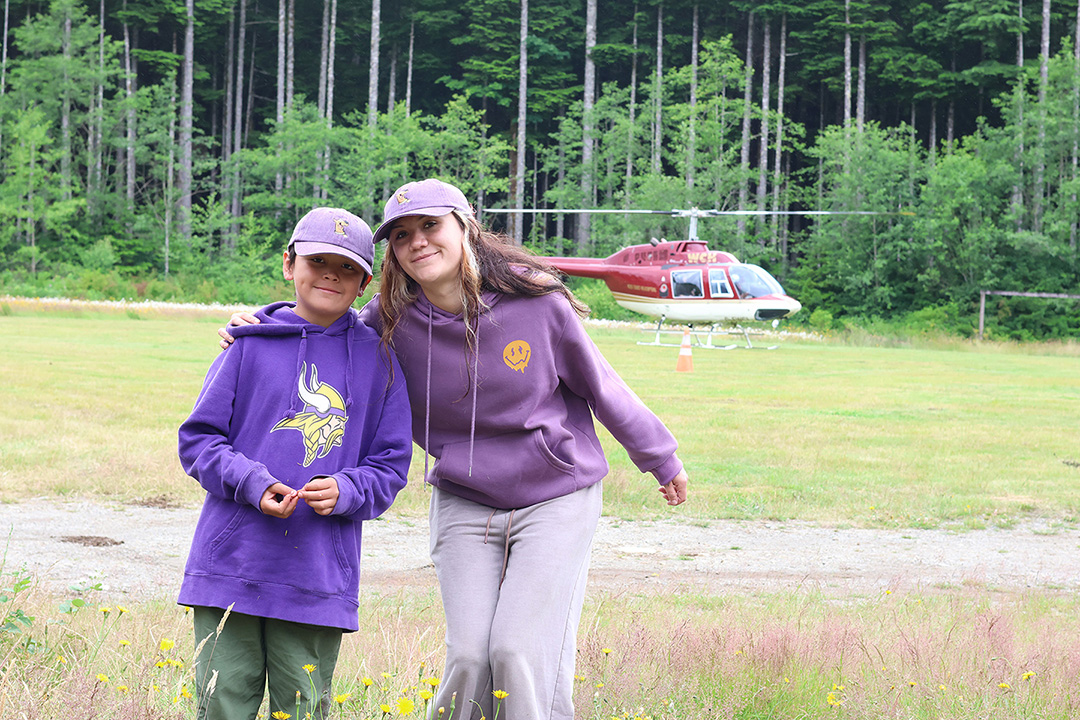
But the Ditidaht First Nation on the southwest coast of Vancouver Island took fun to a whole new level during their annual Ditidaht Days festivities on July 3 by providing free helicopter rides.
“It was awesome. We got to see the lake, the river and a couple of the beaches and then we went to little Nitinaht falls and we went swerving through the river,” said 19-year-old Ditidaht member Katrina Peter.
“It helps us know the area more. It was cool to be able to see the lake from up above,” she continued.
Craig Tate, 10, said the chopper ride was “like a rollercoaster”.
“To keep it simple, it was just beautiful,” said Evan Edgar.
“My daughter loved it,” said Melony Thomas, a Ditidaht family care worker.
Ditidaht traditional territory stretches inland from Cowichan Lake, down through Nitinaht Lake - which is one of the world’s top kite boarding and windsurfing destinations - and outwards to the coast between Bonilla Point and Pachena Point.
Canada’s iconic West Coast Trail (WCT) passes through Ditidaht territory. Last summer, the Ditidaht Economic Development Corporation celebrated the opening of a visitor centre and cultural information hub at the Nitinaht Lake Campground for hikers and campers.
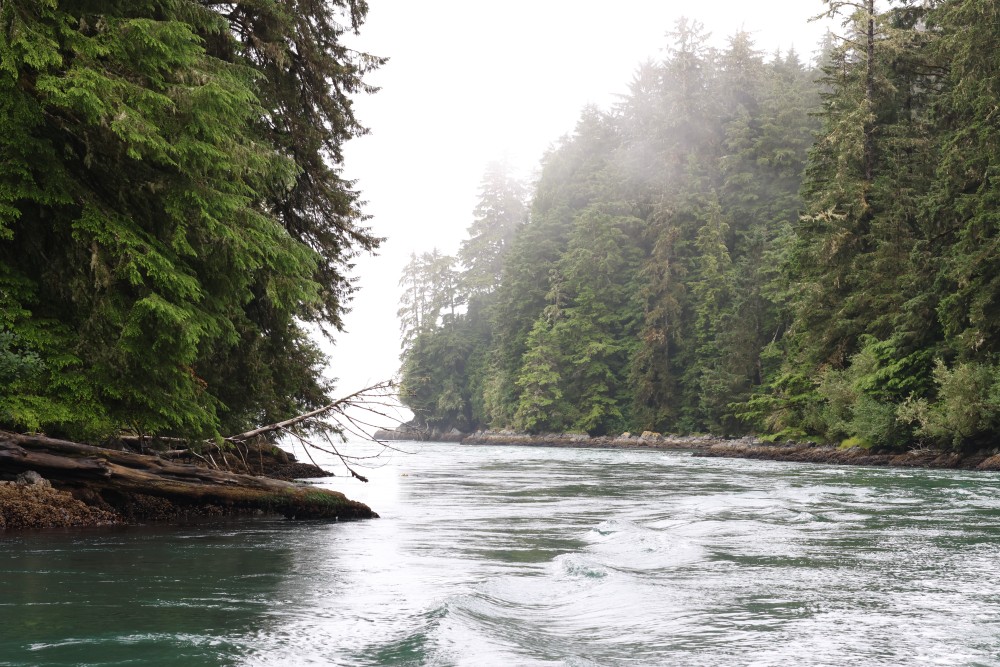
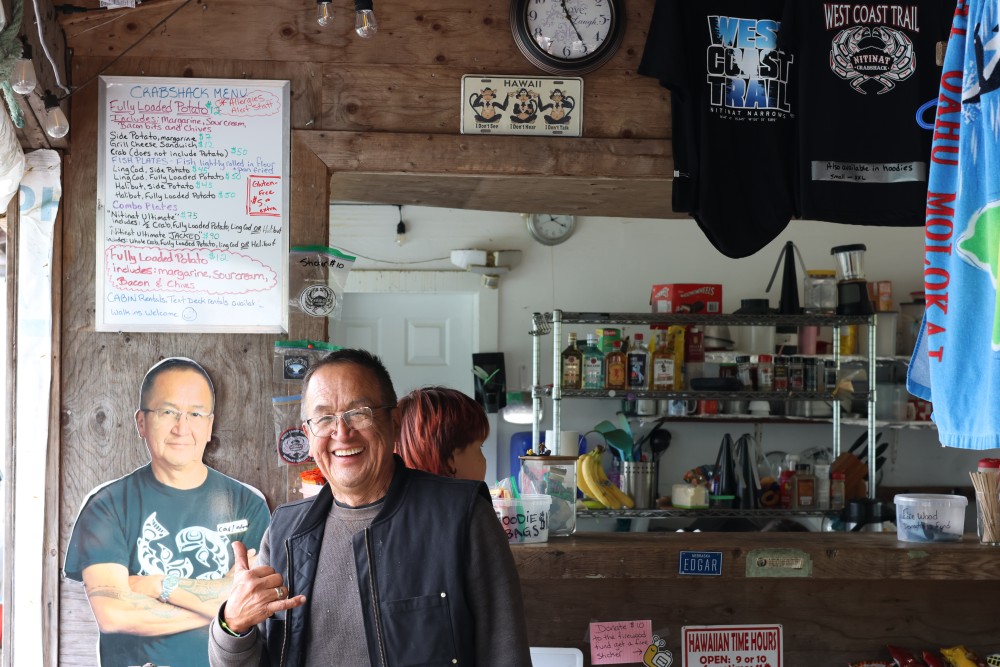
Nitinaht Narrows, a tidal waterway that bisects the WCT, is a third entrance to the trail; hikers picking up the trail in Nitinaht can say ‘hi’ to local legend Carl Edgar at the Crab Shack before opting to go north (32-kilometres) towards Pachena Bay or south (43-kilometres) to Port Renfrew.
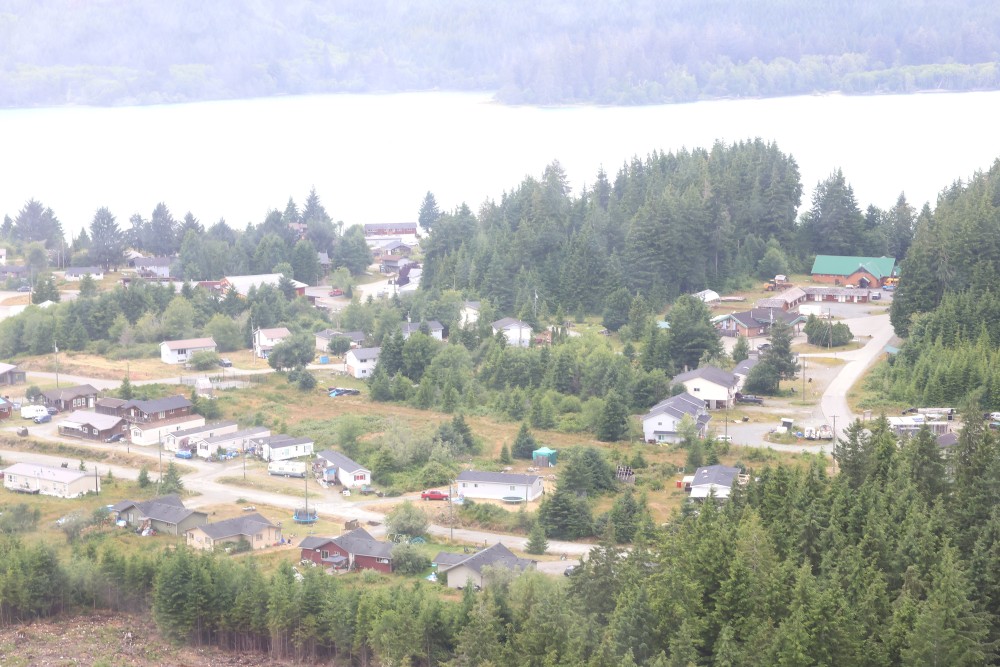
A spray-painted piece of plywood shouting ‘Tire Repair’ greets drivers upon entering the remote village of about 175 residents – the two main access roads to the community are gravel and in dire need of maintenance.
“Chip-sealing our road is a huge need,” said Thomas.
In March, Ditidaht hired Roberta Martell to act as chief administrative officer (CAO). Martell brings over 25 years of community building experience to the Nuu-chah-nulth First Nation, with an impressive CV that includes working for the Xeni Gwet'in First Nation in Nemiah Valley and building straw bale houses for the David Suzuki Foundation, as well as executive director roles for Kluane First Nation in the Yukon and Fernwood Neighbourhood Resource Group in Victoria.
Amid signing up members for helicopter rides, Martell shared that she’s set-up shop at the Nitinaht Lake Motel. She says her main priorities are to upgrade the community’s septic system to wastewater treatment and to build housing options.
“We’re buying back houses that are private so that we can tear them down or renovate them and we are densifying where we have empty lots. We’ve got duplexes and fourplexes. We’re also looking at doing some tiny houses,” said Martell.
She acknowledged the “not insubstantial amount of money” the sky tours are costing the nation, but says the goal is to “celebrate Ditidaht culture and to strengthen, re-affirm the connection to the land and to the territory”.
“Diditaht is at the final table of treaty. In September, we will be signing an environmental assessment side agreement, and we have some other agreements on the go,” said Martell.
“(The helicopter rides) are strengthening the relationship with the treaty team, and when it comes time to have a final vote, for people to know how gorgeous their territory is. Who gets to see it from the air? It’s massive and it’s gorgeous and it’s unreachable in a lot of ways. This is a pretty neat opportunity,” she said.
Ditidaht by boat
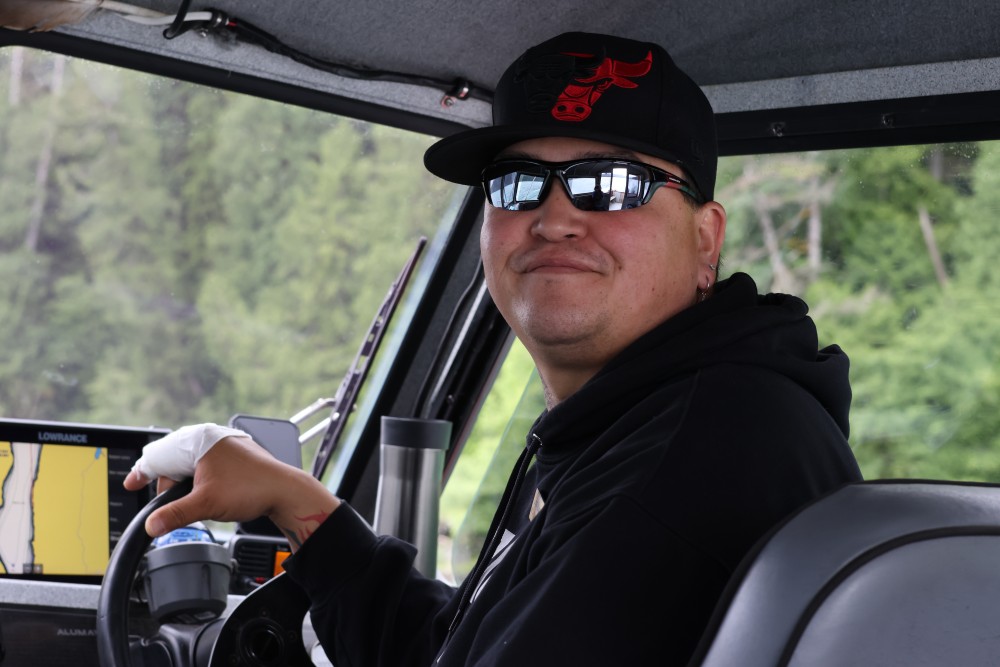
Ditidaht members could also view their territory from the water during Ditidaht Days, with WCT water taxi and ferry service skipper Leon Edgar taking folks out on the boat.
Leon took passengers up to the north end of the lake where the Nitinat River Hatchery has a collection of open-water fish pens. The hatchery opened in 1980 to help sustain salmon populations for local commercial, recreational and Ditidaht First Nations fisheries. According to Fisheries and Oceans Canada, the hatchery sees salmon returns that can range up to about 500,000 each year.
He says while Ditidaht members are always allowed to catch food fish, commercial fishing is prohibited due to overfishing.
“There hasn’t been commercial fishing opening inside the lake or outside the lake for almost 20 years,” said Leon.
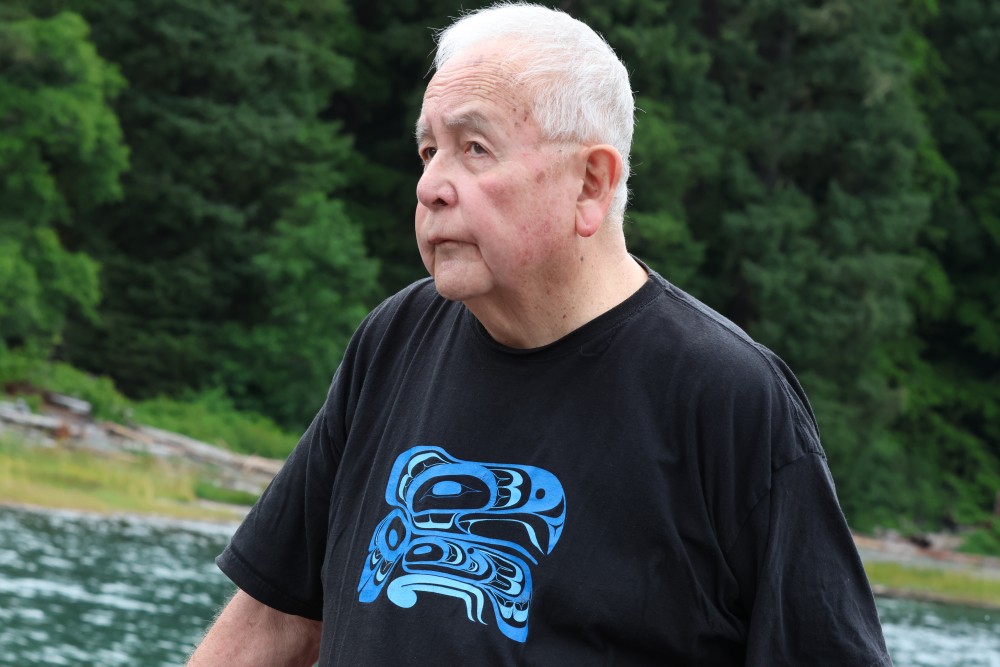
Elder Charlie Elwood Thompson, 80, took advantage of Leon’s July 3 morning boat tour. Thompson grew up in “Whyac”, or waayaa, Ditidaht’s old village site overlooking the entrance to Nitinaht Lake.
“I missed out being a fisherman because I went to residential school. It would have been nice to be a fisherman,” said Thompson as the boat slapped the waves, passing by Hobiton River, a spot once used by gillnetters.
Thompson attended the Alberni Indian Residential School for 10 years. When he returned home in his twenties, he went to work at logging camps with his dad and uncle. He said he also worked on the whole WCT, building bridges and other features in the ‘70s.
“You need really good boots to hike the trail, put calks on the bottom like the loggers used to wear,” Thompson recommends.
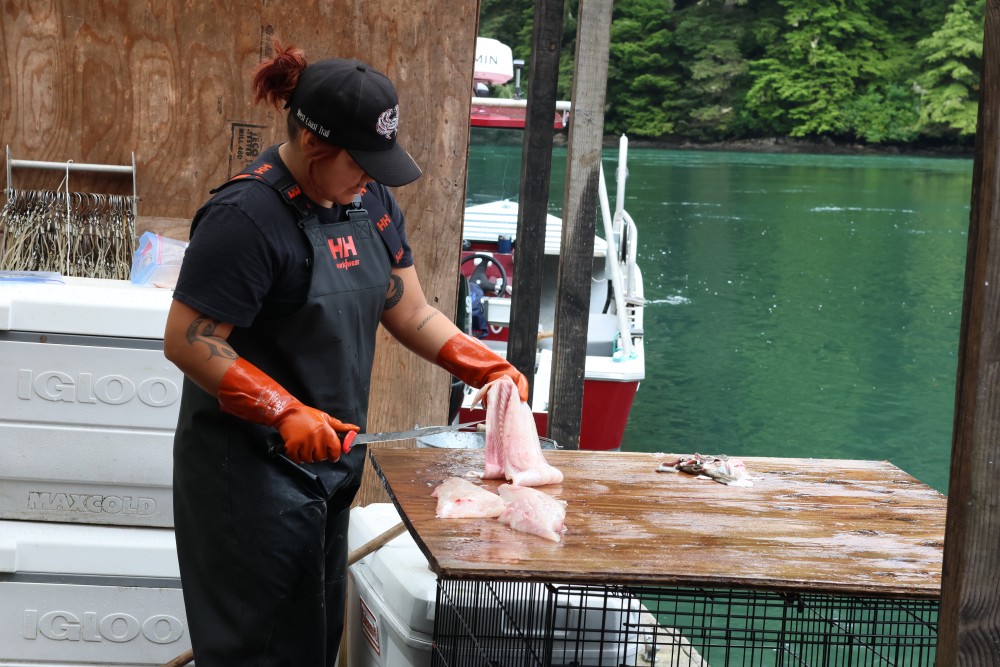
Leon took the boat tour all the way out to the lip of the tidal lake where it connects to the Pacific Ocean before making a pitstop at his family’s Crab Shack business. The Crab Shack is a welcome respite for WCT hikers, offering a place to dry boots, fill the belly with seafood and nurse a cold drink.
Leon’s dad Carl is celebrating his 51st year as a water taxi operator for the WCT. He built the Crab Shack with the help of his son in 2013.
To operate the remote, floating restaurant, Carl says he’ll make a supply run to Costco once a week, which takes roughly 14 to 16 hours.
“It wears me out,” said Carl. “You need ambition. You need the drive. You have to want to do it. My family grew up doing all this.”
Carl says his “succession plan has been in order forever”, with his kids and grandkids all involved with the business, from taking orders and preparing fish to driving the ferry service over the Nitinaht Narrows.
“I’ve been here since the very beginning of the trail and I’ve seen a glimpse of the future. Everything here is what hikers ask for. I built it for them,” said Carl.
As Leon rounded the tour group up to head back to the main dock, two Germans hiking south on the WCT started to hang wet clothes over the Crab Shack’s woodstove. Leon’s son Leon Jr., a Grade 9 student at Ditidaht Community School, hopped in the boat, so he could jump on a chopper tour.
There are currently a total of eight students in his class and 45 to 50 children in the entire K-12 student body.
“If everyone graduates from my class, that will be the most grads ever,” said Leon Jr.