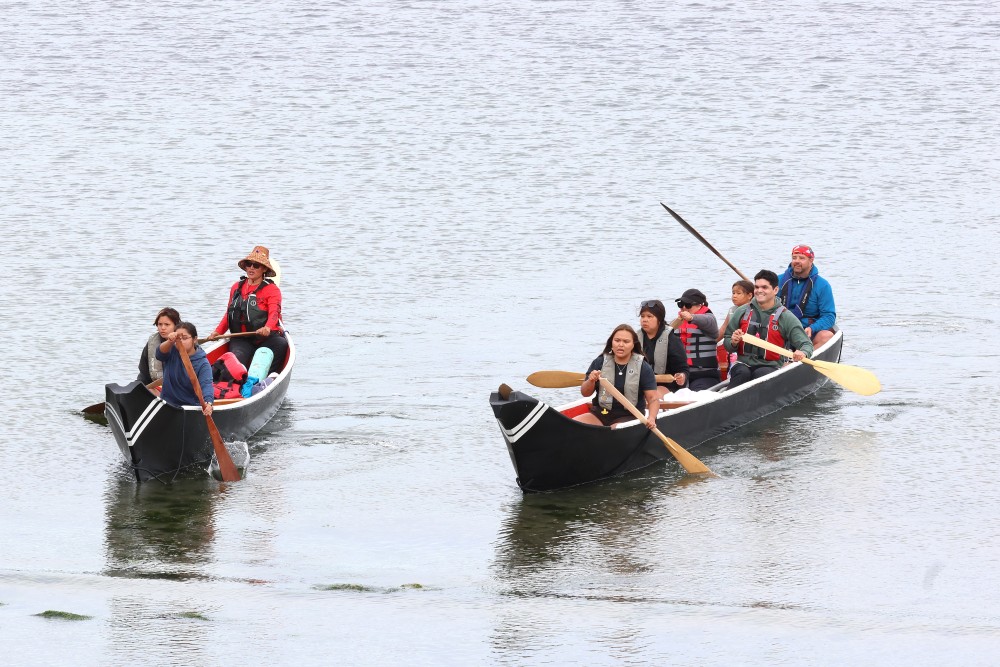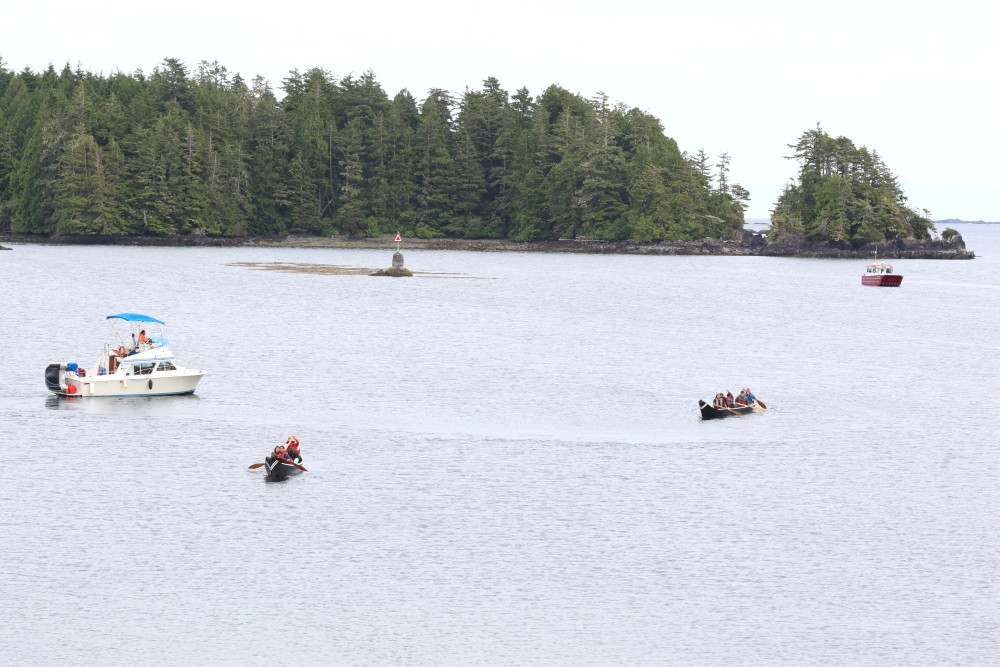
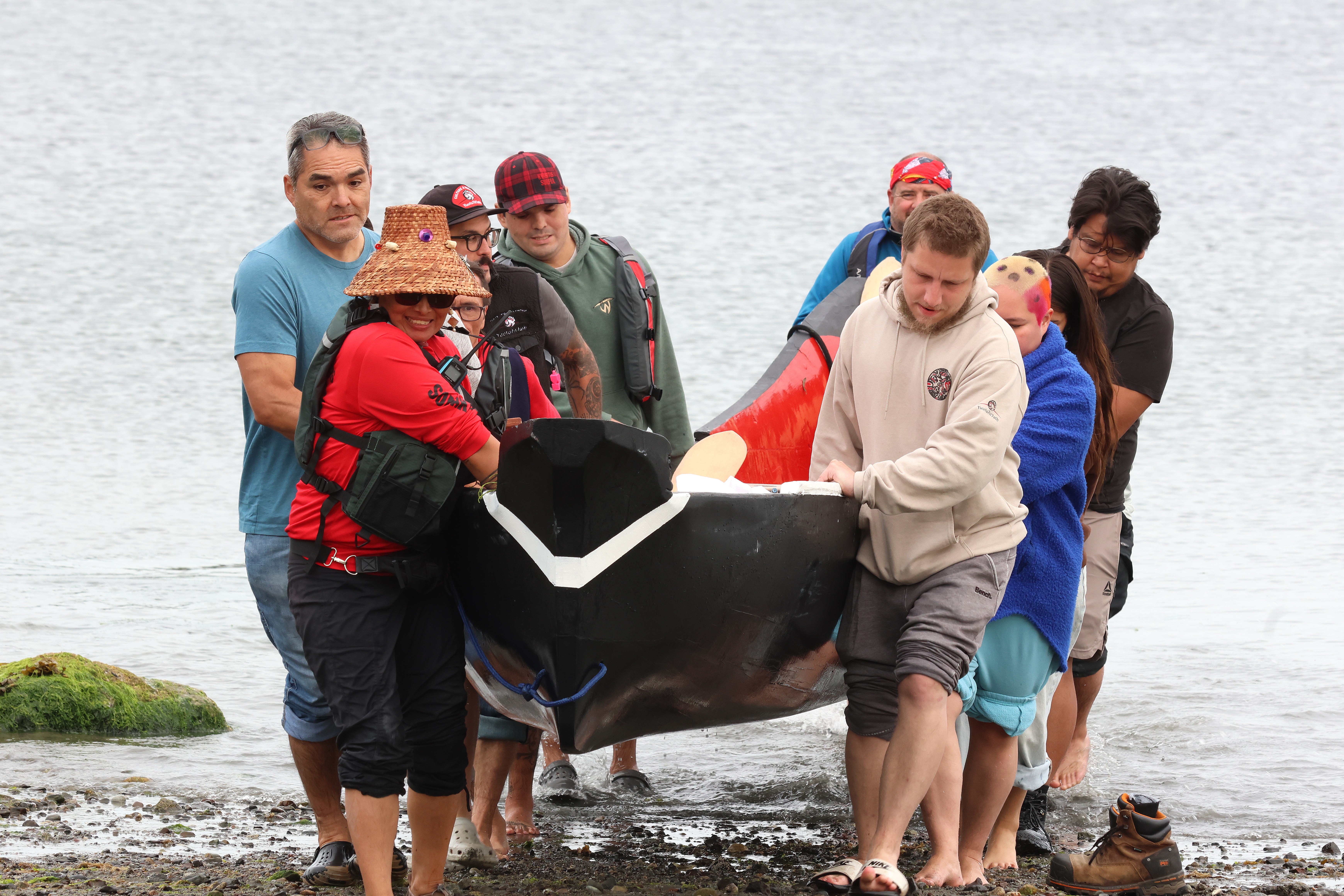
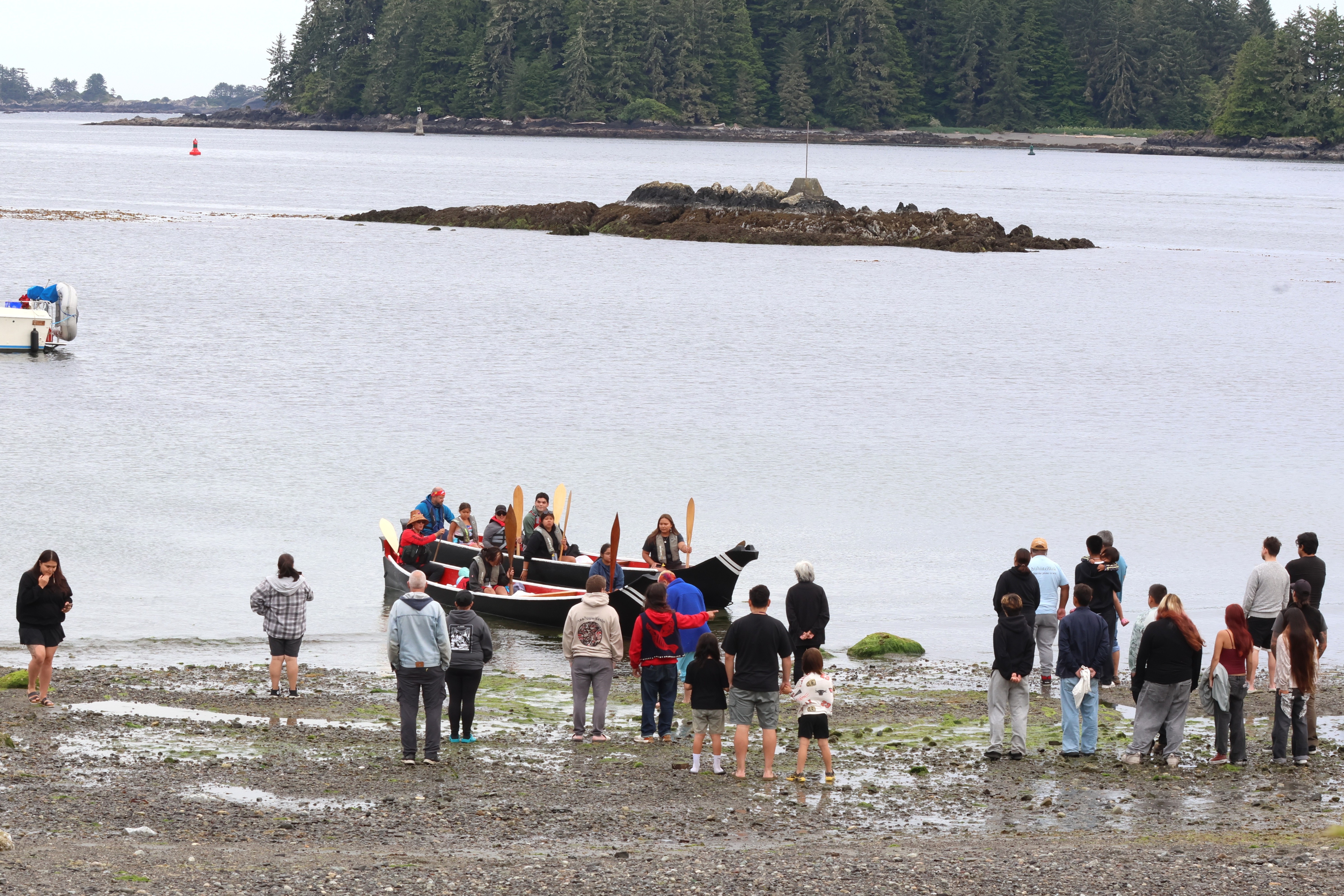
Two Ahousaht dugout canoes and a support boat pushed off the shores of Flores Island in Clayoquot Sound on Monday morning (July 13) around 10 a.m. and by 6:20 p.m. that same day, the pullers had reached the Yuułuʔiłʔatḥ (Ucluelet First Nation) village of Hitacu.
The original schedule was advanced by a day after a stop in the Tla-o-qui-aht traditional territory of Opitsaht was cancelled due to a loss. The young Ahousaht group refuelled and took repose in Tofino as an alternative, then continued south to Hitacu.
Their goal is to reach the Nisqually Indian Tribe, east of Olympia, Washington, U.S.A., by July 31 for a five-day potlatch with over 100 tribal canoe families from all over the Pacific Northwest.
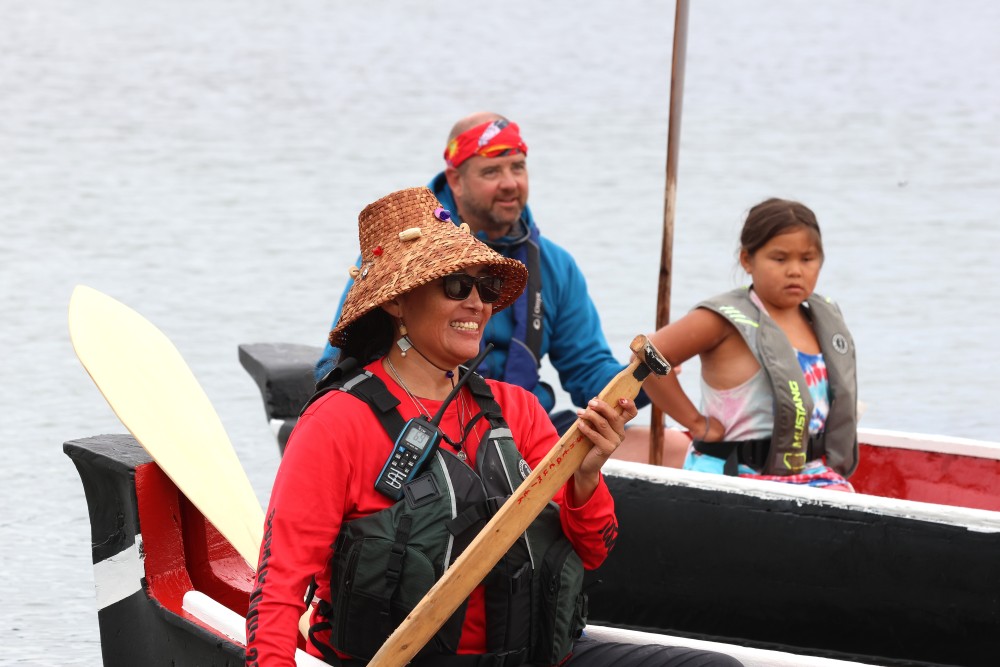
Hisaakʷista (Stephenie Charleson), who is of Hesquiaht and Ahousaht descent, is the skipper for Ahousaht’s 30-foot dugout chaputs (canoe) called Sumakawis. Ahousaht’s other chaputs on the voyage is the 26-foot Swan Family Canoe.
Last summer, Hisaakʷista was the lead puller in a Hesquiaht crew of mostly Indigenous women. Paddle to Nisqually is her third major canoe journey.
She said the crew size is about half of what they originally expected.
“Families are afraid to cross the boarder. I understand. It’s not safe out there, I feel, for two-spirit people,” said Hisaakʷista.
“Healing Through Our Waters by Honoring Our Ancestors” is the official name of the 2026 Paddle to Nisqually Canoe Journey.
Hisaakʷista shared that July 9, 2026, marked one year of sobriety for her.
“I’ll be paddling with a lot of people in my heart and in my mind. That will be my drive. There are a lot of family battling addictions or coming into their own sobriety. With a lot of losses to addictions or homelessness, I think that is what I am paddling for – better care for our people,” said Hisaakʷista.
“I wish I could take everyone and fill our own chaputs. I would fill it with all the people that need to be out there. I’m going out there with good intention and I hope safe journey for all our families,” she said.
Hisaakʷista explained there are generally at least 10 pullers (the preferred term because of the pulling motion on the paddle) in a chaputs. Depending on weather conditions, the pullers spend long days in the canoe, often paddling for five to eight hours.
“If it’s really too windy and not safe to be in the chaputs, then we’ll get a tow. Sometimes we’ll get a tow for an hour and then get back in the chaputs and continue paddling. Safety is definitely a priority,” said Hisaakʷista.
The Ahousaht chaputs were towed for a stint to safely get around Amphitrite Point, but the paddle crew jumped back in at the head of Ucluelet harbour to finish the pull to Hitacu.
Ahousaht First Nation member Terrance Sabbas Sr. (also known as ‘Slug Eyes’) is driving the support boat.
“It has bunks and a kitchen stove and a nice big deck to hang out on. If I’m not in the chaputs, I get a bunk on his boat as well,” said Hisaakʷista.
“I feel so safe with this crew, not even knowing everyone on it. I know they are well-practiced and very safe. They have been through a lot of canoe journeys and living on the coast, that’s how they live. They are so thoughtful and take good care of their people,” she said.
Yuułuʔiłʔatḥ’s canoe family of about 12 will travel the ancestral waterways as far south as Beecher Bay. Last summer, the nation had a crew preparing for the Paddle to Elwha journey, but Yuułuʔiłʔatḥ Government pulled their financial support two days before the crew was meant to depart citing “safety and liability concerns”.
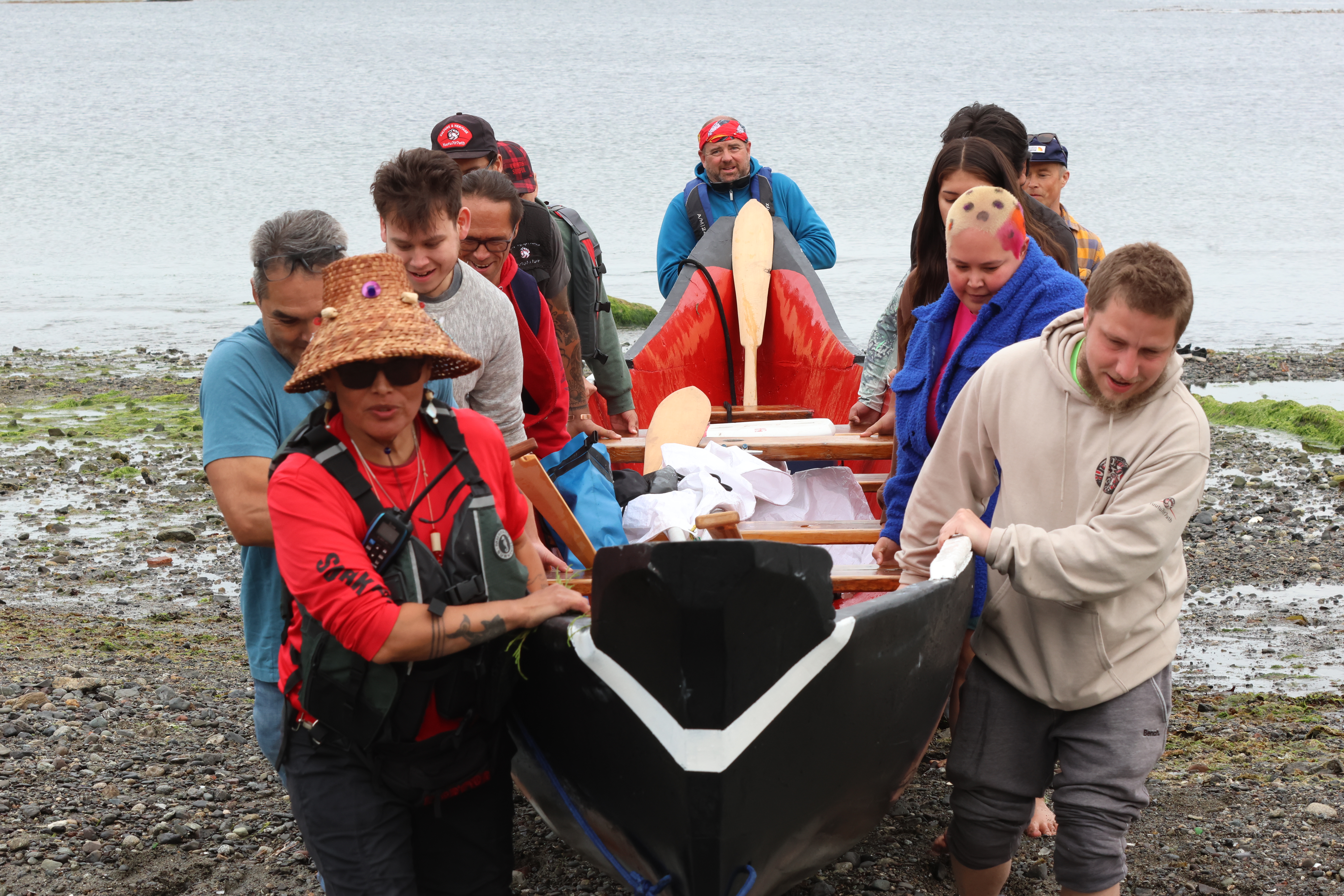
“The forecast looks awesome. I’m stoked,” said Yuułuʔiłʔatḥ skipper Tyson Touchie after helping Ahousaht carry their chaputs up to the high tide line.
“I feel there is a more community effort with this one. I feel there is more backing from YFN, and the amount of training that we’ve put in is crazy. All together we’ve put in about 10 tips. Everyone in our crew has gone through a tip and corrected the canoe,” he said.
“I’m pretty excited for them this year to be participating,” said Hisaakʷista. “They have a beautiful chaputs. It turns on a dime. It’s unreal.”
Touchie said Yuułuʔiłʔatḥ’s 18-person chaputs is a ‘Pacific Dancer’, a fibreglass hybrid model made by Clipper Canoes.
“It could literally do a 180. It almost feels like it’s skidding,” he said.
Tseshaht First Nation is doing a “mini canoe journey” this year for Tseshaht Days. The crew left from Port Alberni to the Broken Group Islands (BGI) on July 14. They will welcome Ahousaht canoes on July 15 to Keith Island in the BGI for an overnight stay.
On July 16, Yuułuʔiłʔatḥ’s canoe family departs Hitacu at 7 a.m. to catch up with Ahousaht. All three canoes will travel to Huu-ay-aht First Nations traditional territory (Pachena Bay) and then to Ditidaht on July 17 for a full rest day.
Touchie says they plan to be in Beecher Bay on July 21. He said they are not going any further south this year “because of Trump.”
Ahousaht’s team plans to push on into Puget Sound and the United States.
“It’s like we are doing two canoe journeys in one,” said Hisaakʷista. “It feels like we are travelling the length of the Island at this point. We will be the northern group.”
It has been 10 years since Nisqually last hosted the Canoe Journey in 2016. The annual tribal journey in the Pacific Northwest region was sparked by the Paddle to Seattle in 1989 as part of Washington State’s Centennial celebration.
“The Nisqually Tribe believes that this will be a transformative and exciting journey, which will bring Indian nations together from throughout the region to celebrate, reconnect, and plan to go forward together. We look forward to welcoming you to our (ancestral) homelands,” wrote Nisqually Indian Tribe Council Chairman Ken Choke in a letter to canoe families.
Hisaakʷista says one of the greatest things about tribal canoe journeys is that nobody is going to be left behind. She said it’s common for people to spontaneously hop into chaputs and help with the pull.
“The last couple canoe journeys it was amazing when you could support another crew. We towed boats last year that had broke down. When you are supporting another support boat, you are taking the whole chaputs that they are supporting,” she said.