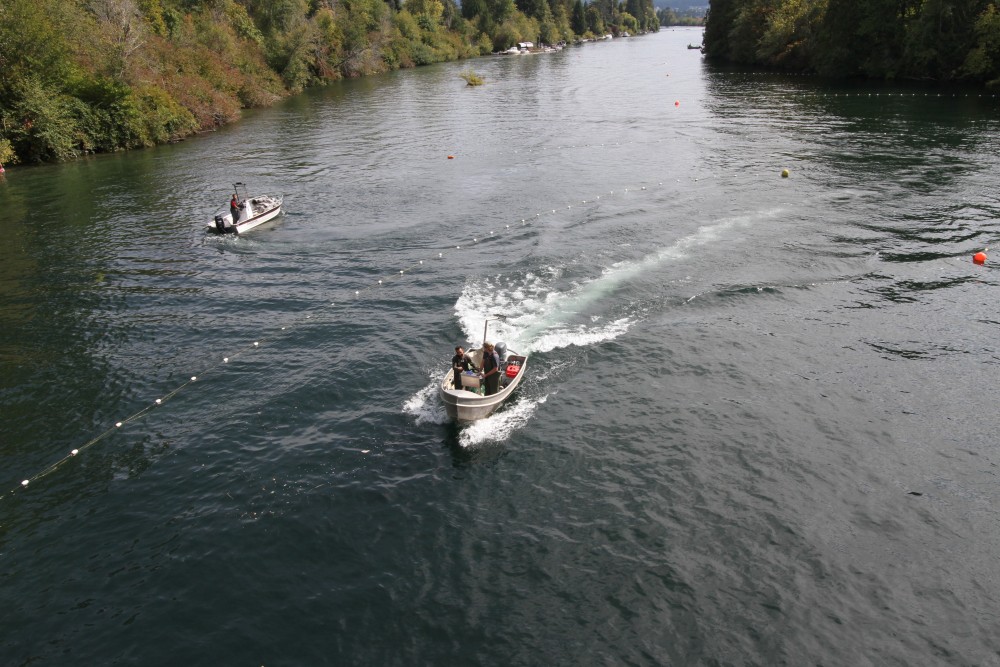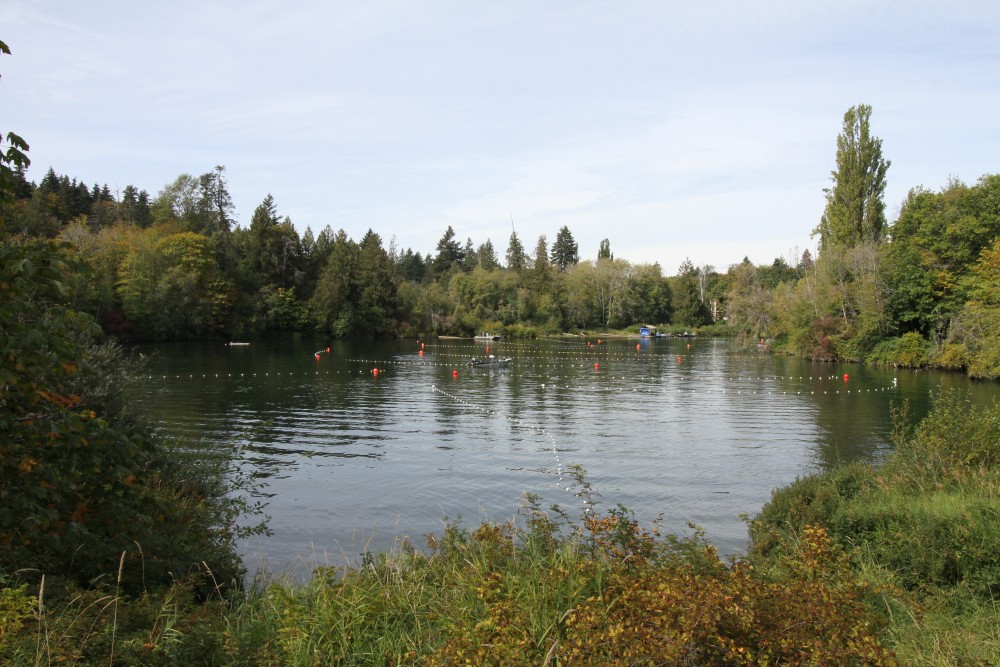
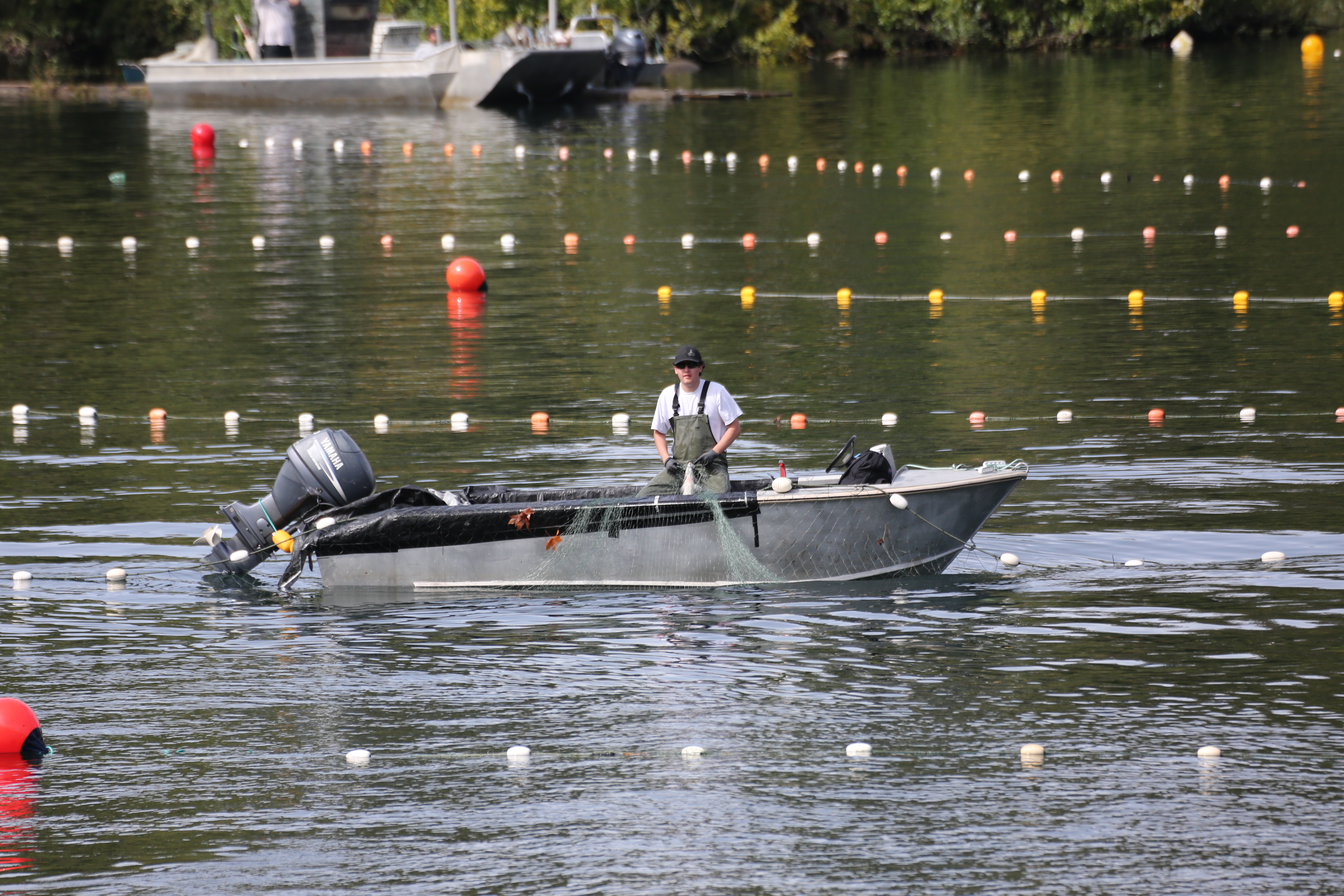
With wild-caught Chinook salmon fetching as high as $7.75 per pound early in the season that opened mid-August, Hupacasath and Tseshaht First Nations commercial fishers are reeling with gratitude for the lucrative run.
Tseshaht gill netter Nasimius Ross holds a licence for the Tsu-ma-uss (Somass) River fishery, an economic opportunity fishery collaboratively operated by the two Alberni Valley-based nations.
Ross said they usually start selling at $3.50 per pound and the average weight of a Chinook is 15 pounds.
“It’s good money. One of the openings caught 600 to 700 fish. That’s one night of fishing. It’s estimated that brought just about $5 million into the economy, and that’s locally. All that stays here,” said Ross.
Fellow Tsu-ma-uss gill netter Martin Watts said it’s a win-win for both nations.
“It’s nice to see that the wealth from the fish that come up has finally got to a point where our fishermen are making a good living,” said Watts.
“Our fishery totally benefits Port Alberni. The money that comes is basically spent here. The kids are the beneficiary of our fishery when it comes to the fall fair or new school clothes. This is the perfect time of year for our Chinook fishery just for that fact,” said Watts.
Tsu-ma-uss Fishery encompasses the Somass River watershed, Alberni Inlet and Barkley Sound. The First Nations economic opportunity fishery was established in 1992 in response to court decisions that affirmed an Indigenous right to fish under Section 35 of the Constitution. Section 35 is the part of the Constitution Act that recognizes and affirms Aboriginal rights.
Four seasons ago in 2022, the Tseshaht and Hupacasath First Nations fisheries generated an estimated $1.5 million.
“It’s been a great year. I’ve been spending a lot more time with my son; that’s better than all the fish in the Somass right now, just spending time and sharing the information that I’ve learnt over the years and teaching him. That’s worth everything to me,” said Ross, who also fishes with his daughters.
90 per cent goes to U.S.
As of Sept. 18, French Creek Seafood, a Parksville-based Chinese-owned commercial fishery, was buying Chinook at $5 per pound, which is considered the “normal price”, according to French Creek Seafood president Brad McLean.
“We’ve been working with the boys over there since they’ve been allowed to have commercial sales. We really enjoy working with the local fishers,” said McLean.
“The size of the fish is smaller (this season), but it’s been a good run and it’s been very good for the fishermen this year. I don’t know why the prices are so high this year. The start of the season there was a little less supply, but now it’s pretty good,” said McLean.
He said the murky Canadian-U.S. trade climate has not impacted sales.
“There is no tariff on seafood. Ninety per cent of our product goes into the U.S. Only about 10 per cent of seafood caught in Canada stays in Canada,” said McLean, noting that they are always looking around for different markets.
“Never keep all your eggs in one basket,” he said.
The high price of Chinook is also reflected in grocery stores across the country with the Stats Can Consumer Price Index (CPI) tracker showing the cost of canned salmon climbing 8.1 per cent in August compared with August last year. Fish in general was up six per cent.
The 2026 pre-season forecast return of Somass River Chinook (Stamp River, Somass River and Robertson Creek Chinook), including both natural and hatchery-born Chinook to the terminal area of Barkley Sound and Alberni Inlet, was 189,000 adults, according to Department of Fisheries and Oceans Canada (DFO).
But by September 17, DFO dropped the in-season “reforecast” to 140,000. As of that date, Tsu-ma-uss First Nations had harvested 32,656 Chinook and 129,283 Sockeye.
The department said Chinook escapement for the area “remains strong” for this point in the season and is tracking above the historical average. Escapement is the amount of salmon that return to a hatchery or stream to spawn.
Over 90 per cent of the Chinook caught by the Tsu-ma-uss Fishery originated from the Robertson Creek Hatchery near Great Central Lake, according to Watts.
“I think the survival rate has risen due to the closures up in the Queen Charlotte (Haida Gwaii). We have benefitted from that,” said Watts.
Graham Murrell, fisheries manager and biologist for Hupacasath First Nation, said this years’ Robertson Creek Chinook forecast was the highest in the last decade.
“Whether that return actually is realized is yet to be determined,” said Murrell. “I suspect in the end it won't be the largest return of the decade.”