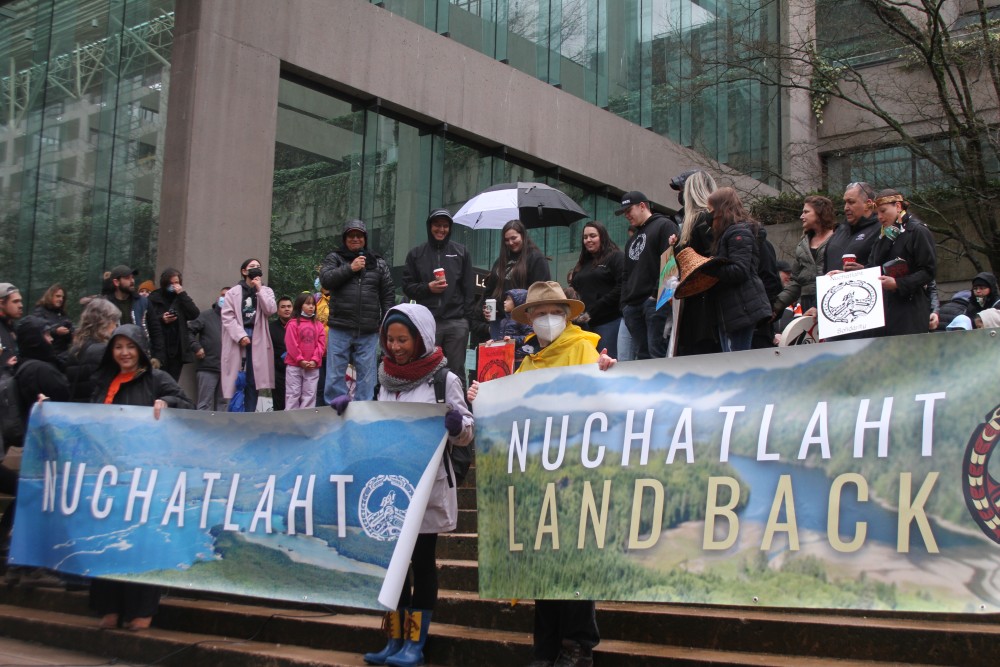
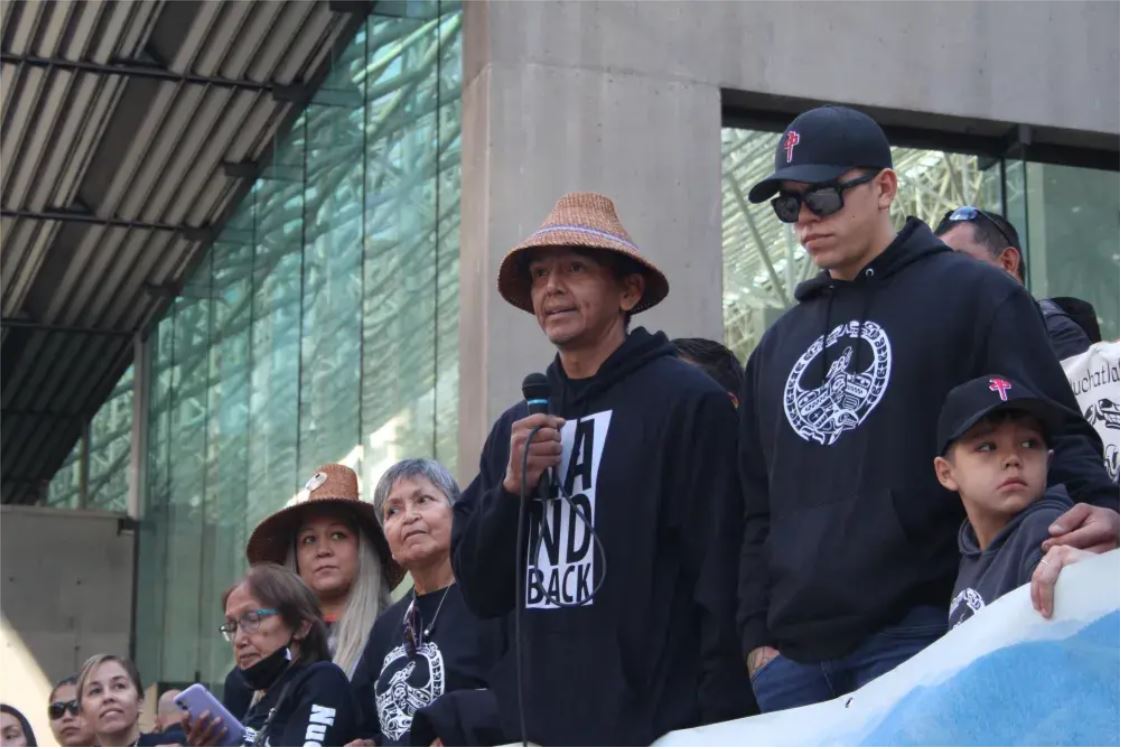
A decade-long fight to win Aboriginal title over a portion of Nootka Island is not over for Nuchatlaht First Nation.
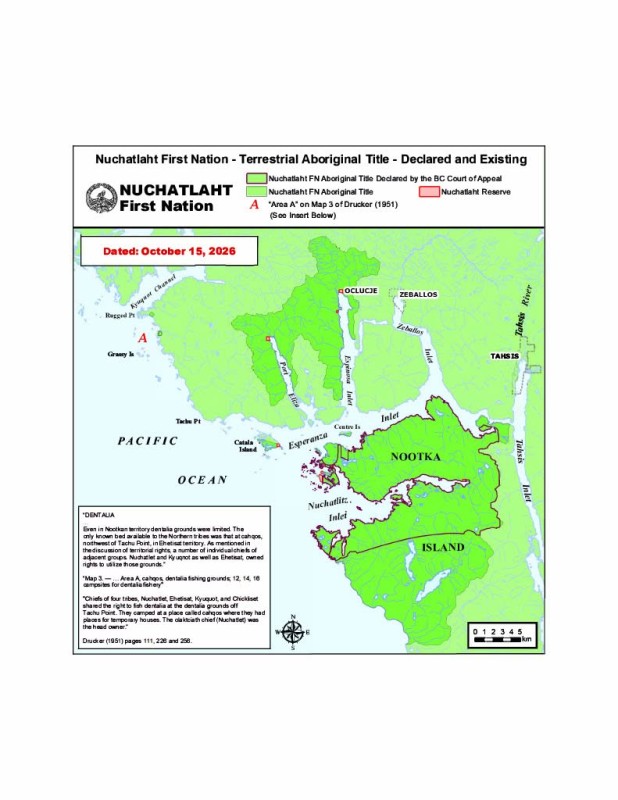
The Supreme Court of Canada announced on Oct. 15 they will hear an appeal from the Province of B.C. to determine Aboriginal title to 201-square-kilometres of land on northern Nootka Island off the west coast of Vancouver Island.
Is there evidence that proves Nuchatlaht’s historical occupation of the portions of Nootka Island they claim? Do the Nuchatlaht people continue to occupy the land? Can they prove exclusive use of the land before the British asserted sovereignty in 1846?
A panel of judges on Canada’s highest court bench will deliberate these questions and vote on a final decision regarding Nuchatlaht’s Aboriginal title claim, likely in late summer or fall 2027, although no schedule has been set yet.
“Nuchatlaht have not claimed private lands, or the territory of our neighbours. Our forests supported our culture for thousands of years. Our territories are not postage stamps. We look forward to proving our case before the highest court in the country,” said Nuchatlaht Tyee Ha’wilth (hereditary chief) Jordan Michael in a statement provided by his lawyer Jack Woodward.
The Nuchatlaht title case has been weaving its way through the court system for nearly a decade, beginning in 2017. The small Nuu-chah-nulth nation, numbering less than 200 members at that time, were frustrated at the lack of progress and the financial cost at treaty table. They turned to the court system following the success of the 2014 Tsilhqot’in decision.
In that historic case, the Supreme Court of Canada granted a declaration of Aboriginal title to over 1,700 square kilometres of land to the Tsilhqot’in Nation. Despite being considered a “semi-nomadic” tribe that did not occupy the land year-round, the court ruled in the Tsilhqot’in’s favour, citing historical use of the territory for sustenance. The court decided that title is not limited to specific, intensively occupied sites like villages, but can cover broader territories regularly used for hunting, fishing, and trapping.
In 2023, the B.C. Supreme Court found the Nuchatlaht had established title over only portions of the claimed area. A follow-up ruling released the following year identified a scattering of less than 12 square kilometres worth of sections, mostly confined to the coast. In his decision Justice Elliott Myers emphasized the “marine orientation” of Nuchatlaht culture, which relied on canoes for transportation. The judge was unsatisfied that evidence proved extensive use of the inland areas of northern Nootka Island, which is why he didn’t grant title to land above an elevation of 100 metres.
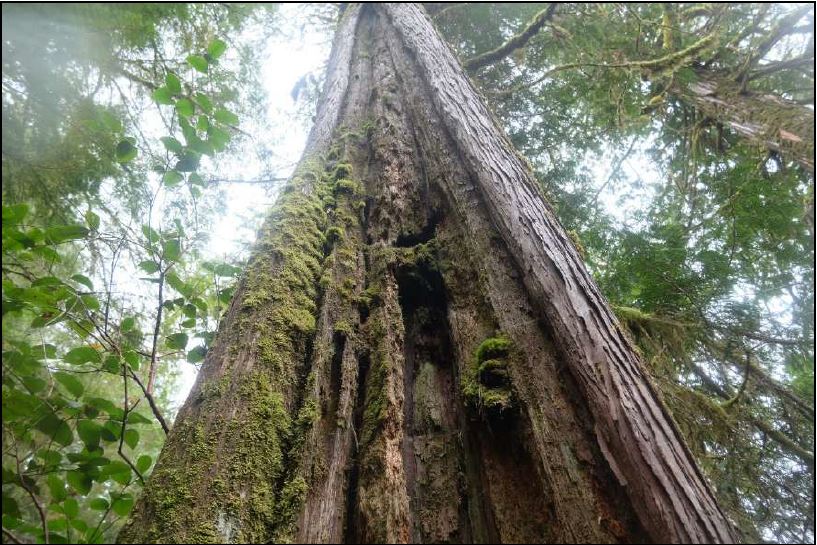
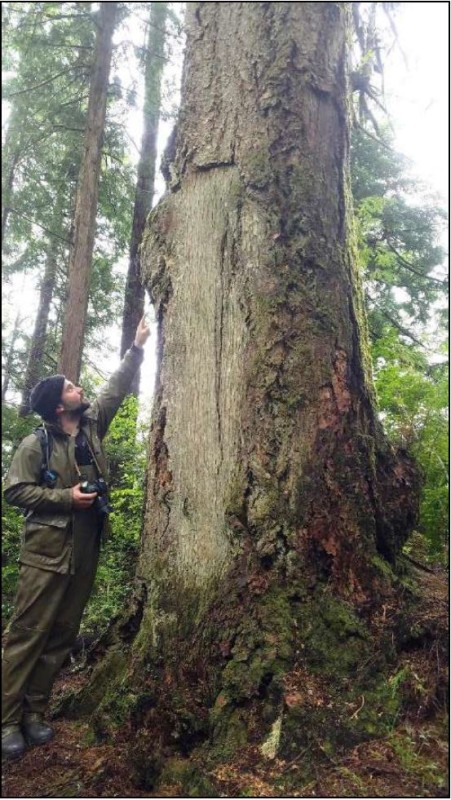
A significant part of the Nuchatlaht’s case looked to 8,386 culturally modified trees listed in the claim area. The CMTs serve as living documents of historical use that supported a way of life, relying on bark stripping and removing portions of trees for homes, tools, clothing and canoes. Some of these CMTs were formally dated, raging from 1541 to 1969, but Myers remained unconvinced of inland occupation, stating that, on average, the altered trees stood within a kilometre from the coast.
Nuchatlaht challenged the decision in the British Columbia Court of Appeal in 2025.
In April 2026, a panel of three judges in the Court of Appeal unanimously ruled in favour of the Nuchatlaht First Nation, granting them full title over their entire 201-square-kilometre land claim on Nootka Island. The B.C. Court of Appeal disagreed with Myers’ assessment of insufficient evidence showing inland occupation, citing proof that “frequent travel into the forest above 100 metres was required for the Nuchatlaht”.
Now that the case will be heard by Canada’s highest court, the province argues, if allowed to stand, “the consequences will transcend the 201 square kilometres of land claimed on Nootka Island.”
“Spillover effects on the Crown’s duty to consult and treaty negotiations will surely result,” states the Province of B.C.
Public anxiety over title cases
The Nuchatlaht case is moving through the courts at a time of heightened anxiety from some elements of the public over how Aboriginal title claims will impact private property. The issue has gained more political attention since August 2025, when the B.C. Supreme Court granted the Cowichan Tribes title over hundreds of acres in Richmond. The decision determined that the First Nation’s right to land around a historical summer fishing village was unjustly infringed upon in the late 1880s, and as a result the Cowichan and some other First Nations have a “prior and senior right” to land in an area that includes multiple privately and publicly owned lots – including some homes.
With a provincial election coming on Oct. 24, the B.C. Conservatives are pledging to “protect private property rights” that might be impacted by Aboriginal title litigation.
But unlike the Cowichan decision, the Nuchatlaht title claim excluded parcels of fee-simple private land on northern Nootka Island.
“The trial lasted only 58 days, largely because the Nuchatlaht showed restraint in only claiming unoccupied Crown land,” stated the First Nation in a press release. “This was in stark contrast to the Cowichan Tribes trial which ran for over 500 days and included claims for land held in fee simple.”
Nuchatlaht Councillor Archie Little spent his early childhood in a village on northwestern Nootka Island. He said that the B.C. Court of Appeal’s ruling in April marked “the first time I did not feel like a beggar in my own country.”
“We own something, we can do something, we can make change,” said Little in an interview with Ha-Shilth-Sa in June. “All we want to do is better.”
“This is our land,” said Nuchatlaht Councillor Mellissa Jack. “We expect Canada’s highest court will confirm that. In the meantime, we are going to keep doing the work to help our members, steward the land and drive our own successes.”
- With files from Denise Titian