With the coastal storm season well underway, summer drought conditions are expected to have a lasting environmental impact, raising concerns about undiscovered hazards and extreme weather.
A new BC Hydro report, The new reality: Emergency season is year-round, examines how conditions of extended heat, drought and wildfires that defined the summer of 2026 will continue to influence this upcoming winter. Areas with trees weakened by dry conditions, landscapes altered by wildfire, and damaged infrastructure can become more vulnerable to flooding, erosion, and landslides, according to the report.
“We’re getting more intense impacts from storms when you have those weakened trees from the summer and when those winter storms hit. We’re seeing that line between summer and fall and winter blurring,” said Whitney Deane, a BC Hydro spokesperson.
Additionally, meteorologists are tracking the development of the “super” El Niño phenomenon, which could contribute to weather volatility in the coming months.
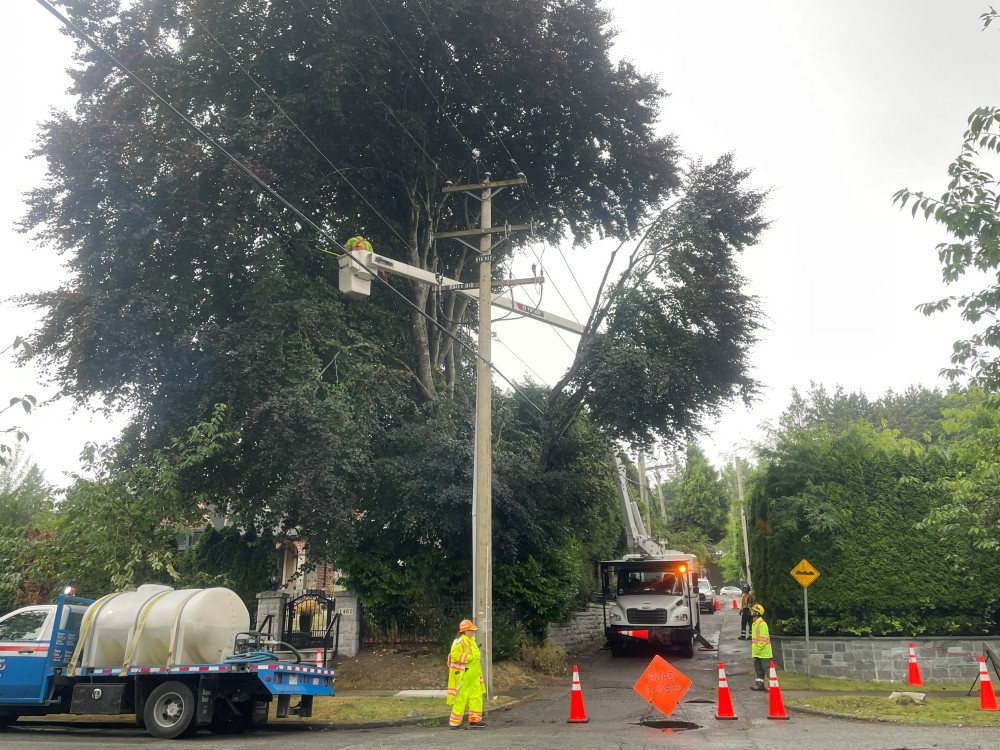
Trees and vegetation are the leading cause of storm-related power outages across British Columbia, damaged by prolonged dry conditions that might be undetectable to the naked eye.
“We have 79,000 kilometres worth of lines across the province, so we’re not able to eliminate outages and risks, but we can reduce them. We have three times more trees per kilometre of power line than any other utility in North America,” said Deane.
Windstorms and atmospheric rivers on Vancouver Island and the South Coast regularly affect electrical infrastructure, as drought-damaged trees increase the chance of branches or trees falling onto power lines during severe weather.
“With all the water that we got, the soil is less strong holding the trees. We knew there could be power outages last week and that there could still be in the coming days. So, something to watch out for,” said Steve Boily, a meteorologist from Environment and Climate Change Canada (ECCC), reflecting on the coastal storms that began Nov. 6.
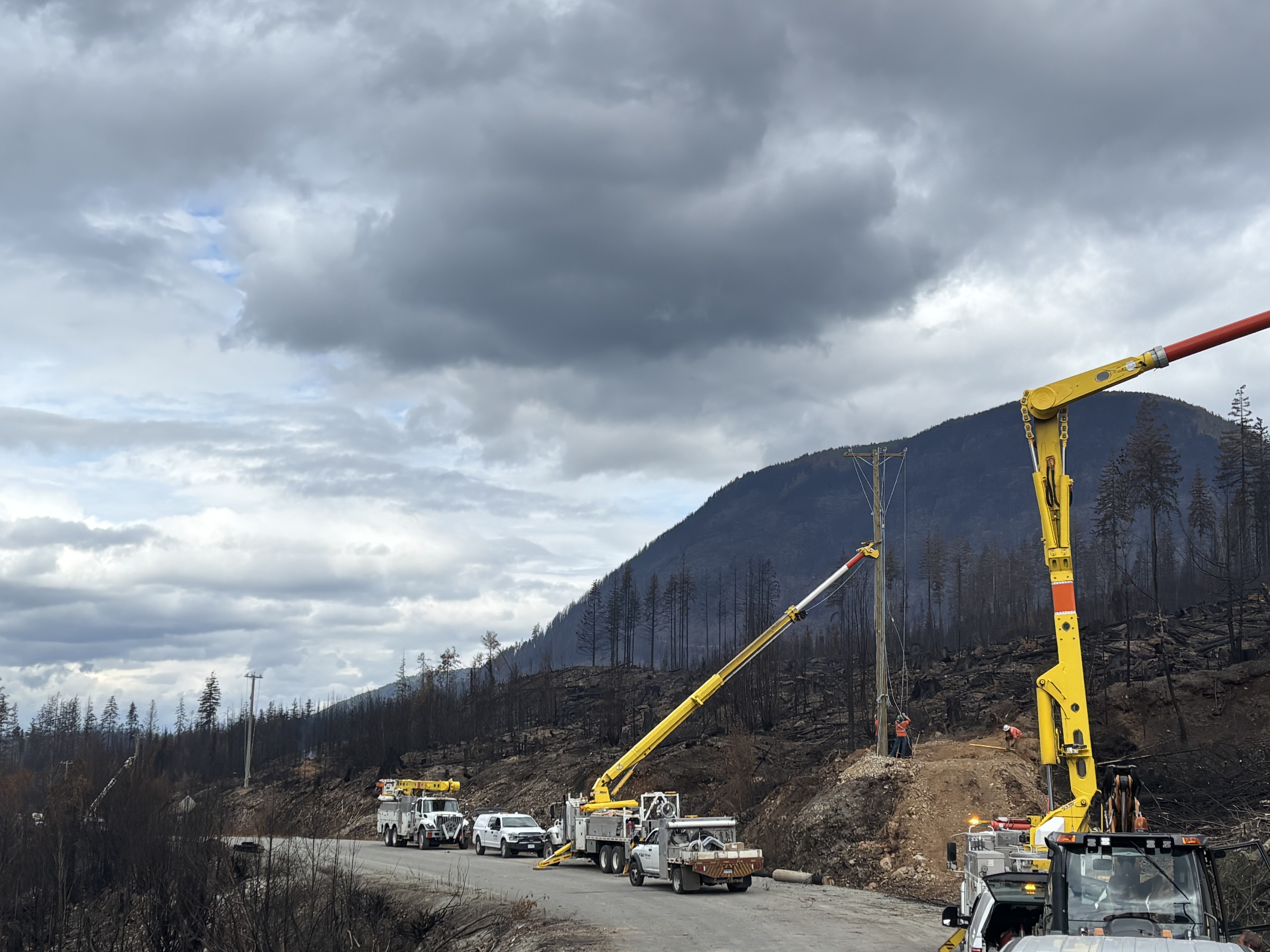
Wildfire impacts go beyond forest burning. For many Interior communities, wildfire alters landscapes by damaging vegetation and root systems that help stabilize slopes and absorb rainfall.
During heavy rain, burned areas become more vulnerable to flooding, erosion, debris flows, and landslides, creating additional risks for communities, such as blocked transportation routes and more difficult repairs to critical infrastructure like power lines.
“When it comes to remote areas, especially in the Southern Interior, you have several poles before you’re connected to another line, [which] increases the risk of something happening and having more outages,” said Deane.
Response times for remote communities can be prolonged because distribution and transmission lines may run through mountains and rocky areas that are difficult for BC Hydro crews to access. The challenging terrain may require helicopter or foot access, extending wait times or delaying response until weather conditions allow a safe flight.
On November 6 the first major storm of this fall struck the west coast of Vancouver Island, bringing heavy precipitation that flooded roads in Zeballos. Locals were forced to evacuate because the mountain slope was unstable after a previous fire damaged it.
With 23 active wildfires across the province, storm season can continue to uncover the hidden damage left by past fires.
While no seasonal forecast can predict precise weather conditions, meteorologists are watching the development of the super El Niño phenomenon, which could influence the province’s temperature, precipitation and storm activity.
El Niño is typically associated with warmer-than-normal winter temperatures, especially along the coast, but its effects vary each year.
“During an El Niño, the ocean off the coast tends to be warmer than normal. That will tend to make it a mild winter here on Vancouver Island, especially here [in Victoria], but also across Canada,” said Nathan Gillett, spokesperson from ECCC. “In terms of rainfall, it does also tend to be associated with a bit more rain than normal out here on the West Coast. And that’s something that we’re seeing in the seasonal forecast for this year as well.”
In past years, when El Niño was active during the winter, it had a warming effect, resulting in less snow accumulation on top of mountains. However, meteorologists say this is not a definitive outcome.
The current forecast for a mild winter does not mean fewer weather-related risks, as powerful storms could bring more moisture and produce heavy rain, flooding, landslides and outages that could be strengthened by the lingering effects of the summer’s drought.
As weather patterns reshape emergency seasons, BC Hydro is adapting to counter them.
In the 2026 wildfire season, BC Hydro crews replaced 1,256 power poles and 110 transformers as part of parallel work to restore damaged infrastructure across British Columbia. Many of those same crews are stationed to directly to respond to any outages during the storm season.
To mitigate the risk of falling trees, BC Hydro has tripled its annual investment to about $150 million to identify and remove vegetation that poses a risk to power lines, reducing the likelihood of power outages during severe weather.
BC Hydro relies on advanced weather forecasting and outage-prediction tools to identify high-risk areas before storms arrive.
“A big part of it is that every time a storm happens, we do a debrief; we take the lessons learned from that and then we incorporate them into the next storm event,” said Deane.
BC Hydro continues to invest in strengthening infrastructure, improving system resilience against more frequent extreme weather events, and relying on technology like smart meters that provide near-real-time information to help confirm outage locations more quickly.
The Ministry of Emergency Management and Climate Readiness (EMCR) has 24/7 staff to support local government and First Nations, maintaining flood response assets that can be deployed when needed.
Both BC Hydro and EMCR encourage British Columbians to take a few actions before severe weather strikes.
Preparation means building or refreshing 72-hour emergency kits, creating a household emergency plan so family members know how to communicate and where to go in case power goes out, staying at least 10 meters away from damaged, downed or low-hanging power lines, always calling 911 to report them and learning how the local government responds to an emergency.
“I think it’s mostly getting into the habit of having a year-round emergency preparedness approach rather than waiting until the first storm hits. So, check your emergency plan and emergency supplies on a regular basis,” said Deane.
To learn more about how to prepare for potential emergencies, visit:https://www2.gov.bc.ca/gov/content/safety/emergency-management/preparedbc