
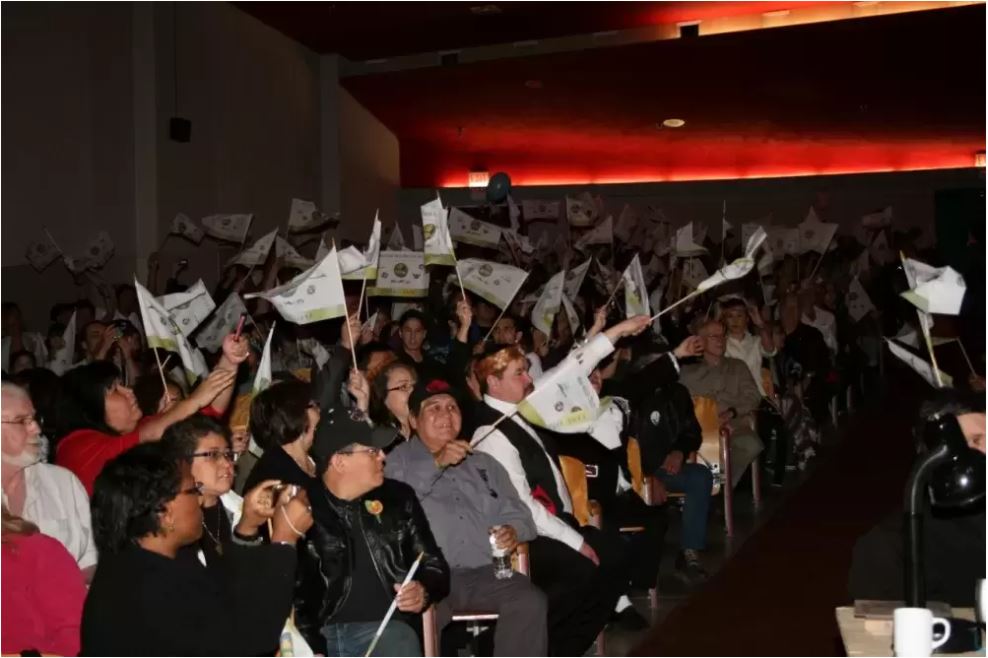
The historic Maa-nulth treaty was signed 15 years ago this April 1, one of the few modern-day formal agreements between First Nations and the federal and provincial governments that sets the tenets of self-governance.
Five Nuu-chah-nulth First Nations celebrated their 15th anniversary of the historic Maa-nulth Final Agreement signing on April 1. The signing ratified the Toquaht, Ka:’yu:’k’t’h’/ Che:k’tles7et’h’ (Kyuquot/Checkleseht), Huu-ay-aht, Yuułuʔiłʔatḥ (Ucluelet) and Uchucklesaht First Nations as autonomous First Nations belonging to one treaty, and effectively removed them from the Indian Act.
“In 15 years of treaty implementation, our governments and culture have strengthened, we are building lasting economies empowered by our treaty, a living document that will continue to evolve alongside our peoples for generations to come,” said Maal-Nulth Treaty Society President Wilfred Cootes, “hišḥukʷiš c̕awaak — everything is connected. Our work continues.”
The BC Treaty Commission (BCTC) took to Facebook to also congratulate the 15th anniversary of the Maa-nulth treaty signing, stating the commission “celebrate[s] the many successes and achievements of the Maa-nulth Treaty Partners.”
Negotiations for the Maa-nulth Treaty began around 15 years before its actual implementation, years of efforts between Nuu-chah-nulth First Nations, the Province of British Columbia, and the Government of Canada.
It wasn’t until 1982 when section 35 declared that “the existing aboriginal and treaty rights of the aboriginal peoples of Canada” was added to the Canadian Constitution, affirming treaty rights under the national law. The Maa-nulth Final Agreement was the first modern treaty recognized on Vancouver Island, 29 years after section 35 was added to the Canadian Constitution.
Since then, the treaty nations have been leading an example of what it means to be self-governing.
Reconciliation
The Maa-nulth treaty focuses on strengthening the five nations’ autonomy, self-governance, cultures, economies and communities. Each First Nation exercises their right to govern and regulate their own treaty according to their communities’ unique needs and concerns. Overarching regulations include managing land use and natural resources, defining and running community-led leadership, as well as participating in conservation goals.
The Indian Act has subjugated First Nations people to its assimilationist policies since its implementation 150 years ago on April 12, 1876. Various amendments have been made to the Indian Act since, but the effects of its legacy caused tragic consequences for many Indigenous peoples across Canada.
The Maa-Nulth treaty has since freed the five Nuu-chah-nulth nations from the restrictions of the Indian Act.
For example, the Huu-ay-aht First Nation has since implemented social services programs that help bring together separated families.
The Ucluelet First Nation built 30 affordable homes last year. The Uchucklesaht Tribe has repurposed an industrial facility to produce Thunderbird spirit water in Port Alberni, further strengthening their local economy. Ka:'yu:'k't'h'/Che:k'tles7et'h' First Nations proposed an Indigenous-owned sablefish farm in October of last year.
Road developments connecting Maggie Lake Road and Canal Main Road have also been completed in the last year, ensuring safety and fostering further community between Toquaht Nation and Uchucklesaht Tribe.