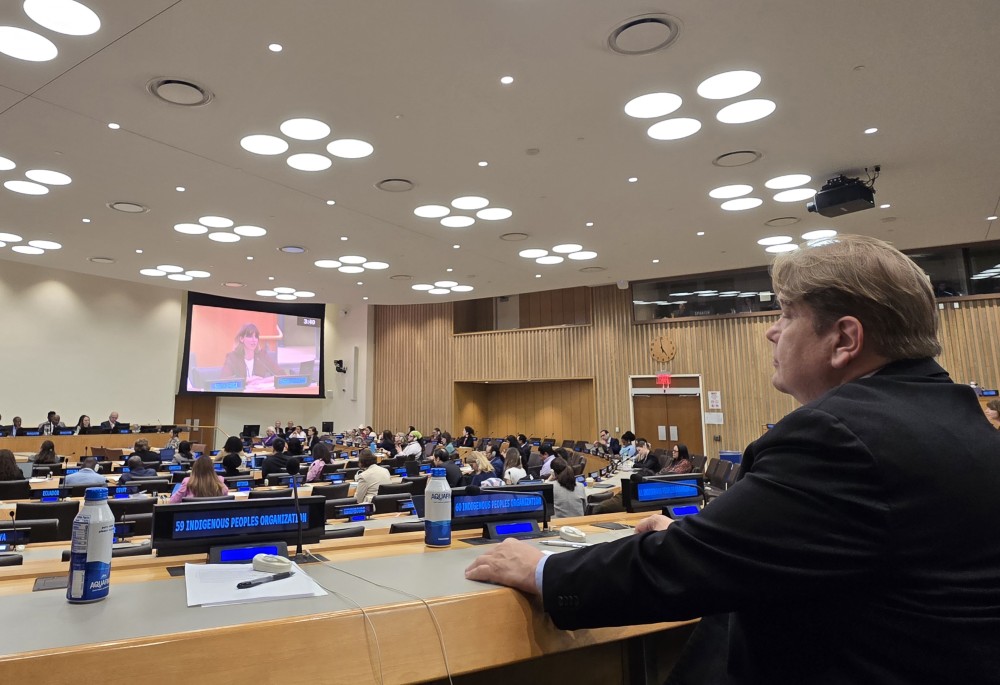
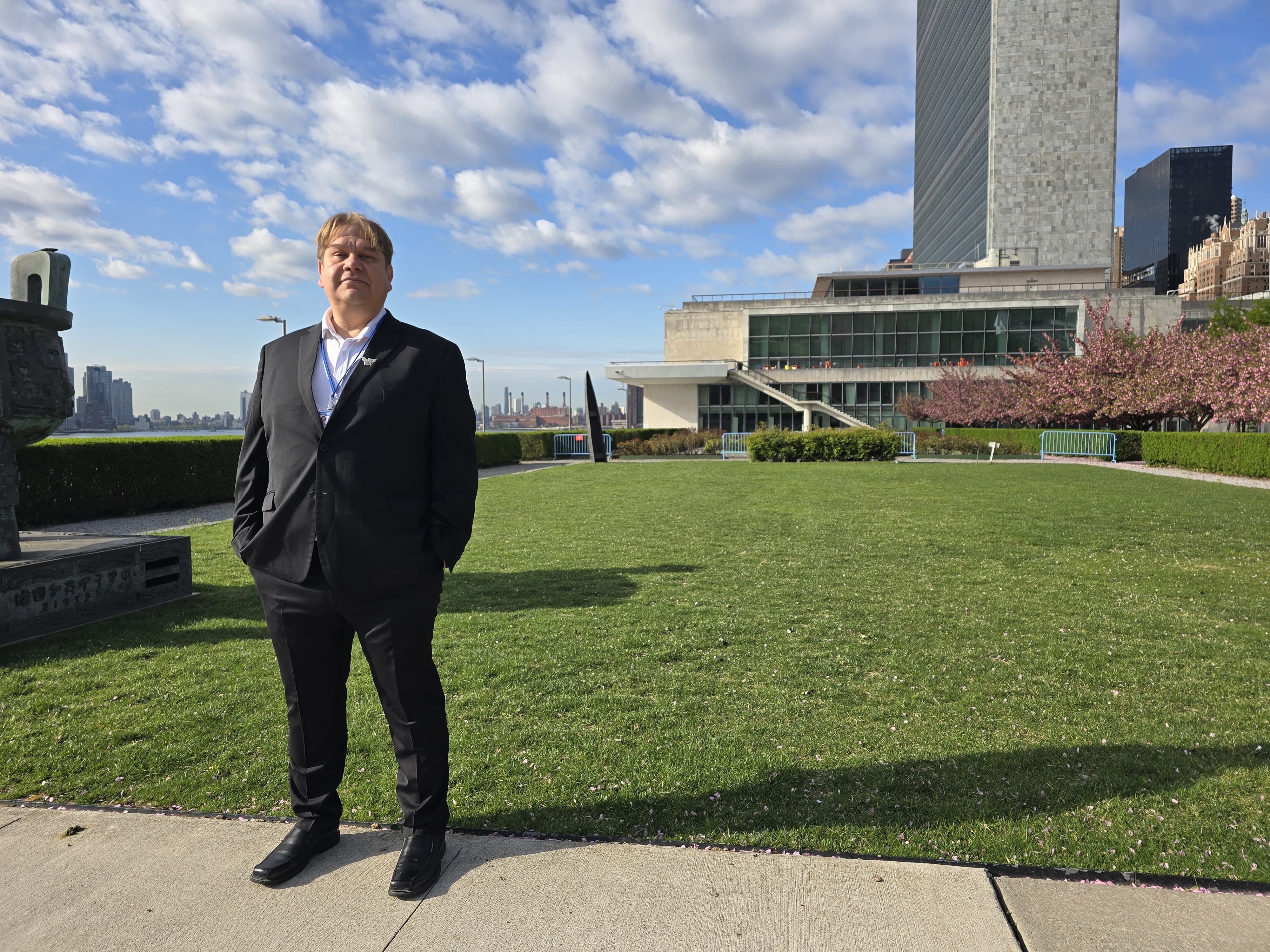
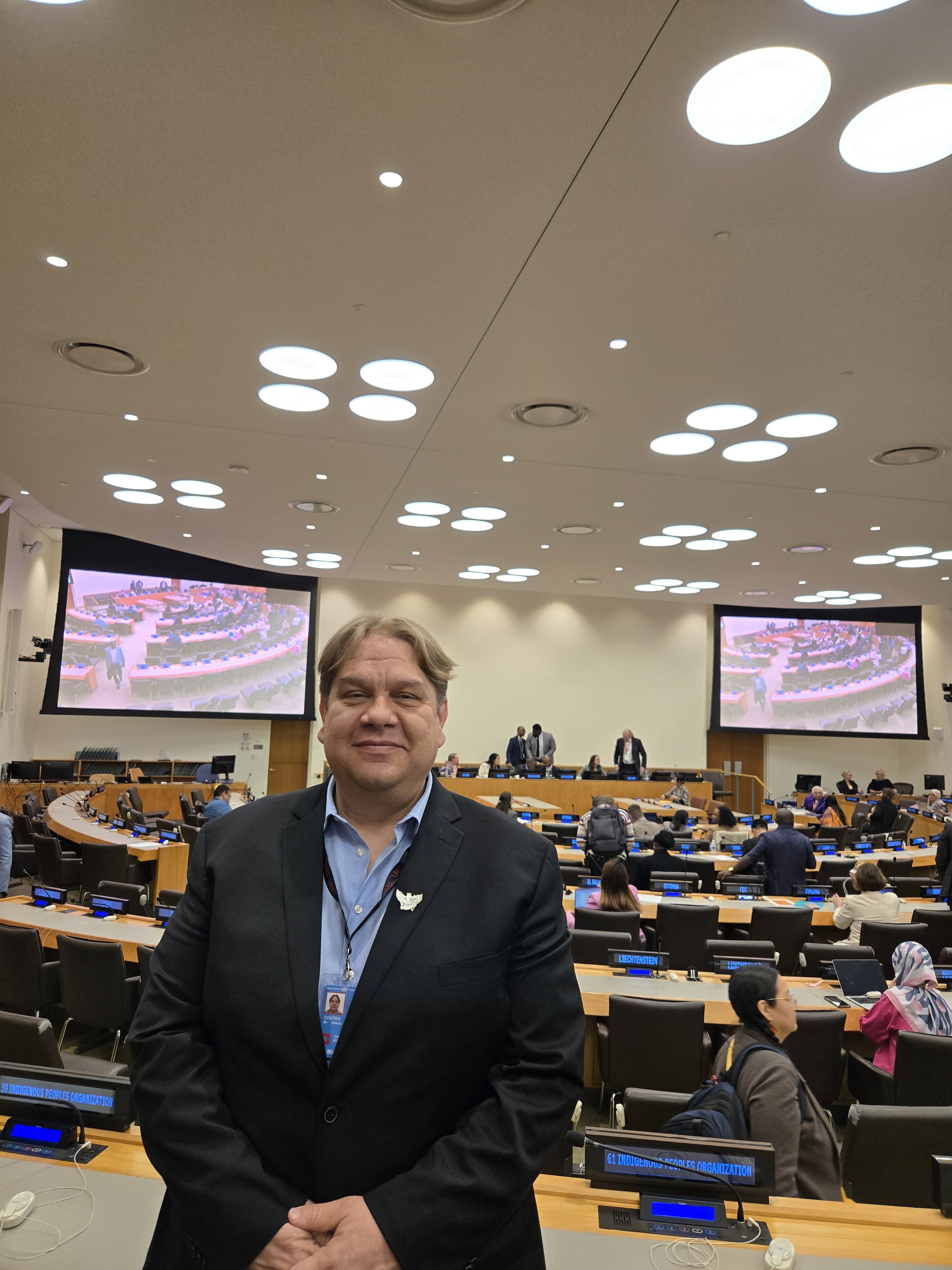
Chief Councillor Wilfred Cootes spent a few days in the ‘Big Apple’ (New York City) to talk about health with other Indigenous leaders from around the world.
Held in late April, the event was the annual United Nations Permanent Forum on Indigenous Issues (UNPFII). The Uchucklesaht elected chief spoke about enhancing Indigenous inclusion within the “mechanisms of the UN”.
The forum brings together governments and Indigenous representatives to discuss and promote the rights of over 370 million Aboriginal people globally. The annual gathering takes place over two weeks at the United Nations headquarters in New York City.
The theme this year is "Ensuring Indigenous Peoples’ health, including in the context of conflict.” But there were other side events taking place at the forum: workshops, panel presentations or roundtable discussion organized by member states, UN entities, Indigenous Peoples’ organizations, as well as other intergovernmental organizations and NGOs that have been approved for accreditation to the 25th Session of the UNPFII.
The Government of Canada sent a delegation to the forum including the Department of Crown-Indigenous Relations along with Indigenous leaders. Minister Rebecca Alty was joined by Governor General Mary Simon, First Nations, Inuit and Métis elders, Ruth Mercredi, Minnie Grey, and Alberta Malcolm, as well as reception keynote speaker Be'sha Blondin, and Senator Margo Greenwood.
As part of the Canadian delegation, Cootes noted that the forum is a strategic platform to influence global policy, build alignment, exchange knowledge with other governments from around the world and to leverage international mechanisms to support work at home.
While there, Chief Cootes said he exchanged views on ways to enhance participation of Indigenous peoples within the mechanisms of the UN, “and in particular, to support advancing a distinct approach to recognizing the status as Indigenous Peoples within the United Nation’s system,” he explained in an email.
“Being part of these international spaces is important,” said Cootes. “The conversations and decisions made here have an impact on us at home. I believe strongly that there should be nothing about us without us.”
In her opening statement at UNPFII 2026, Annalena Baerbock, president of the General Assembly said, “our responsibility today is not to speak about Indigenous Peoples…about you or for you, but rather to amplify your voices, to join your hands, embrace your leadership, and value your knowledge and culture, not only for your communities but for the benefit of all societies.”
For Canada, Minister Alty said the 25th session of the Permanent Forum reminded them that Indigenous rights and health are deeply interconnected.
“Canada will keep working, at home and with our partners around the world, to advance reconciliation as we continue to implement the United Nations Declaration on the Rights of Indigenous Peoples Act and support Indigenous–led solutions, guided by the leadership of First Nations, Inuit and Métis voices,” she stated.
Alty went to say that she discussed Indigenous Peoples' resilience in the face of climate change, and highlighted Canada's recently launched $3.8 billion A Force of Nature strategy, which emphasizes the importance of Indigenous–led conservation in protecting lands, waters, and ways of life.
“Canada also hosted an event that looked at how important the United Nations Declaration on the Rights of Indigenous Peoples is for protecting health,” Alty stated. “Canada was clear throughout: Indigenous rights are fundamental to achieving improved health outcomes and meaningful climate action, and these solutions must be Indigenous led.”
For Chief Cootes, highlights from the forum included a breakfast with Indigenous leaders from across Canada, a meeting with Ambassador Mohamed, Australia’s Ambassador for First Nations People, and a strategic dialogue chaired by Senator Margo Greenwood.
UNPFII promotes respect for and full application of the provisions of the UN Declaration on the Rights of Indigenous Peoples and follows up on the effectiveness of this declaration.
Established in 2000, the UN Permanent Forum on Indigenous Issues is a high-level advisory body to the UN Economic and Social Council. They are part of the UN’s Division for Inclusive Social Development (DISD), which is part of the UN’s Department of Economic and Social Affairs (DESA). Each part works to advance DISD’s global mandates “on groups of people that have traditionally been left behind” (Indigenous peoples, person with disabilities, older persons and youth, among others).
These groups work to eradicate poverty and reduce inequities around the world. Among their goals is to empower Indigenous peoples to strengthen their identity and determine their lives.
UNPFII’s forum serves as a platform for Indigenous Peoples to discuss issues affecting their communities. It provides a space for Indigenous Peoples to engage with member states, civil society organizations, and other Aboriginal organizations from around the world to exchange views and best practices on how to promote and protect the rights of Indigenous Peoples. Part of the purpose of these annual meetings is to bring together leaders from around the world to advance the implementation of the United Nations Declaration on the Rights of Indigenous Peoples.