The Supreme Court of Canada has created a new civil legal tool that allows survivors of intimate partner violence to sue their abusers for financial damages.
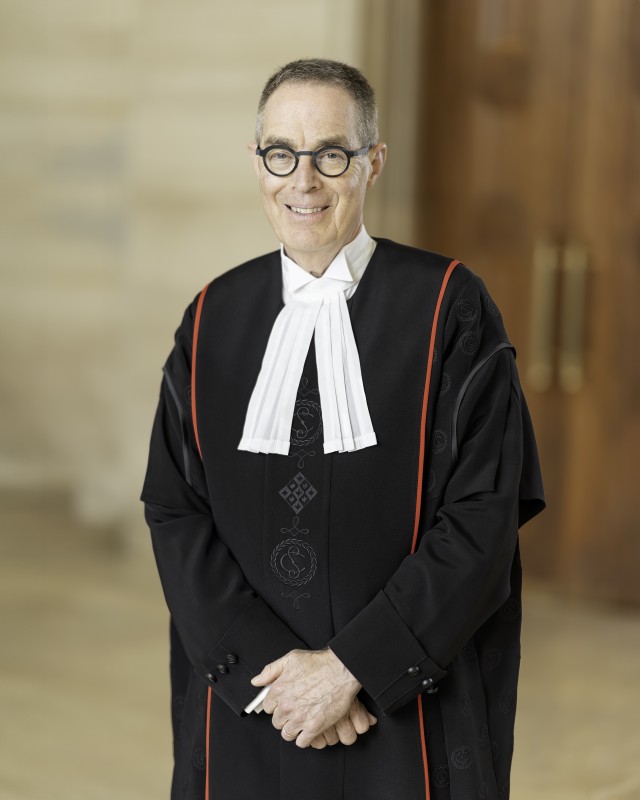
Writing for the majority of the judges, Justice Nicholas Kasirer found in a decision released on May 15, in the case of Ahluwalia v. Ahluwalia, that existing torts are not enough to address the full harm caused by intimate partner violence.
A tort is a type of civil legal claim where a person asks for damages because someone else caused them harm.
The new civil legal tool called the “tort of intimate partner violence” recognizes that this sort of harm is best understood as coercive and controlling conduct.
“Intimate partner violence is centered around coercive control. While coercive control can result from discrete incidents of physical, sexual, or emotional abuse, it often also includes methods of control that are less visible, such as economic control of the victim or monitoring day-to-day movements,” wrote Justice Kasirer in his decision.
“Abusers may impede their partner’s ability to acquire, use or retain financial resources in order to undermine their security and long-term independence,” wrote Kasirer.
Laurie Hannah, the outgoing executive director of the Westcoast Community Resources Society and the incoming housing manager for Sage Haven Society, says the new legal tool represents a “cultural shift” that will contribute to ending gender-based violence.
“It sends another clear message to society; we are having to go to this next step because there is still such a huge rate of intimate partner violence mostly being perpetrated by men,” said Hannah.
“If the consequence isn’t relatable or impactful to them, how will it change behaviour? I think having this financial tort takes it to a different realm of consequence,” she said.
The landmark ruling from Canada’s highest court follows the recent release of the BC Coroners Service report on intimate partner violence-related deaths. The coroners service found that at least 135 people in B.C. died due to intimate partner violence between 2016 and 2024, with 81 per cent of the decedents being female.
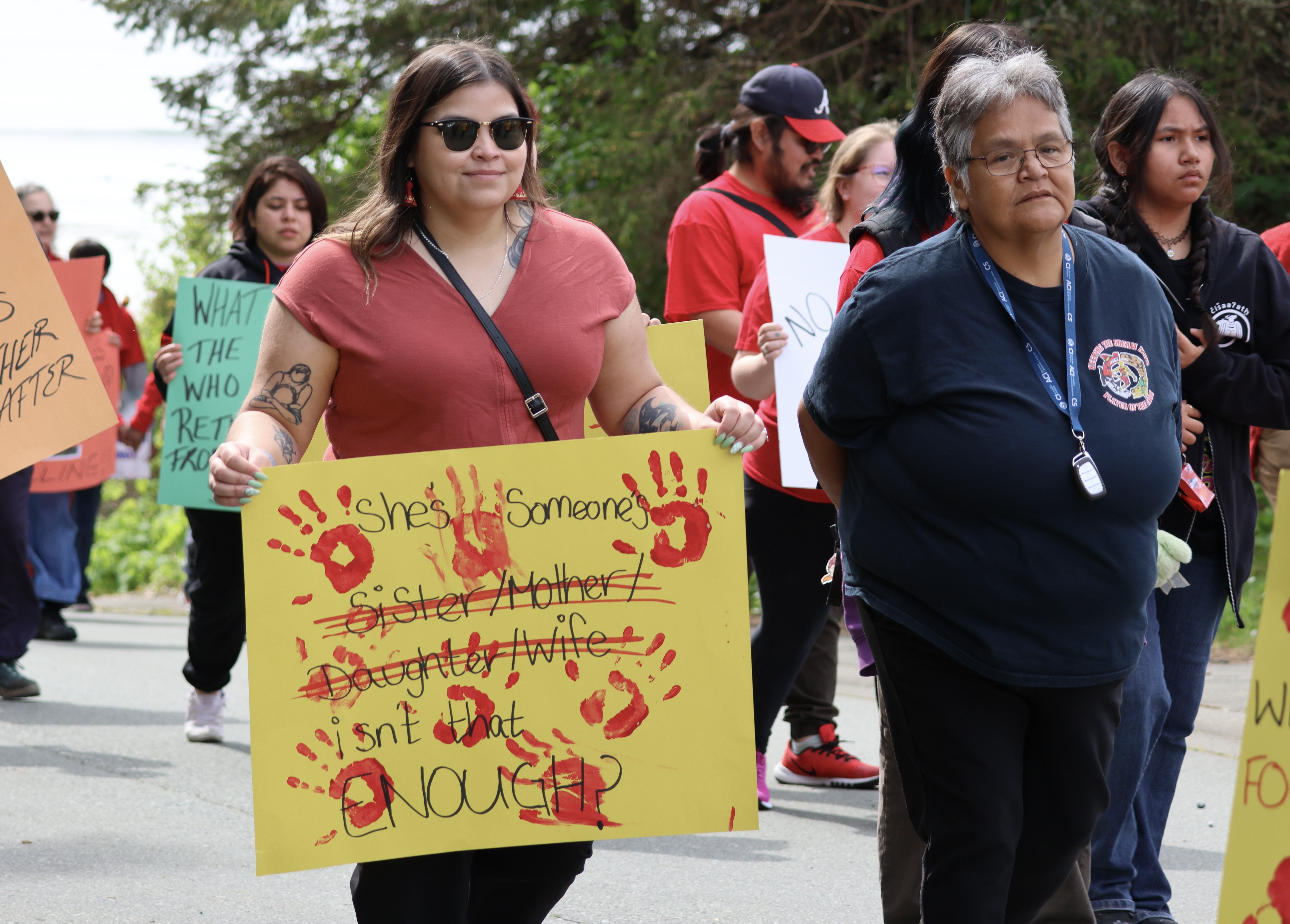
The report found that 25 per cent of the victims of intimate partner violence-related deaths identified as Indigenous, even though Aboriginal people make up just 5.9 per cent of B.C.’s population, according to Statistics Canada.
Rural, remote and northern B.C. communities experienced disproportionately higher rates of intimate partner violence-related deaths, the coroners panel report showed.
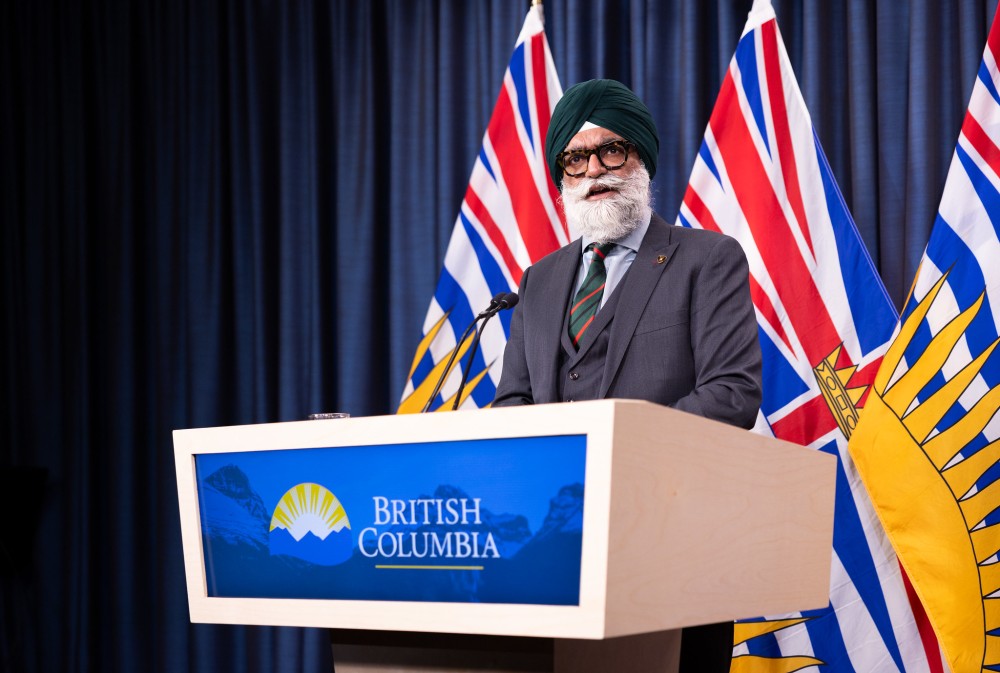
At an April 17 press event in Vancouver, B.C.'s chief coroner, Dr. Jatinder Baidwan, said intimate partner-related deaths are “overwhelmingly preventable”.
“It was found in the months and the years leading to their deaths, individuals had contact with health care, police, community support services and other public systems,” said Baidwan.
“The warning signs were present, yet response systems were uncoordinated, overburdened or unable to respond in meaningful ways that improved safety,” he said.
Baidwan called on “all ministries with responsibilities related to intimate partner violence to take collaborative, coordinated approach” and recommended a “coordinated provincial framework” to strengthen response to intimate partner-related violence and deaths.
Barriers to reporting
It has been estimated that as many as 80 per cent of Canadians who have experienced intimate partner violence do not report it to police, according to the BC Coroners Service report.
Fear of shame and stigma, ineffectiveness of police response, and lack of trust in the criminal justice system are among survivors’ most common reasons for not reporting intimate partner violence to law enforcement authorities, the report states.
Deputy Chief Andrew Chan, president of the BC Association of Chiefs of Police, stated in a news release that: “the report highlights gaps in consistency and coordination, underscoring the need for clearer expectations in decision-making and stronger alignment across agencies responsible for protecting those at risk.”
Chan re-iterated that addressing intimate partner violence requires “sustained, system-wide effort, including continued coordination across policing, justice, and social services, alongside a shared commitment to supporting victims and holding offenders accountable.”
Tofino-based artist and intuitive reader Andrea Fergusson was in an intimate relationship marred by violence. She coaches other women who are healing from unhealthy relationships.
Five years ago, Fergusson says she left her home with her four sons, carrying a backpack each, after a “near death” incident.
She said she didn’t immediately report the incident to the police, but when she did make a report, she was rerouted, and even with photographic proof and a witness (her son), she says the police didn’t take her seriously.
She said she had to reach out to the Westcoast Community Resources Society (WCRS) to advocate for her as the police “weren’t listening”.
When it comes to reporting intimate partner violence, Fergusson says there needs to be an individual or team that specializes in this sort of abuse, and that contact point needs to have trauma-informed training.
“There needs to be a clear pathway,” said Fergusson. “It got harder before it got easier and that is something that justifiably stops women from making the journey.”
“People have an idea that when you leave, that’s when it’s over, but it’s really not. A lot of times it gets more dangerous. I’ve heard a lot of stories about women who do report and don’t get listened to. It ends up making things more dangerous for them,” she said.
Under the scope of the new tort of intimate partner violence, a person must show that the wrongful conduct happened during an intimate relationship or after it ended, that the other person intentionally engaged in abusive conduct, and that the conduct amounted to coercive control when viewed in context, wrote Justice Kasirer.
Three judges opposed the courts’ decision, arguing that the existing torts were fully capable of addressing the factual matrix in the case of Ahluwalia v. Ahluwalia and provided ample basis for the trial judge’s award of damages.
Ms. Ahluwalia and Mr. Ahluwalia were married for 16 years. Throughout the marriage, Mr. Ahluwalia abused his then-wife physically and emotionally. His conduct limited her ability to make choices in the relationship, according to court documents.
Before the Court of Appeal, Mr. Ahluwalia conceded liability under the existing torts of assault, battery, and intentional infliction of emotional distress, but urged the court to overturn the trial judge’s new tort of family violence, wrote Justice Mahmud Jamal on behalf of the dissenting judges.
Mr. Ahluwalia argued that there was no proper basis in law to recognize such a new tort and objected to how the trial judge had proceeded.
Justice Kasirer wrote that the new tort should allow simple recovery for discrete instances of intimate partner violence. He said it’s a “one-stop shop tort” that allows victims of intimate partner violence to plead and argue all instances of that harm under one tort.
“Whether an individual is subjected to coercive control, or other forms of violence causing them physical or psychological harm, it is the context of the intimate partnership which justifies distinct judicial recognition and markedly higher damages than those available under the existing torts available between strangers,” wrote Justice Kasirer.
Ms. Ahluwalia was awarded $100,000 in damages for what the Supreme Court of Canada recognized as the new tort of intimate partner violence.