Will Dennis was between jobs last year and contemplating varying opportunities of what to do next.
Dennis, a member of Huu-ay-aht First Nations, couldn’t be happier with the path that he chose.
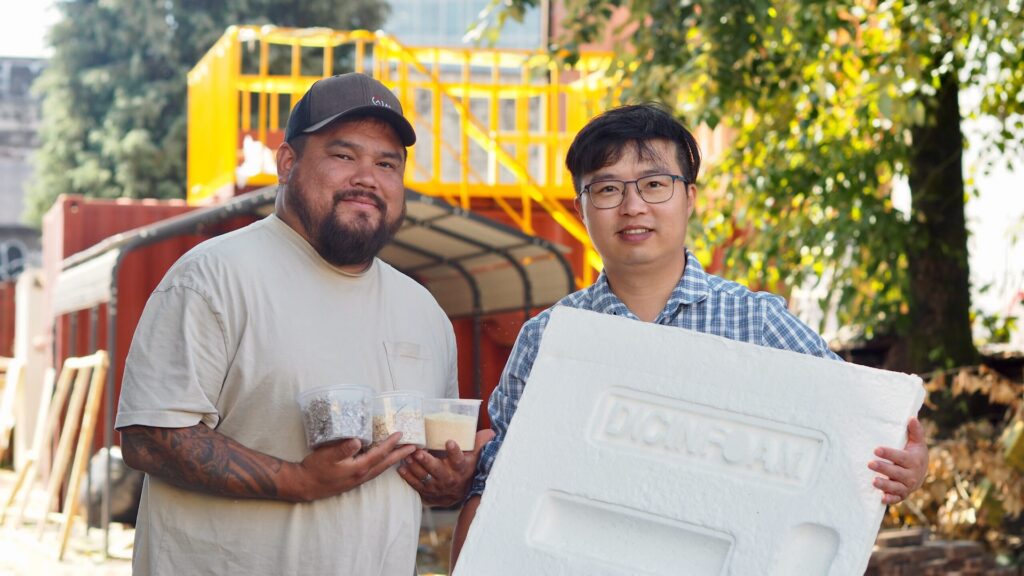
He opted to become a technician for a company called DicinFoam. The company is a subsidiary of the Yinka Dene Economic Development Limited Partnership (YLP), the business arm of Wet’suwet’en First Nation.
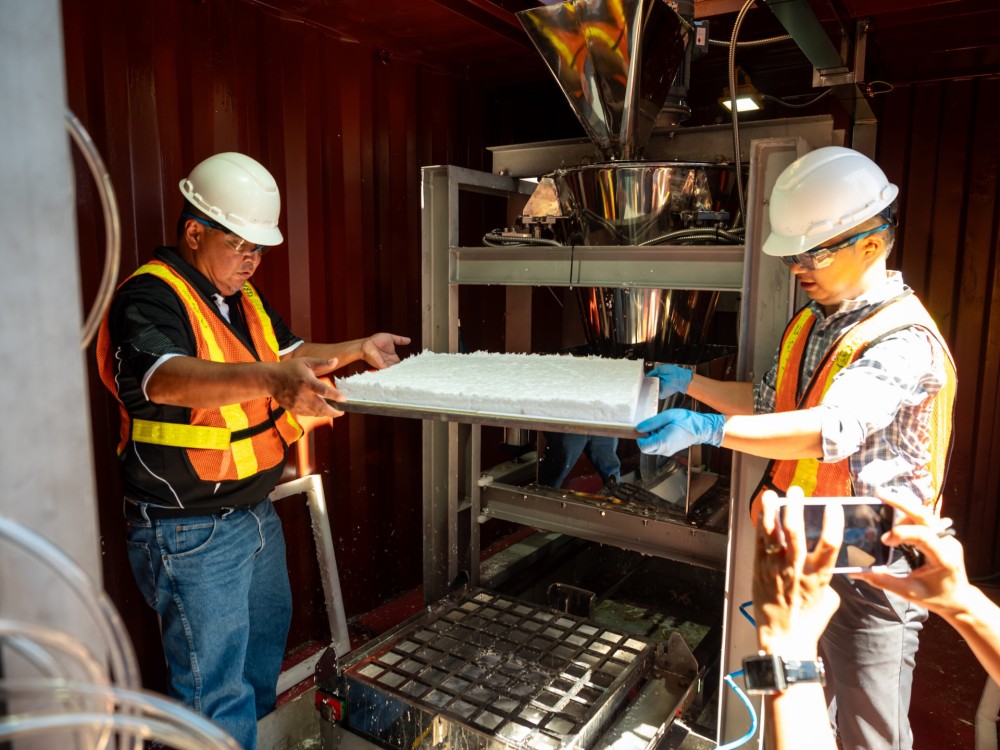
DicinFoam formed a partnership with the University of British Columbia. Though it has been operating since last year, it was only publicly announced in mid-August that the partners have been operating a pilot project plant in Vancouver turning forestry waste into biodegradable foam packaging.
This concept is intended to help lessen the massive amount of plastic and Styrofoam waste that goes to the landfill.
Dennis said he heard about the business turning wood waste into foam packaging through a relative. Dicin is the Wet’suwet’en word for wood.
“I couldn't get this out of my head,” he said. “I had to come down this path. I had to see where it led me. And it has been nothing but good things so far.”
Dennis, who is 36, was hired as DicinFoam’s lead technician in June of 2025.
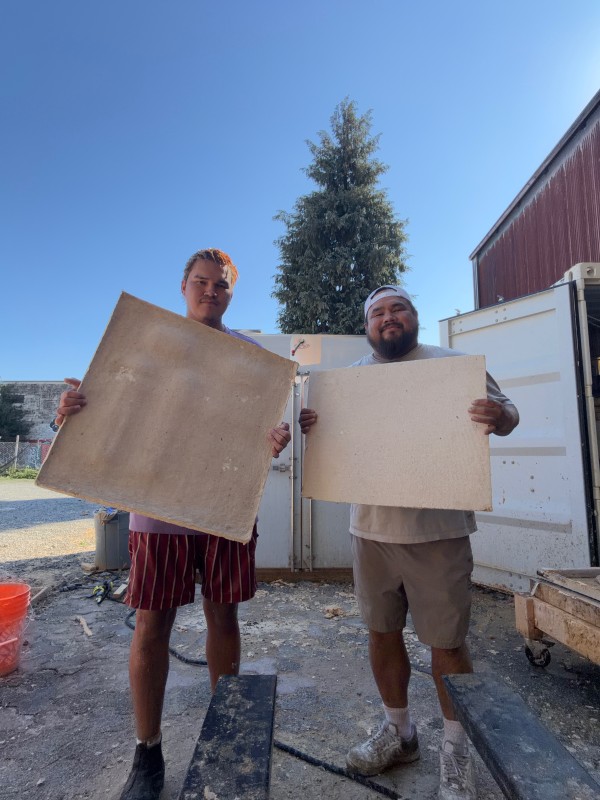
“From the very first day I came in, my job has been the hands-on guy,” he said. “I've been manufacturing this insulation by my hand, by myself, for the first eight months that I was here.”
Dennis said company officials would have frequent meetings and make minor changes in the foam. He considered this the research and development part of the process.
Dennis originally started working with the company out of a temporary plant in Richmond. This past January the business moved to a new plant in Vancouver.
And because of a heavy workload, Dennis brought in his 21-year-old brother Shawn to also work as a company technician this past February.
“I kind of needed an extra pair of hands as we were expanding,” he said. “I could probably use a couple more hands. But we're making it work, just us two right now.”
The elder Dennis is thrilled the company is making giant strides.
“In the very early days it was very unsure if this was going to be anything or not,” he said. “But we’ve got some promising signs that we are going in the right direction now.”
The plant is currently producing 150-200 kilograms of wood foam per day. Potential customers have had opportunities to test the material and evaluate its performance.
Dennis said the company officials are looking to expand and find a larger plant to work at.
“We want to have a bigger place and produce more, which is very much in our sights now,” he said.
Dennis believes it won’t be long before many are aware of DicinFoam.
“I have a lot of high expectations that it's going to explode (in popularity),” he said. “We're getting noticed. I'm very excited. I think we're going in the right direction. I didn't think over a year ago that it would get to this point this fast.”
Reg Ogen, YLP’s president and CEO, said what DicinFoam is doing is groundbreaking.
“It took a little while to get to the point where we have a pilot program,” he said. “Next, we have a few big steps here - get the numbers in order and get this thing to scale and look at doing some marketing. We've already got a few folks interested in the product.”
Ogen added none of the packaging that has been produced thus far is being sold.
“We’re still making sure that the machines are working properly,” he said. “We’ve sent some up to our community up in Burns Lake so the leadership can have a look at it and other communities who can't get down to Vancouver to have a look at the product and see and feel what it is like.”
Ogen added some potential clients have shown interest in the product and he hopes it will be available for sale soon.
“We've got a few interested few folks, but nothing that is going to really generate a whole lot of revenue,” he said. “But it’s a start.”
Ogen added company officials will be writing letters to provincial and federal officials to see what assistance, if any, they can provide.
Ogen also said DicinFoam reps have been doing numerous media interviews.
“Those are definitely going to help people know who we are we,” he said. “And they will ask more questions and potentially create some excitement and some sales.”
Ogen said some communities have expressed plenty of interest in the company and have signed non-disclosure agreements, which could lead to eventual partnerships.
He added some Nuu-chah-nulth First Nations have also had discussions with DicinFoam officials but they haven’t signed any agreements yet.
Ogen believes if successful his company will have significant impacts.
“For the packaging it will really keep the Styrofoam out of the landfills and out of our streams,” he said. “It’s bad for the fish. And also, we don't have to go and burn all of the piles and waste all of the wood. There are thousands and thousands of piles that are burnt every year because the forest industry doesn't know what to do with what they call the garbage.”
Ogen also believes if successful DicinFoam will have many spinoff effects.
“I think this will definitely create some training opportunities and employment for our people,” he said. “And not only our people but Indigenous people in general. If things work out well, then we can license this out and anybody could come in and get a program going in their community.”
Ogen said DicinFoam can be viewed as a trailblazer.
“It seems to me that we're the only ones looking at this concept,” he said. “But I think potentially it could go around the world. If it does, then it’s great for the environment and great for the people who want to clean up the waste. That’s always been our elders thinking.
“It's nice to have money and do things. But really the big thing is making sure that we have a good clean earth to live with and work with.”