Addictions, family violence, alcohol-related crime – these are issues faced by most First Nations across the nation. Most people say that the root of these problems can be traced back to colonialism, forced assimilation, trauma and the legacy of Canada’s residential school system.
Regardless of where the problems started, First Nations governments have been working for decades to fix it. In 1974, leaders of Esk’etemc First Nation, then known as Alkali Lake Indian Band, made a bold move and banned alcohol on their reserves.
Faced with what they say was a nearly 100 percent alcoholism rate in the early 1970s, the community’s social fabric was being torn to shreds with alcohol-induced violence and child neglect. Some called the place Alcohol Lake. During that time, Andy and Phylis Chelsea, community members, launched a grassroots campaign to stem the flow of alcohol coming into the community.
With the help of the RCMP, liquor deliveries to the village were halted and bootleggers were arrested. Interventions took place and culture was reintroduced. Fifty years later, the nation claims a ‘roughly 95 percent sobriety rate’.
Closer to home, there are Nuu-chah-nulth First Nations that have used similar tactics. More than 20 years ago Ahousaht First Nation banned alcohol from the reserve. Other methods to save the people were tried along the way.
Cultural leaders, with the support of the Ahousaht Ha’wiih confronted bootleggers in the village and asked them to take the offer of community-based cultural treatment or leave. Deterrents like fines and jail terms for bringing alcohol into the village were introduced, but that failed.
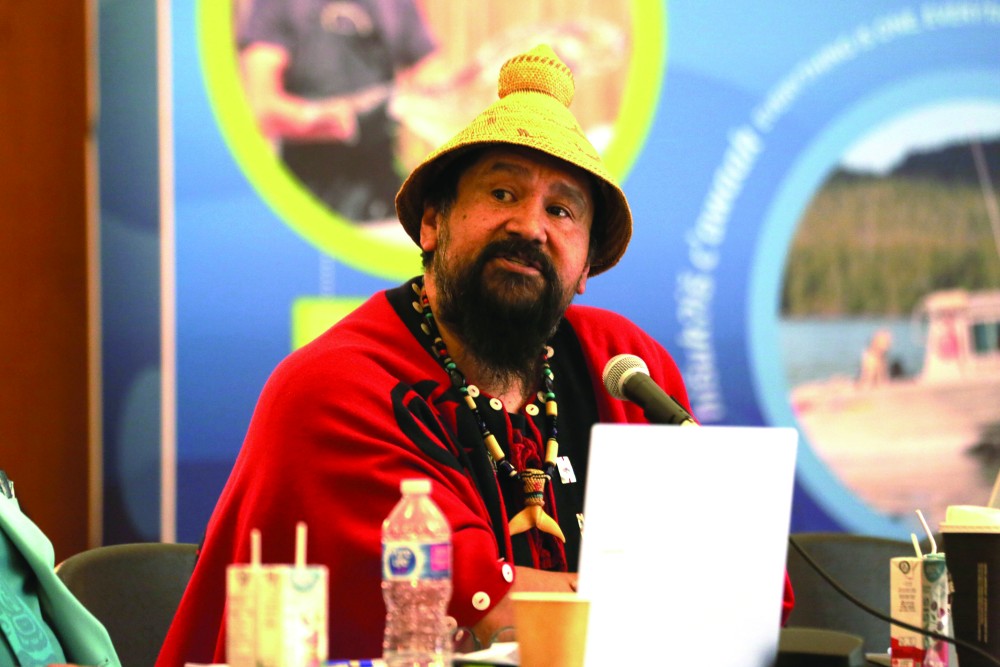
In March 2025, at a Fisheries meeting, Hasheukumiss, sitting in for his father, Tyee Ha’wilth Maquinna, spoke about their by-laws, a $1,000 fine for the first offence of bringing liquor into the community, followed by a six-month jail term for a second offence.
“It doesn’t’ matter how many bylaws we create, if we don’t have anybody to enforce it, those are for nothing,” he said back then. He went on to say that the nation wants to bring in an unbiased bylaw officer, to avoid nepotism.
Hereditary and elected leadership stressed that this illicit flow of alcohol severely fueled local addictions, violence, and tragic, preventable deaths. According to Hasheukumiss, there have been 51 of his people that were lost to alcohol from 2015 to 2025.
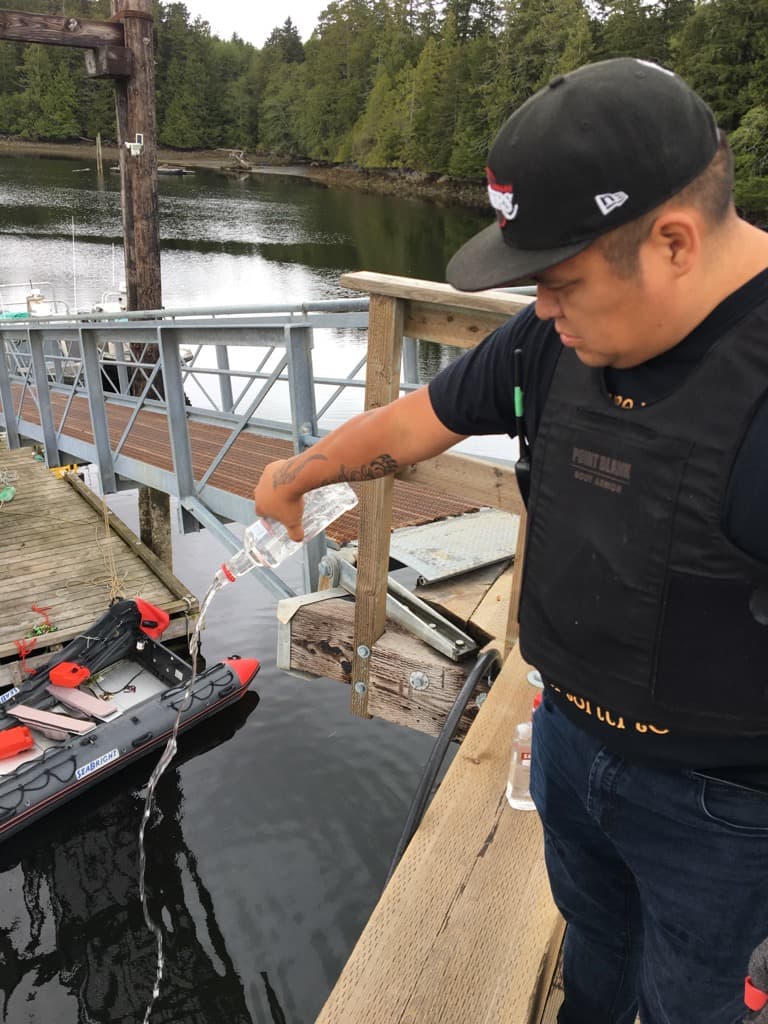
Ahousaht has been supported by both federal and provincial governments in their efforts. The RCMP, a federal policing agency has supported Ahousaht witwok in liquor searches and other efforts. In 2024 the Tofino government-run BC Liquor store imposed a limit of four bottles of liquor per customer at the request of Ahousaht Ha’wiih and the ministry.
But what happens when there is push-back on punishments related to on-reserve liquor? Are searches, banishments, and monetary fines even legal?
In other parts of Canada, band members are fighting the prohibitions and banishments that they say violate their rights as Canadians.
In a news release dated September 8, 2026, the Justice Centre for Constitutional Freedoms (JCCF) said they would be representing two plaintiffs in separate provinces. The two men are challenging their First Nations’ over what they say are warrantless searches and five-year banishments.
In Northwestern Ontario, Doug Riffel, former chief of Wabauskang First Nation (WFN) territory, was banished from his home territory in June 2025 by Band Council Resolution (BCR). Faced with criminal charges in 2024, Riffel’s banishment was said to be based on public safety. But the criminal charges were withdrawn in March 2026. According to the Justice Centre, Mr. Riffel has no criminal record.
“Lawyers funded by the Justice Centre previously sent a warning letter to WFN in February 2026, stating that the banishment was “unlawful and unconstitutional” and requesting that it be rescinded immediately,” wrote the JCCF. In that letter, the JCCF asserts that, “a First Nation band council cannot simply banish band members at will,” and that a BCR, without a supporting bylaw enacted under the Indian Act, “does not carry the authority of the Indian Act, and is unenforceable.”
In other cases, the JCCF have issued warning letters to First Nations in Alberta and Saskatchewan. The legal warning letters concern five-year banishments of members – penalties for breaking band by-laws. One man faced a five-year ban after contraband was discovered during a roadside check.
While the warning letters had the desired effect, and the banishments were rescinded, the legal challenge against the First Nations that issued the banishments remains. “The four new warning letters argue that these bylaws exceed the authority delegated under the Indian Act, deny affected individuals’ basic procedural fairness, and violate multiple protections guaranteed by the Canadian Charter of Rights and Freedoms,” stated JCCF.
At issue are the penalties some First Nations are imposing and whether they violate the member’s rights as Canadians.
Alberta’s Little Red River Cree Nation has a by-law, for example, according to JCCF, related to the sale of illegal drugs or bootleg alcohol on reserve. Contravention of the by-law could mean a five-year banishment for the member. “The By-law does not provide any prior notice or a chance to be heard prior to Council making an initial banishment or removal decision.”
Rob Louie, President of the Band Members Alliance and Advocacy Association of Canada (BMAAAC), is supporting the JCCF in filing of their four Federal Court applications challenging banishment, search, and detention provisions in bylaws enacted by four indigenous governments in Alberta and Manitoba.
BMAAAC is a national organization that helps indigenous people seek transparency, accountability, and justice from their indigenous governments. Its mandate is to help band members get access to justice.
The JCCF is a registered charitable organization that defends the constitutional rights and freedoms of all Canadians through litigation and education.
“Historically, acts akin to treason and extraordinary acts of violence and sex crimes would result in banishment from a First Nation community. Banishment was a last resort. Today, I have seen band councils use banishment and eviction as the first and only option to address interpersonal conflict,” said Louie, who is a lawyer and member of the Lower Kootenay Indian Band.
“The power banishment gives band councils, without any recourse for their members, results in an enormous power imbalance,” he said.
In early September 2026, the Justice Centre for Constitutional Freedoms filed four lawsuits in Calgary Alberta challenging banishment, search and detention provision in bylaws enacted by four indigenous governments in Alberta and Manitoba.
“All four challenged bylaws regulate alcohol, illegal drugs, or other intoxicants on reserve lands,” said the JCCF in a statement. Punishments for the bylaws include fines, banishment, and imprisonment.
According to the JCCF, the challenged provisions of the bylaws exceed the authority delegated under the Indian Act and deny procedural fairness.
The Federal Court applications concern the Little Red River Cree Nation, Fisher River Cree Nation, Roseau River Anishinabe First Nation and the Little Grand Rapids First Nation.
In their statement, the JCCF quotes Constitutional lawyer Phil Dunlop. “Band councils have every right to address substance abuse, but they must do so within the law. They cannot set up roadside checkpoints and search people and vehicles indiscriminately, authorize warrantless searches of homes and offices, or banish their own members without adequate procedural and constitutional safeguards.”
“I am really hoping to see meaningful change respectful of members' rights on this issue, and I think public information and discussion of this issue among First Nation communities will be centrally important to change,” said Marty Moore, Legal Director of Charter Advocates of Canada.
According to Moore, the First Nations respondents will have 10 days to file a notice of appearance after being served if it wishes to contest the application. “Service was accomplished last week, and at least one First Nation has filed an appearance,” he wrote in an email to Ha-Shilth-Sa.