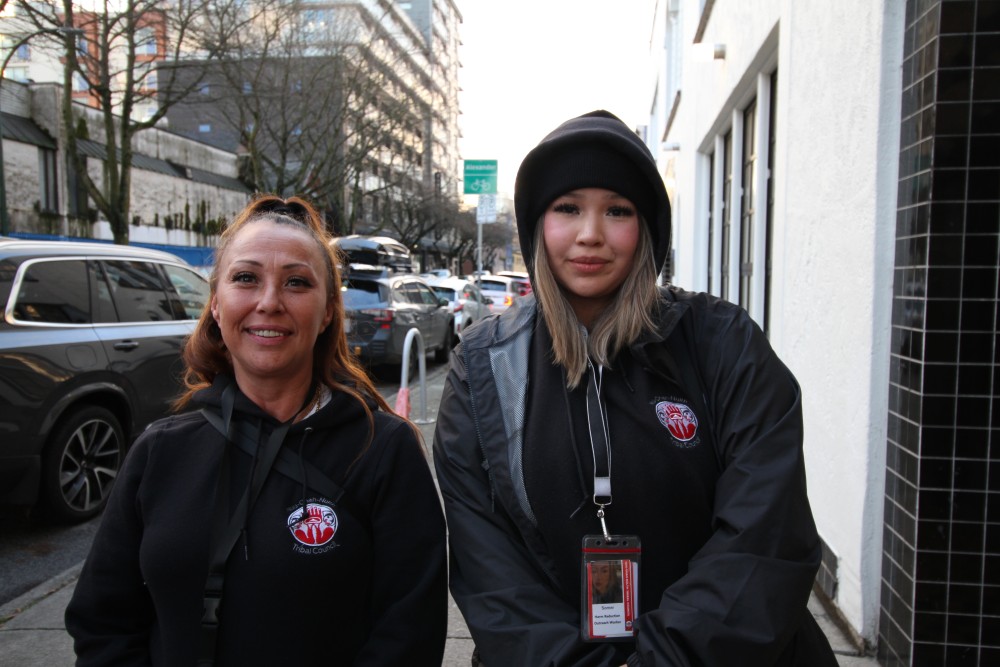
Charity Lucas and Somer McCarthy were glad that this year’s Nuu-chah-nulth urban gathering was held in Vancouver’s Downtown Eastside.
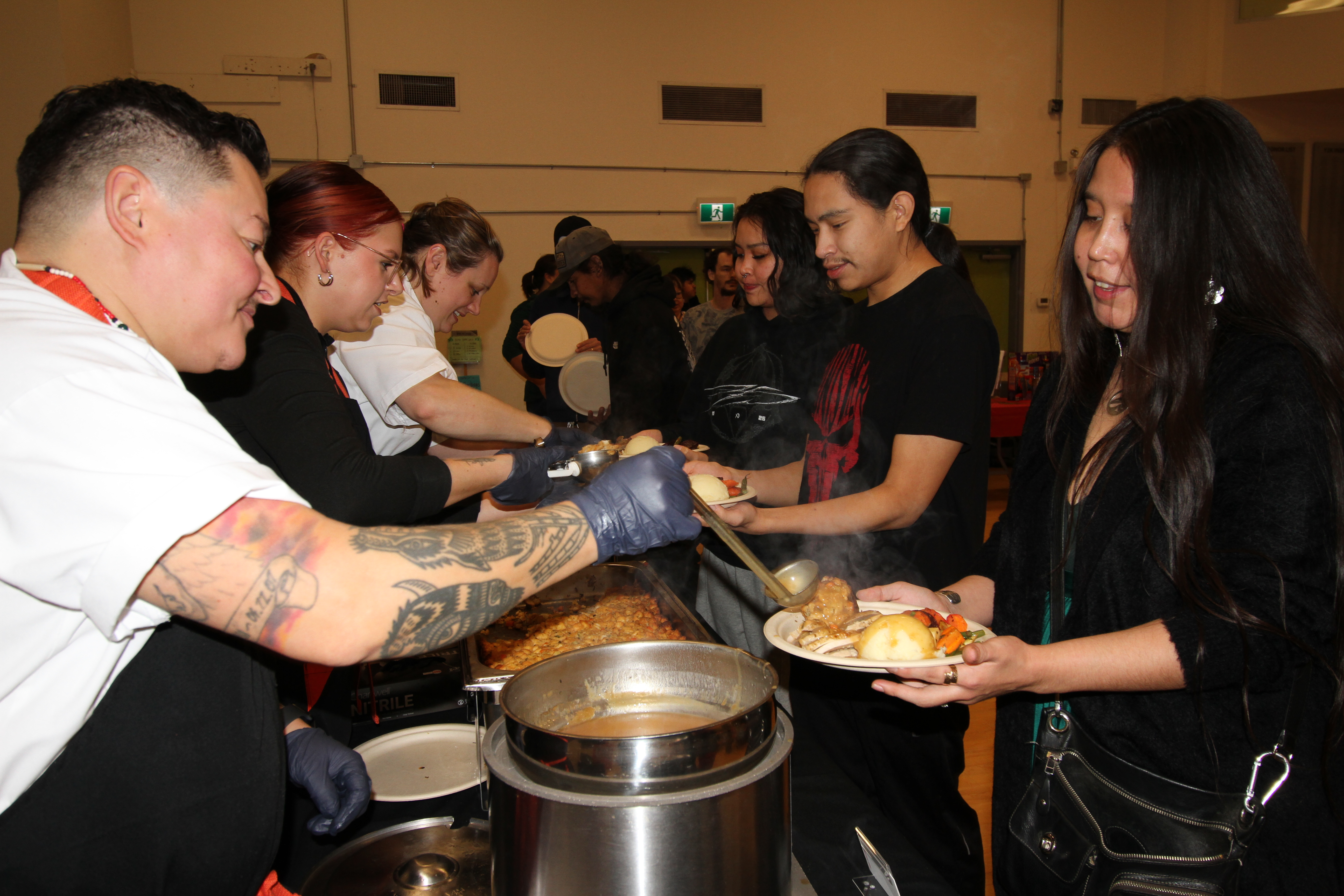
Put on by the Nuu-chah-nulth Tribal Council at the Japanese Language School on 487 Alexander St., the annual gathering took place on Nov. 26 in the centre of one of Canada’s poorest urban neighbourhoods. It was a short walk from Lucas and McCarthy’s office, where they serve as outreach workers with the team from the All Nations Outreach Society. But more importantly the venue offered a welcoming pre-Christmas season turkey dinner to those who sleep on the surrounding streets.
As coastal Nuu-chah-nulth communities faced evacuations and states of emergency due to a month-long torrent of rain, Vancouver’s streets were also battered with precipitation. The season has brough a grim reality for the outreach workers each morning, as they encounter the many men who spend the night outside.
“They try to find the dryest corner anywhere,” said McCarthy. “We see them sleeping in the rain.”
“We’re coming out every morning and our clients are absolutely soaking wet,” added Lucas. “On rainy days the first thing we do is get some rain ponchos, hand warmers, emergency blankets.”
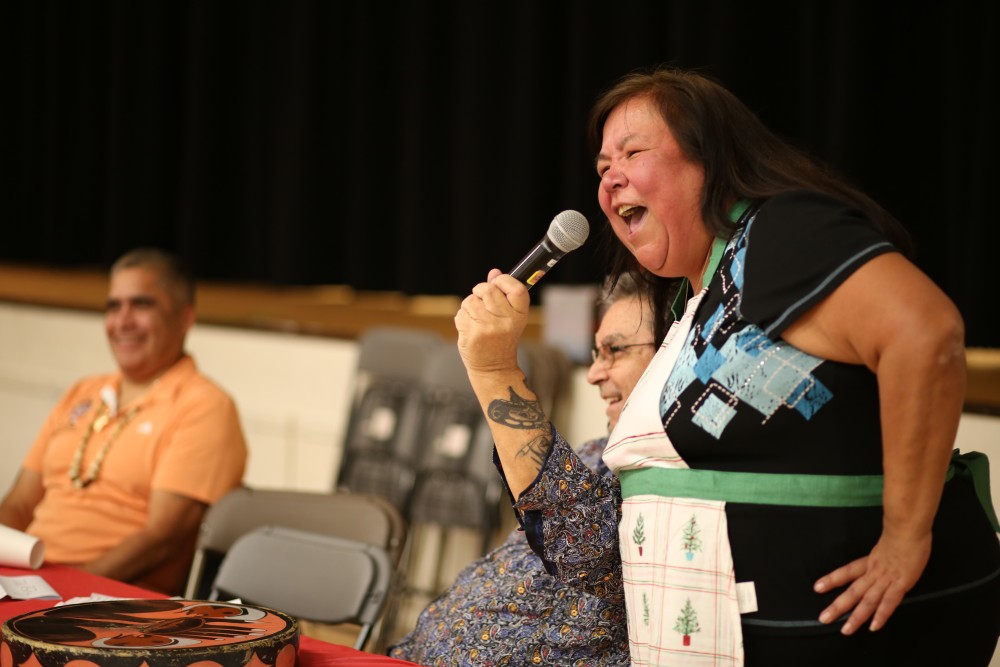
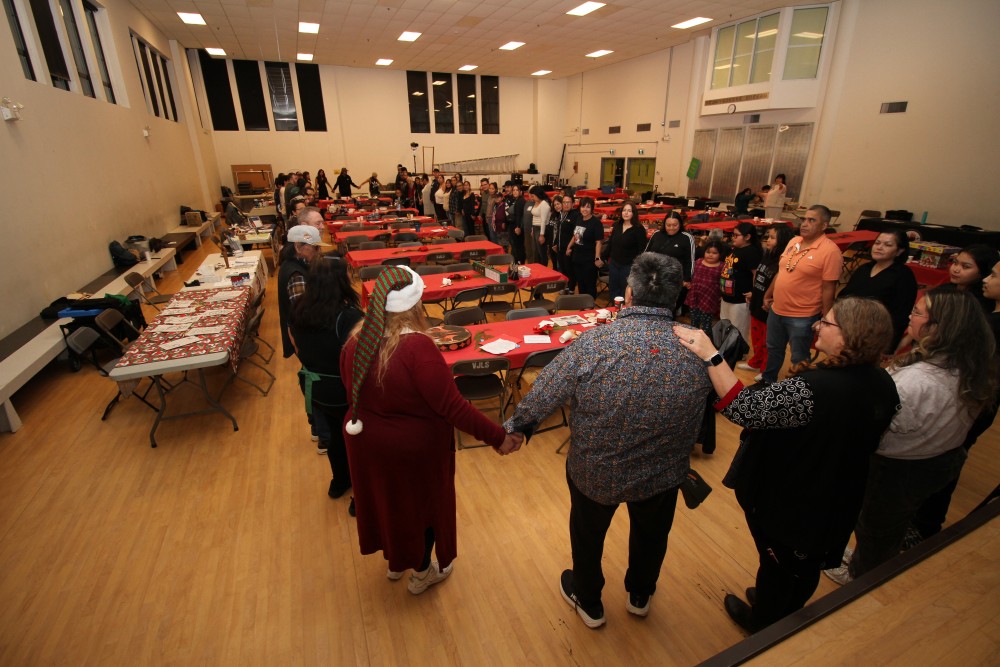
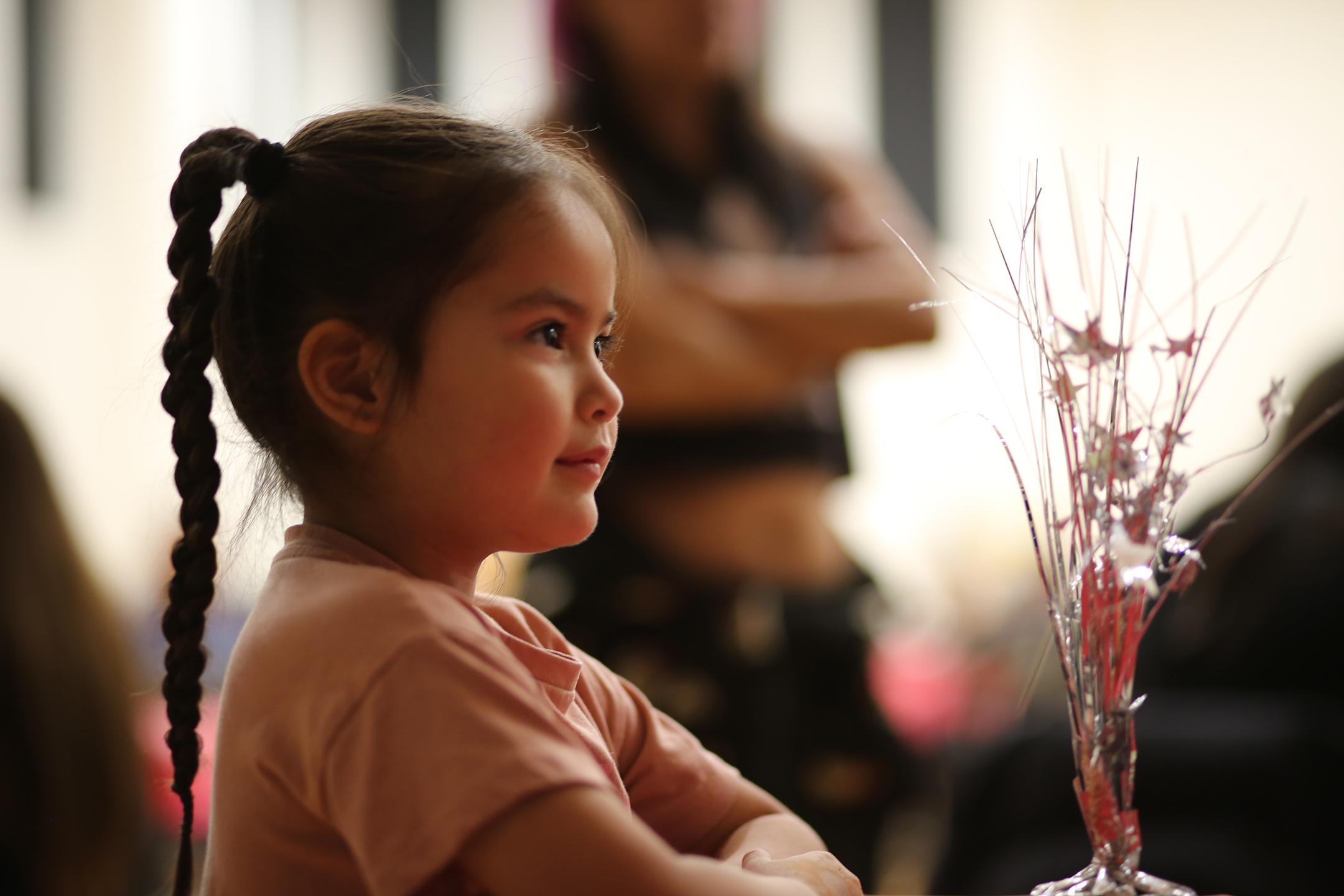
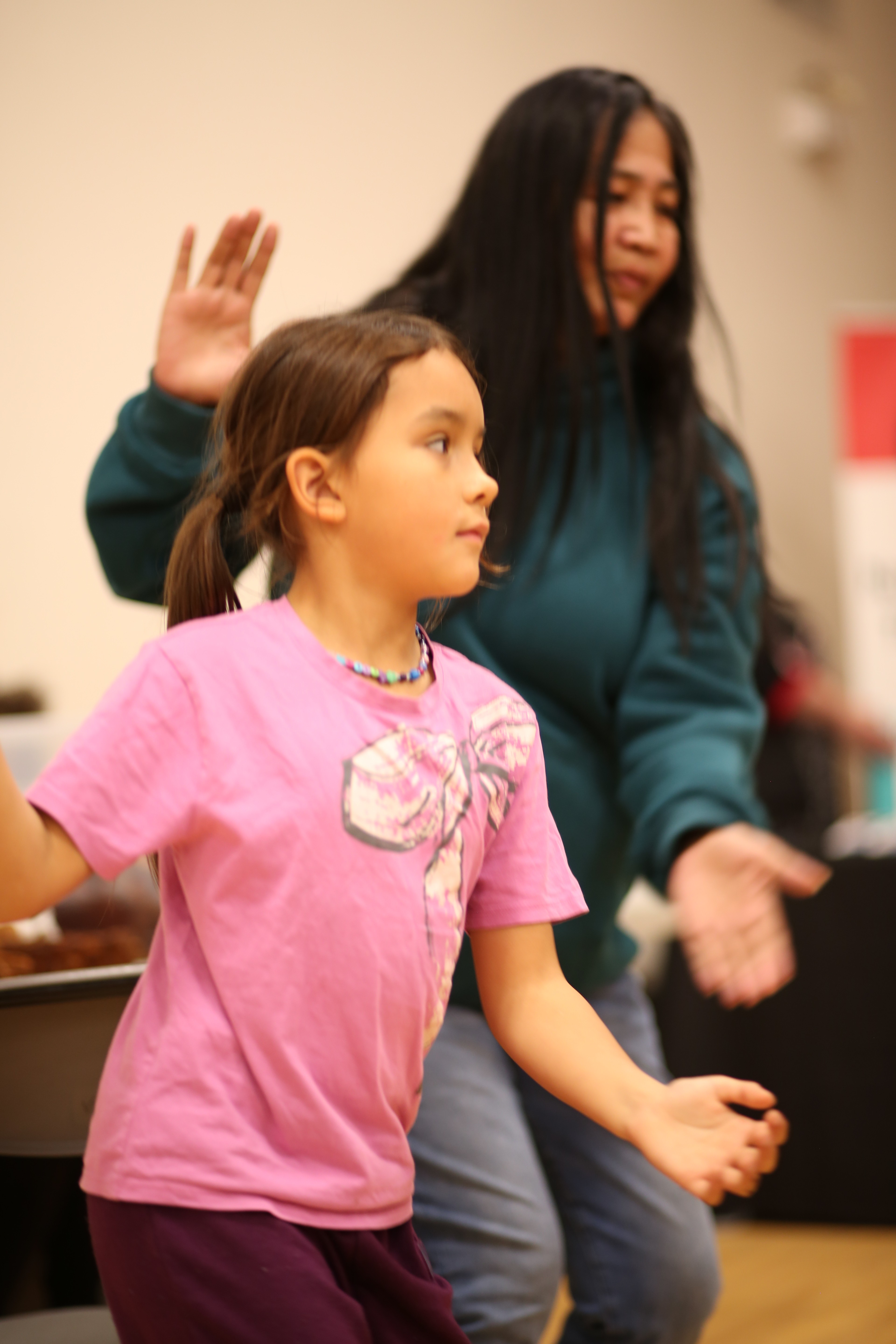
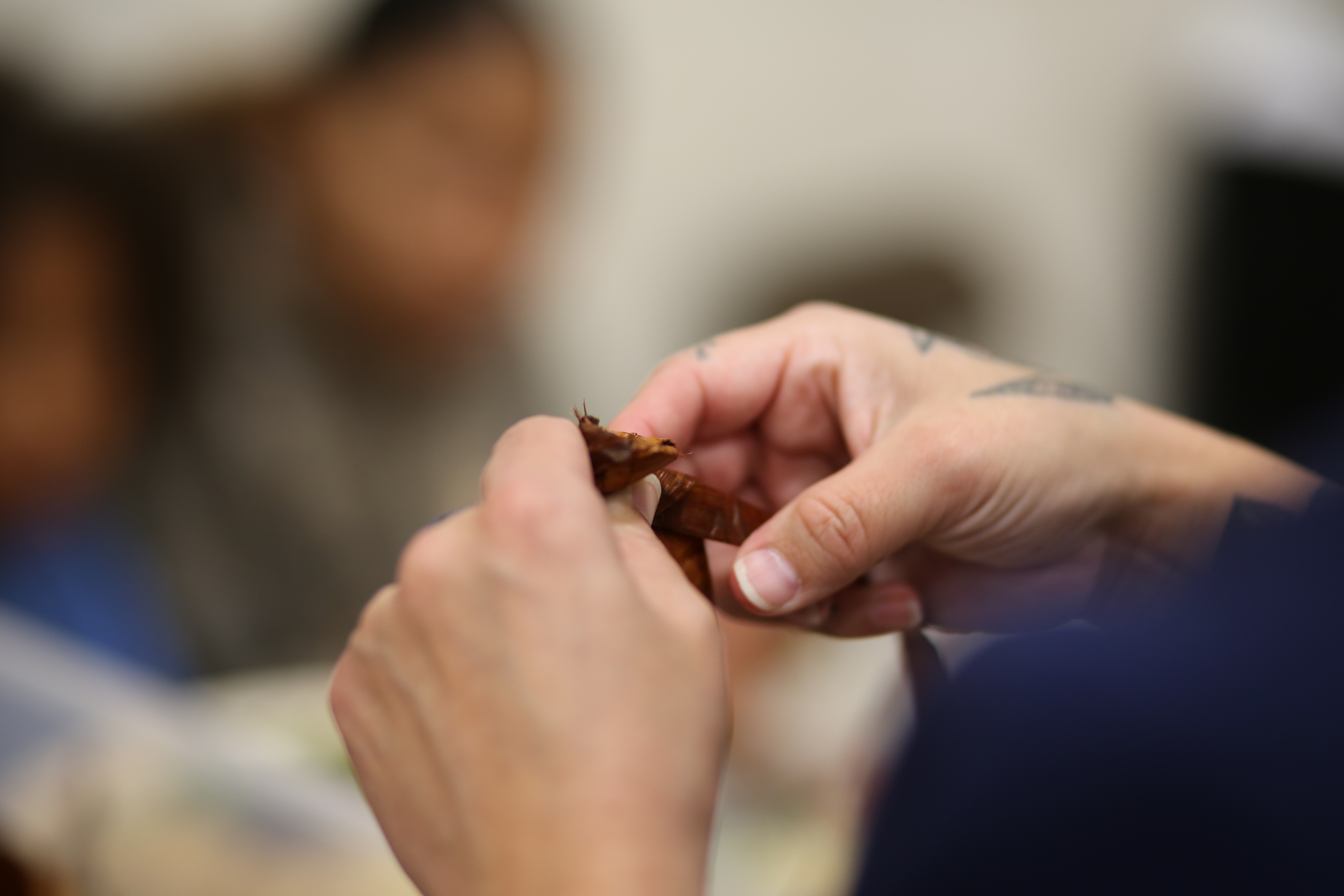
As part of the annual effort to bring a hearty meal, traditional culture and family connection to those who live away from their home territory, the Vancouver event was the second of five urban gatherings put on by the Nuu-chah-nulth Tribal Council as the Christmas season approaches. Several dozen filled the large hall on Alexander Street, as people were treated to cedar weaving, henna tattoos, a photo booth and private cedar brushing. Tables were available from the NTC Health Benefits and post secondary education support departments, with a team gathering surveys for Hishuk-ish tsawalk Healthy Children, Healthy Futures, a long-form research project that delves into the wellness of Nuu-chah-nulth communities.
A table was even available from the Salmon Parks Project, an initiative from the Mowachaht/Muchalaht First Nation that aims to have 66,595 hectares, comprising approximately 20 per cent of its land territory, under a protected designation by 2030. The initiative strictly limits industrial activity within the Salmon Parks – particularly old growth logging – with hopes of eventually allowing nature to heal itself to the point that salmon runs rebound from the headwaters to the ocean.
This was all documented by a camera crew from CBC, thanks to a tip from Hupacasath journalist Wawmeesh Hamilton, who works as an Indigenous affairs reporter for the national broadcaster.
Just over a year ago the NTC took a step to broaden its reach outside of Nuu-chah-nulth territory by creating the two outreach positions on the Downtown Eastside to work with the All Nations Outreach Society. With just about all of the tribal council’s staff based on Vancouver Island, it was a novel recognition of the many Nuu-chah-nulth-aht who are struggling from day to day in Vancouver. McCarthy recalls an elder she met over the last year who has been living in the Downtown Eastside for the last 17 years.
“He overheard me talking, he said, ‘Oh, you’re Nuu-chah-nulth? I am too!’. He instantly asked me, ‘Who’s your mom, who’s your grandma?’,” recalled McCarthy. “He said, ‘Wow, they came for us!’.”
In the late summer McCarthy brought him back to the Ucluelet area to enjoy Yuułuʔiłʔatḥ Days, an annual gathering put on by the Yuułuʔiłʔatḥ First Nation.
“That was the first time he set foot in his own territory in 15 years,” said McCarthy. “Being able to bring him back to the reserve that he grew up on, it opened his eyes. He couldn’t express how thankful he was to have that opportunity…He didn’t know that his nation offers this to urban citizens that go back home.”
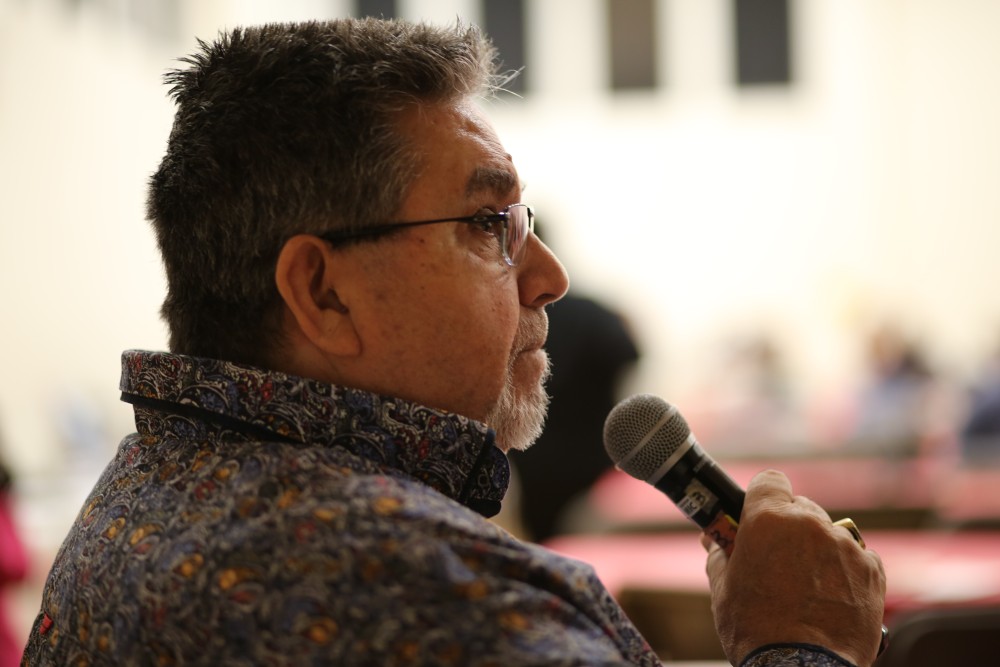
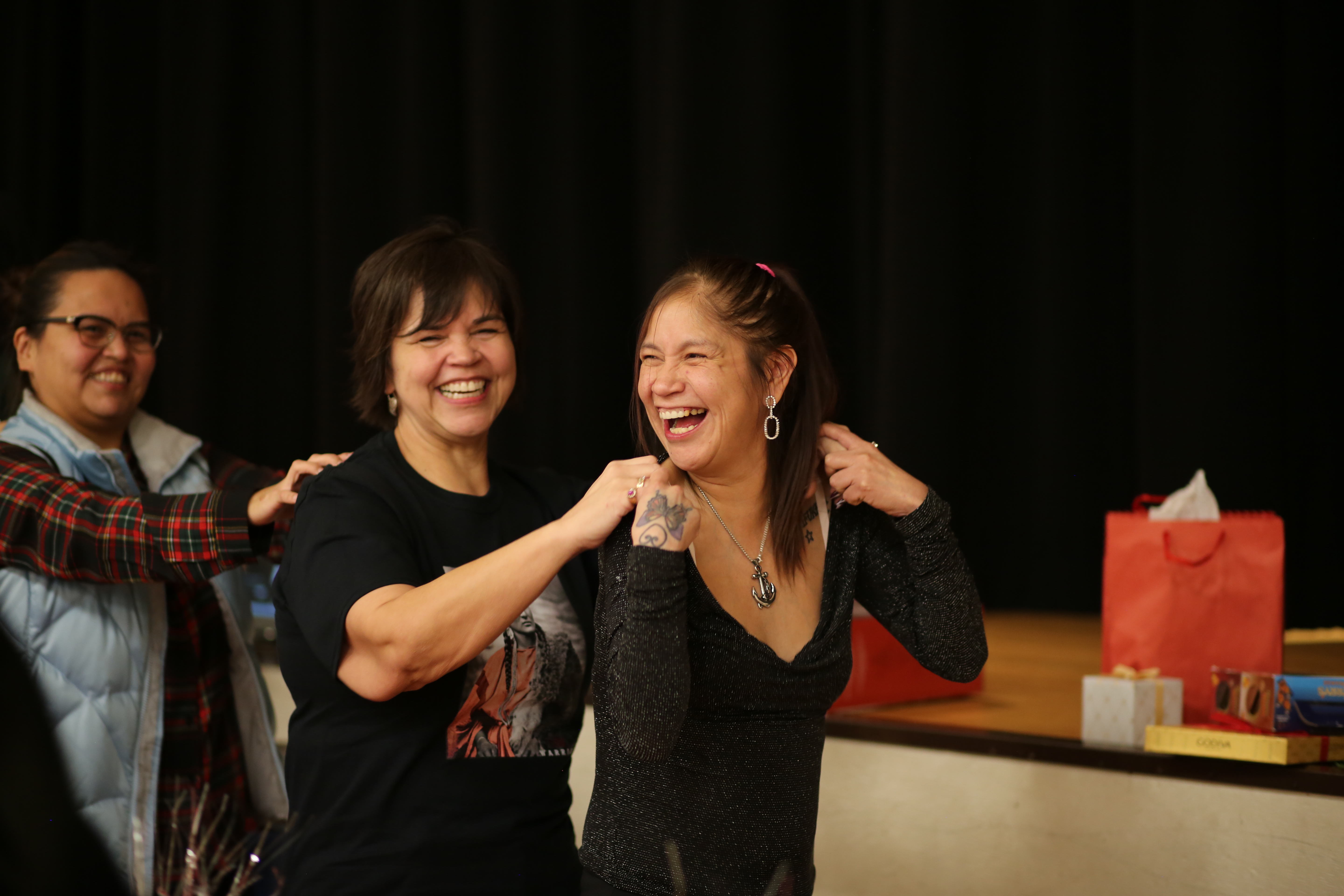
At the end of the Vancouver urban gathering NTC Vice-President Les Doiron called everyone in the hall to stand up, make two long lines and hold hands, forming an enormous circle to demonstrate the importance of maintaining connection.
“Remember those ones we love who aren’t with us any longer; remember those on the street who are struggling with drugs and alcohol,” said Doiron to the circle. “Be safe, be seen, be Indian.”