A salmon restoration project involving the Ditidaht First Nation has received international recognition from the United Nations.
In recent years work has continued to repair salmon habitat in a part of Ditidaht territory that falls within the Pacific Rim National Park Reserve. Recognized as part of a Parks Canada initiative, this work in the Cheewaht watershed has been selected for the UN World Restoration Flagship award.
Restoration of the Cheewaht (čaaxwiyt) tributaries for sockeye (miʕaat) salmon was chosen in Parks Canada’s Respectful Return Salmon Restoration Project, part of a country-wide initiative to rehabilitate salmon populations in collaboration with Indigenous communities across Canada. The UN Flagship award recognizes the large-scale efforts at the Cheewaht Lake that contributed to biodiversity recovery, climate resilience and sustainable food systems.
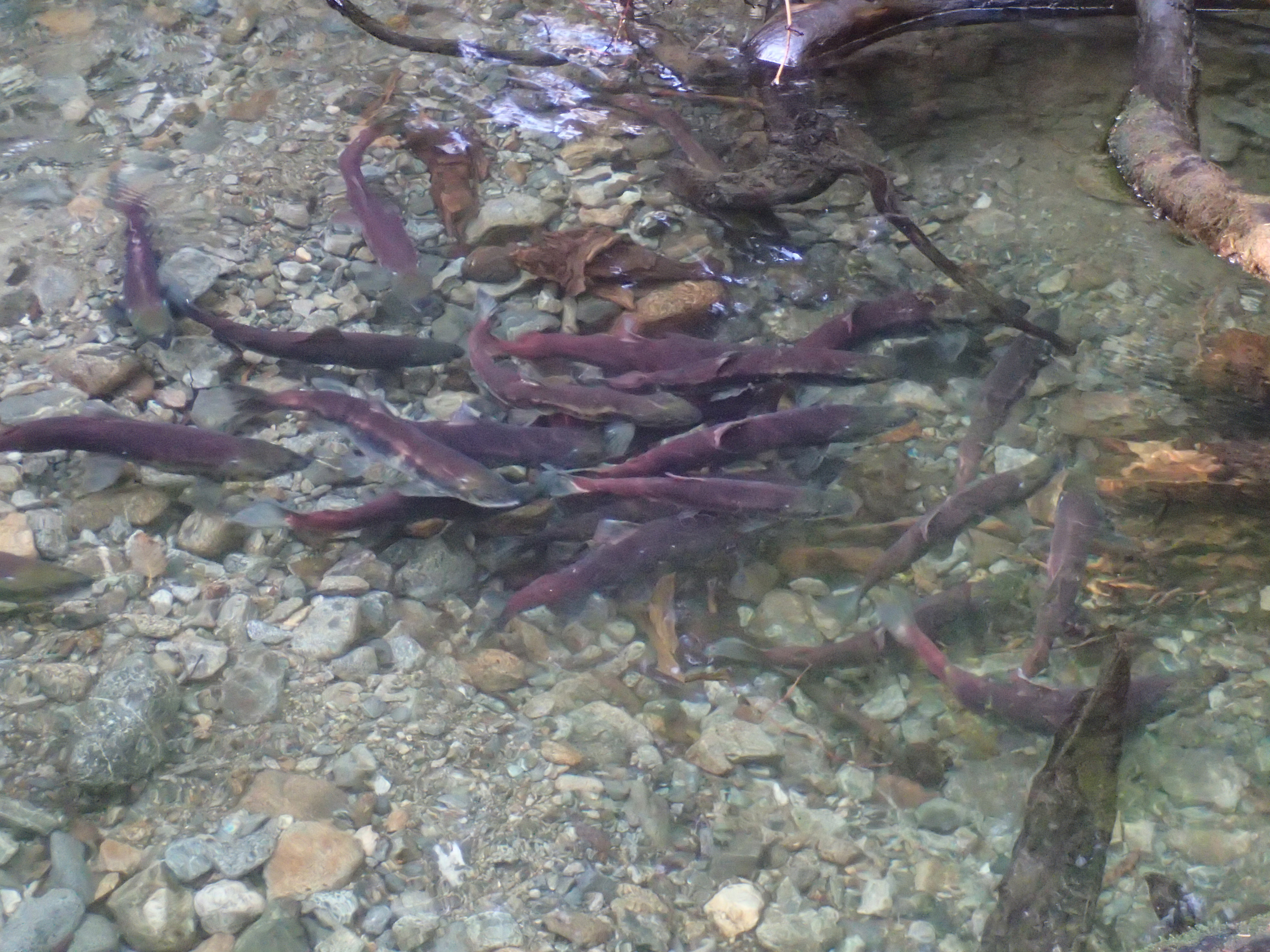
“So, the last two years, the sockeye salmon runs coming back to the streams at Cheewaht have been notably strong. That is a continuing positive note,” said Sarah Tyne, a resource officer at Parks Canada.
Parks Canada reported a significant increase in the juvenile fish population. Their data, gathered through monitoring, show a 35 per cent rise in coho fry and a doubling of cutthroat trout fry population in the restored streams. Staff from Parks Canada noted an increase in bear activity on trails since the project began, a sign of its success.
“Even though the restoration project is complete . . . [Parks Canada continues] to work with the Ditidaht First Nation to monitor the fish population, the water quality, and the habitat conditions to support this as a long-term recovery,” said Tyne.
Not everything was smooth in the fall of 2024, at peak season for the sockeye salmon return, when access to the lake was impossible due to washed-out roads.
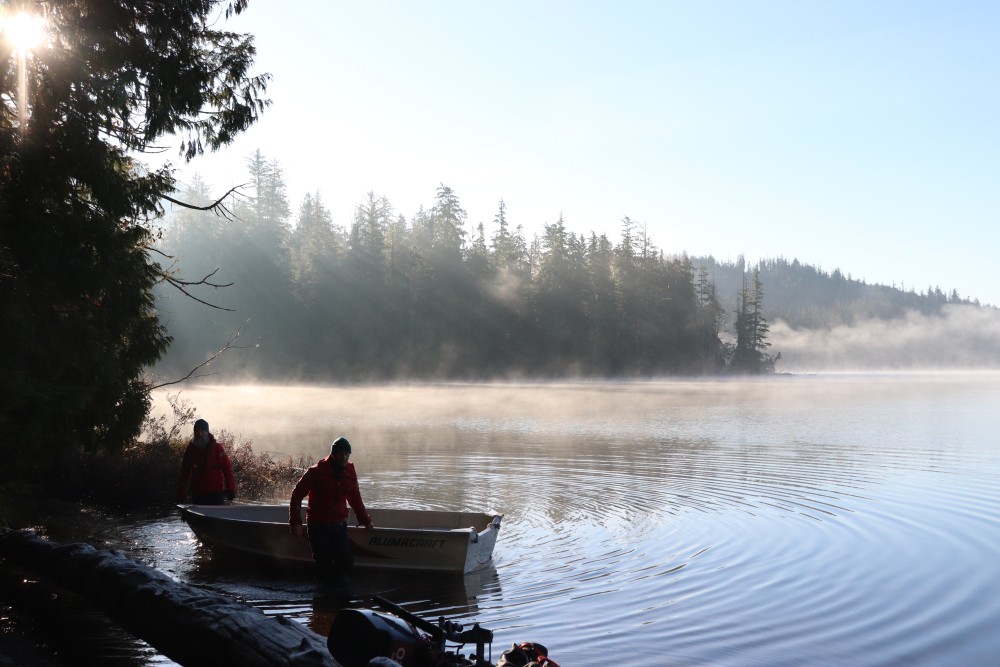
However, the collaboration between Parks Canada and Ditidaht First Nation was key to overcoming this challenge, as they relied on boats to regain access to Cheewaht Lake and continue the restoration process.
“Ultimately, the success of this project is about the collaboration with the Ditidaht Nation and other partners and the relationships as we continue to work together towards the future and maintain the salmon in the Cheewaht watershed.”
For thousands of years salmon have been a key food source and held an essential cultural foundation for coastal villages at Clo-oose, Wyah, and Cheewaht. The five-kilometre river once supported sockeye, choho, chinook, chum, steelhead and cuttthroat trout. The Cheewaht watershed is also home to several sacred Ditidaht sites and some of the largest remaining cedar trees in the region, ranking the area as an important cultural and ecological location.
Communities along the river once built fish weirs to harvest sockeye, thereby building unity and reinforcing family bonds by helping one another.
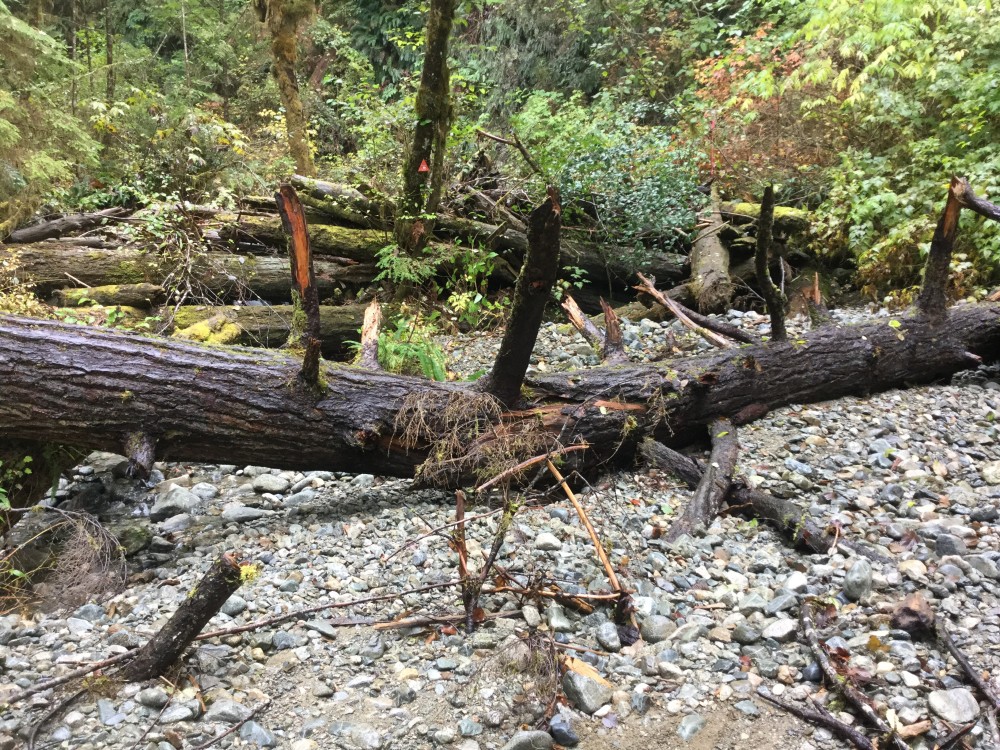
The restoration process is aimed to address ecological damage inflicted on the ecosystem decades ago. Logging activity intensified in the Cheewaht watershed in the 1970s, which concerned the Ditihat First Nation and environmental groups due to the increased buildup of debris in streams used by salmon. Even after Cheewaht Lake was protected when the Pacific Rim National Park Reserve was established, timber harvesting continued to have long-term impacts on Cheewaht Lake and the surrounding watershed.
Mike Wright is a professional biologist and owner of M.C. Wright and Associates who has researched the watershed since 1984. He said the streams were in pristine condition before industrial logging.
In 1986 the Ditidaht limited its fishing capacity in the area to preserve the salmon population. However, two years later, a sediment wedge and a log jam shattered, spraying gravel and woody debris through the stream and destroying the spawning area for coho and sockeye salmon. Another issue surged when the previous channel continued to shrink during its redirection, making salmon egg incubation highly difficult.
Restoration planning truly began when the Cheewaht Restoration Working Group was re-established. The group consisted of a range of diverse members, including representatives from the Ditidaht First Nation, Nuu-chah-nulth Tribal Council’s Uu-a-thluk department, Parks Canada, Fisheries and Oceans Canada, the Nitinaht Hatchery, the Ministry of Forests, Lands and Natural Resource Operations (South Island), British Columbia Timber Sales, Western Forest Products, the Teal-Jones Group, biological consultant MC Wright and Associates, as well as the environmental non-governmental organization West Coast Aquatic.
Together, their collective role was to restore spawning zones in Cheewaht Lake that had been impacted by logging over the past decades.
“Parks Canada funded this project, but the reason was that we had a letter of request [from the Ditidaht First Nations],” said Tyne.
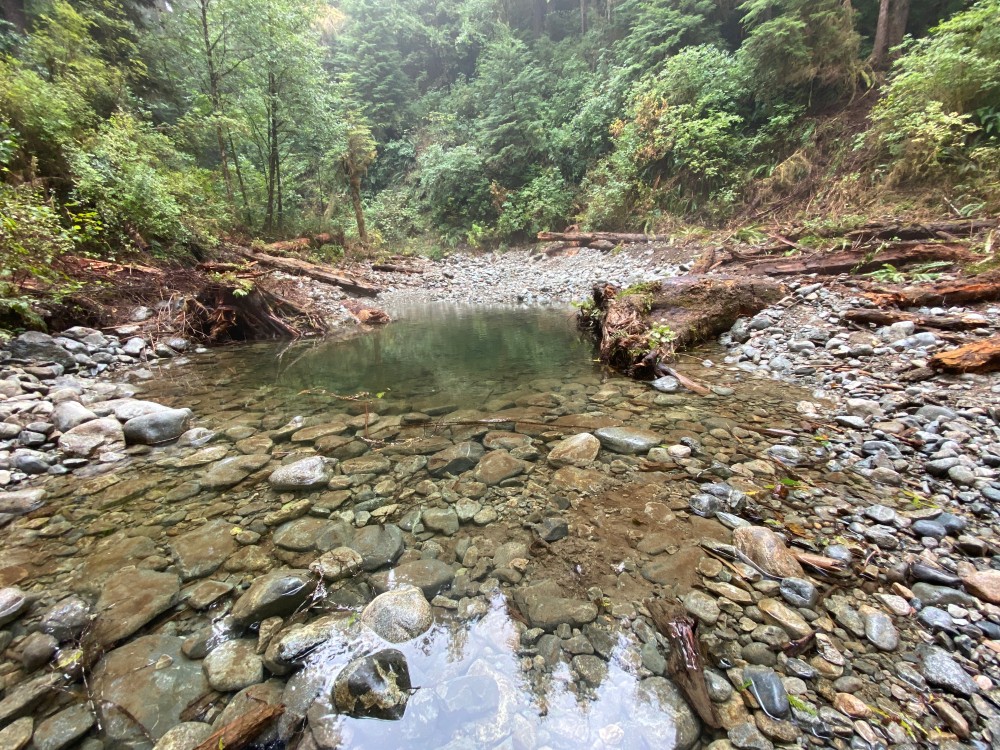
In 2022, members of the Ditidaht community aided Parks Canada and contractors brought an excavator through a temporary access road to remove more than 3,000 cubic metres of sediment and debris from the stream. The next part of the restoration process focused on stabilizing the stream channels, improving water flow, strategically placing logs to reduce future blockages, and protecting spawning and rearing habitats over a one-kilometre section of the river.
Last fall, the working crew noticed a high increase in adult sockeye, counting up to 1,300 fish in a single day in the creeks, as they spawn and serve as a constant food source for black bears in the area.
Parks Canada and the Ditidaht First Nation plan to monitor the stream for the next five years to measure the effectiveness of the restoration effort, tracking water quality, stream levels, rainfall and salmon numbers to assess the long-term ecosystem health.
Collaborators in the project are well aware that full ecological recovery will take time. Wright shared that it may take 20 years or more to fully assess the long-term effectiveness of their restoration efforts.
“Stream restoration is a long-term process,” noted Tyne. “Just because the work is done, the streams are very dynamic, and it's a long-term commitment, and the leadership of the Ditidaht First Nation was the driving force and the inspiration for this Project.”