
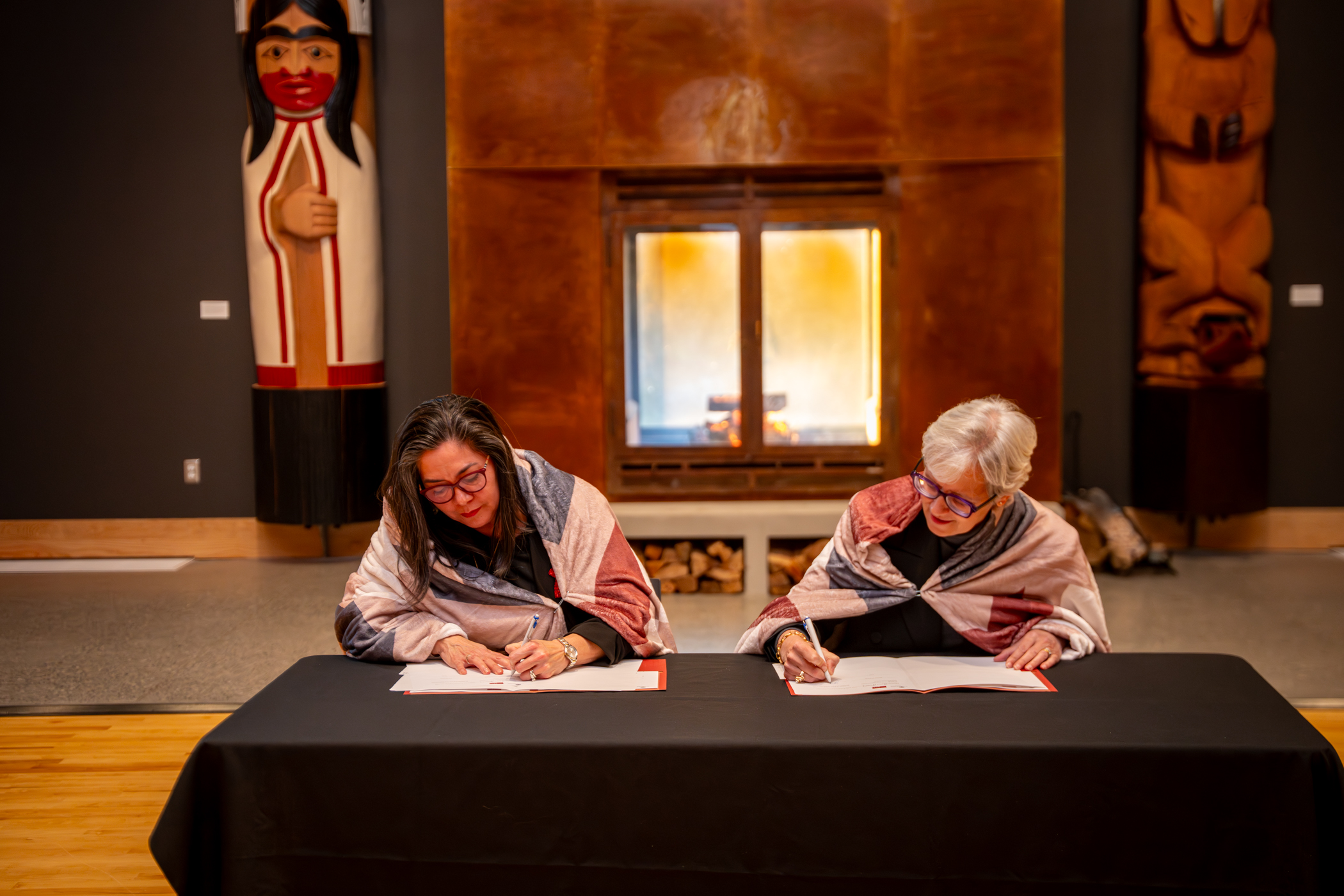
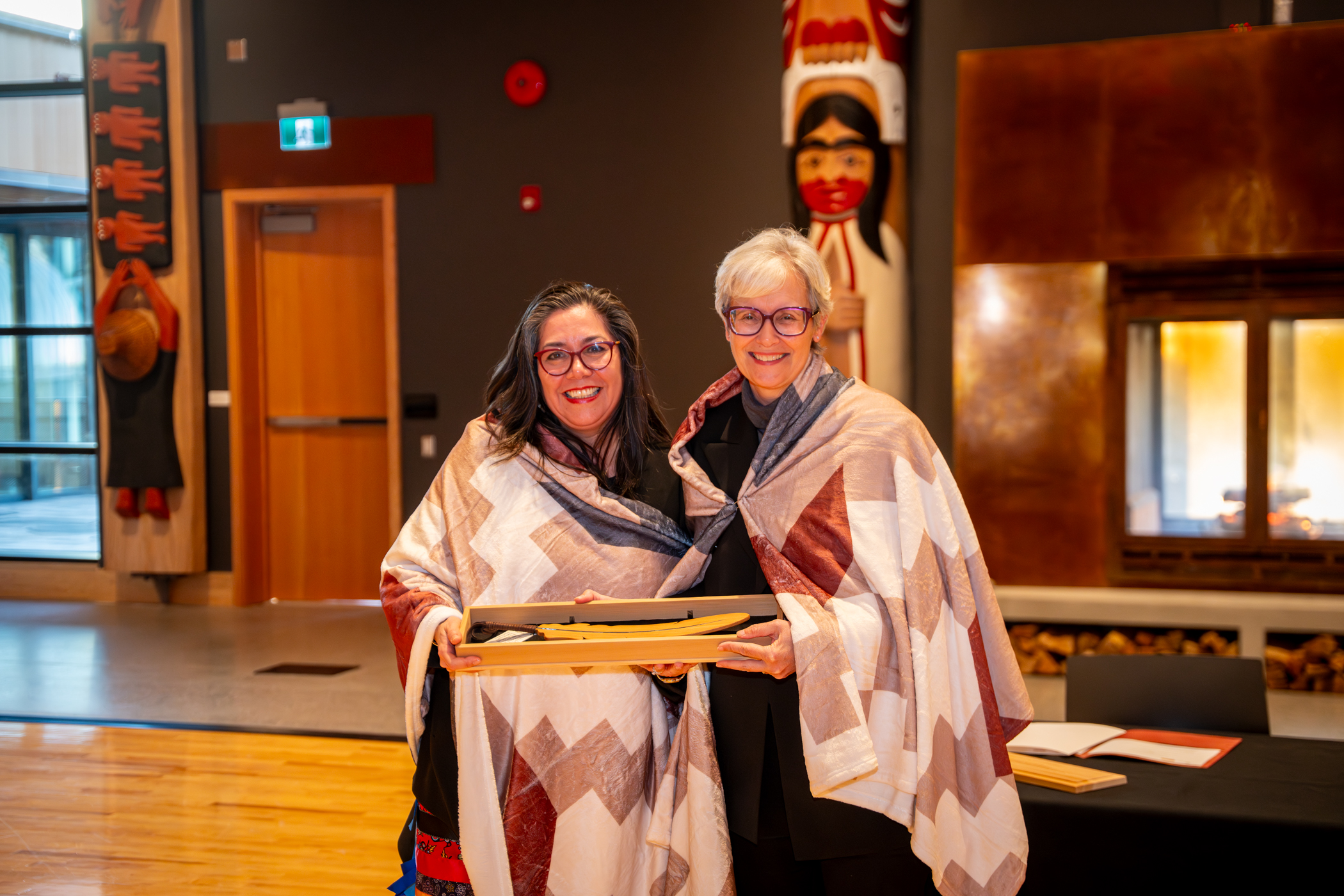
Simon Fraser University and the First Nations Health Authority have signed a three-year Memorandum of Understanding aimed at improving the wellness of First Nations across the province.
The memorandum was signed in the shared territories of the kʷikʷəƛ̓əm (Kwikwetlem), xʷməθkʷəy̓əm (Musqueam), Sḵwx̱wú7mesh (Squamish) and səlilwətaɬ (Tsleil-Waututh) Nations.
“The MOU marks the beginning of our shared commitment to integrate First Nations’ ancestral knowledge, traditions and perspectives in medical education and increase the number of First Nations physicians,” said Monica McAlduff, chief executive officer of the First Nations Health Authority. “Together, we celebrate this significant milestone in advancing culturally safe, trauma-informed and team-based medical education for the next generation of physicians.”
A major catalyst for the MOU is the university’s new School of Medicine, the first of its kind in Western Canada in 50 years.
“The goal of the medical school was to [become] community-driven, [following] Indigenous ways of knowing and build relationships with underserved Indigenous communities,” said Syeta’xtn Lewis, SFU’s Indigenous executive lead.
The School of Medicine is part of SFU’s drive for Indigenous engagement and addressing systemic inequities that echo those of the FNHA. This aligns with FNHA’s 10-Year Strategy on the Social Determinants of Health, which focuses on culture, language, ceremony, and education, creating the right moment to formalize a partnership through the MOU.
“We’re really in a neat position in that we get to design a curriculum with Indigenous people right at the outset, which means Indigenous ways of knowing are going to be woven throughout the entire medical school curriculum,” said Dr. Rebekah Eatmon, associate dean of Indigenous Health with SFU’s School of Medicine.
“Ultimately, this MOU should help contribute to improved wellness and better health outcomes for First Nations individuals, families, and communities across BC,” said McAlduff.
The MOU aims to extend beyond the School of Medicine and the Faculty of Health Sciences. Lewis says the MOU creates an opportunity to establish new action plans that enable other faculties, such as science, education, and environment, to join the effort to improve health and wellness indicators in First Nations communities and to create more partnerships.
“[The MOU] is a platform or a bridge that allows us to kind of come and collaborate and continue to work together,” said Lewis.
The 2024 report, First Nations Population Health and Wellness Agenda (PHWA): First Interim Update, provided by the FHNA and the British Columbia Office of the Provincial Health Officer, reported on health and wellness indicators for First Nations People in B.C., noting an improvement in education and infant mortality.
However, there were no changes in issues like avoidable hospitalization, the number of First Nation physicians, serious injuries and young adult suicide. The report highlighted worsening health indicators like birth weight, diabetes prevalence, weight-related diseases, drug overdoses and all-cause mortality. As a result, the average life expectancy of First Nations people in B.C. had declined from 73.3 years in 2017 to 67.2 in 2021 – a drop of 6.1 years, according to the report.
Amid this disturbing trend, McAlduff hopes that SFU’s School of Medicine can contribute to a new paradigm of medical training and education that includes traditions and practices, while building a deeper understanding of First Nations culture, history, and experiences.
“[With] every Indigenous medical student admitted to our school, they are supported through their medical journey from the time they apply until residency,” said Dr. Eatmon. “The secondary impact of that is to lead to a change in the healthcare system, which will be more culturally safe for Indigenous patients, and responsive to what the healthcare needs are.”
McAlduff hopes, through the partnership, to embed a holistic First Nations perspective on health and wellness so medical students appreciate the importance of supporting every aspect of a person’s well-being, not just their physical symptoms.
The strengthened research and data-governance partnership supports better community-driven analysis and planning, with these changes helping to enhance cultural safety and humility within the system, improve access to safe, effective care, and ultimately improve health outcomes for First Nations peoples.
“In these ways, the MOU between FNHA and SFU supports long-term improvements in health—not quick fixes, but lasting change,” said McAlduff.
Lewis notes that the MOU is set to follow the First Nation 7 Directives, a fundamental set of standards and instructions for the new health governance relationship shared by the FNHA, the First Nations Health Council, and the First Nations Health Directors Association.
The Faculty of Health and Sciences initiated the decolonization process into its course content to support several FNHA-led health research projects, including the creation of the First Nations Health Authority Chair in Heart Health and Wellness at St. Paul’s Hospital.
Senior leads from both organizations, including SFU President Joy Johnson and FNHA CEO Monica McAlduff, agreed to meet regularly to track progress and identify new areas of potential collaboration. This approach aligns with the governance principles in FNHA’s 10-Year Strategy, emphasizing partnership, shared accountability, and collaborative decision-making across sectors.
“SFU is committed to upholding Truth and Reconciliation in all that we do,” said Joy Johnson, SFU's president and vice-chancellor. “This new partnership will help guide research, teaching and curriculum development university-wide, ensuring that SFU takes meaningful action in partnership with Indigenous peoples to advance the health and well-being of Indigenous communities across BC.”
“We expect this partnership to create meaningful, measurable improvements in how First Nations people experience healthcare and education,” said McAlduff. “Success means more First Nations leadership in medical education, research, and system planning. It means a new generation of physicians trained in culturally safe care. It means closer alignment with community priorities identified in the FNHA 10-Year Strategy for Social Determinants of Health, including cultural identity, education, and social inclusion.”


