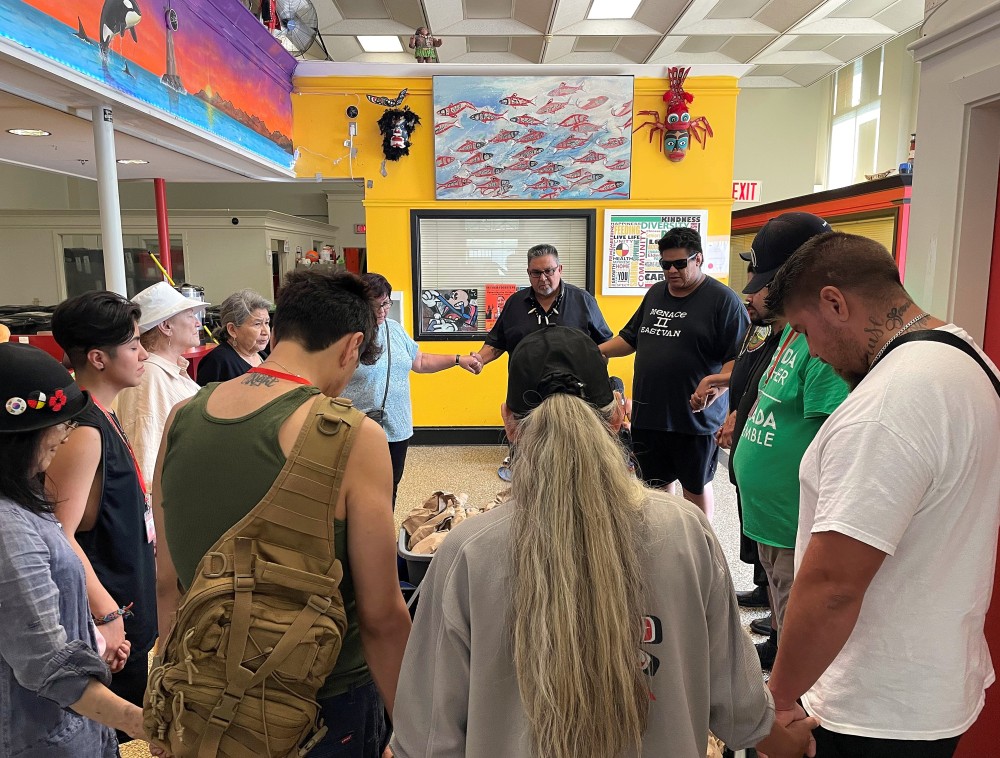
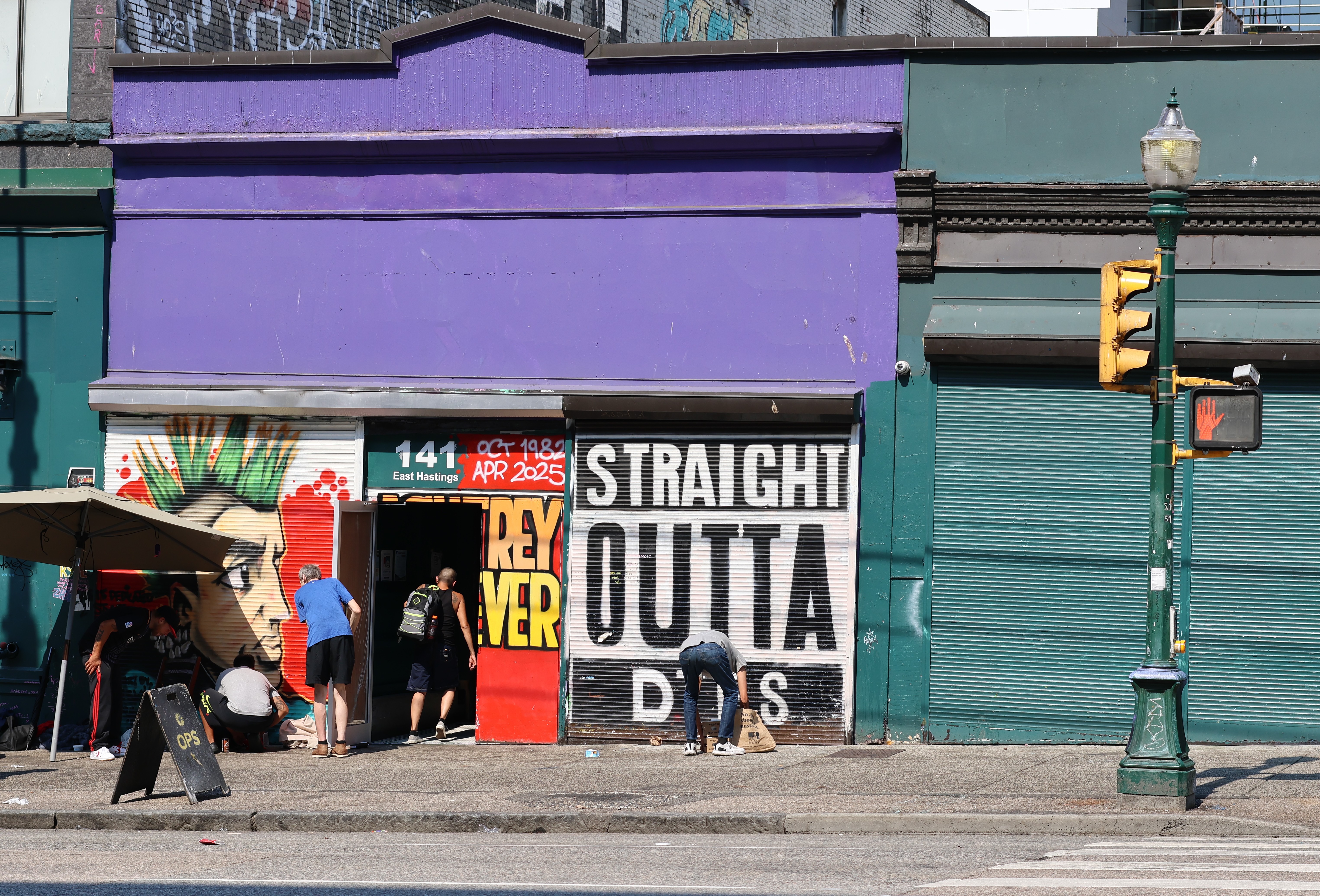
James Harry is the founder of the All Nations Outreach Society, a team of urban outreach workers dedicated to saving lives on Vancouver’s Downtown Eastside (DTES).
His staff do rounds three to four times a day, and if anyone goes down, Harry says they’ll check to see if they’re alive.
“It’s a whole different animal now with the poison that’s being sold,” said Harry. “I’m a big advocate for more outreach. Just let them know that they are not alone. They are probably at their lowest.”
In British Columbia, unintentional unregulated drug toxicity deaths among youth have increased since public health authorities declared an opioid crisis in 2016. One of the main drivers of this increase was the introduction of the toxic synthetic opioid, fentanyl, into the unregulated drug market, according to the BC Coroners Service (BCCS).
From January 1, 2019 to December 31, 2023, BCCS says there were 126 unregulated drug toxicity deaths in B.C. of persons younger than 19 years of age. The number of deaths equates to about 25 a year.
Over the first three month of 2026 there were 401 suspected lives lost to unregulated drug toxicity, according to the BCCS March data report.
Overdose remains the most common cause of unnatural death in B.C. for those age 10 to 59 – more than homicide, suicide, accidents and natural diseases combined. But the 1,820 fatalities tracked last year show a significant decrease from the 2,318 lives lost from toxic drugs in 2024, and a continued decline from the peak of 2,593 deaths in 2023.
Vancouver’s City Centre, which is gearing up to host the 2026 FIFA World Cup, records the second-highest rate of overdose deaths in the Vancouver Coastal Health region and the second-highest number of calls to B.C. Emergency Health Services after the Downtown Eastside.
In a May 5 information bulletin, VCH announced that services would soon open for a proposed overdose prevention site in Vancouver’s City Centre on 900 Helmcken St., across the street from the Sheraton Vancouver Wall Centre and less than a block away from St. Paul’s Hospital.
But roughly three weeks later, Health Minister Josie Osborne alongside her colleague, Terry Yung, Minister of State for Community Safety and Integrated Services and MLA for Vancouver-Yaletown, announced on May 27 that VCH will not proceed. The overdose prevention site at 900 Helmcken St. will not open “at this time” due to concerns from the City of Vancouver, local businesses and community partners.
The proposed 900 Helmcken St. overdose prevention site was meant to replace the Thomus Donaghy overdose prevention site at 1060 Howe Street, which closed in January 2026. VCH said the lease term began June 1, 2026.
VCH said the lease for the space at 900 Helmcken Street began on June 1 and runs for a term of two years at a cost of $179,000 annually. The lease, which is held by RainCity Housing and Support Society, is still currently in place, according to VCH.
Since 2021, VCH says the Thomus Donaghy overdose prevention site supported 149,603 visits and responded to 480 overdoses. It was the only overdose prevention site in the Vancouver City Centre available to the public, according to VCH.
“Stores are closing down or threatening to close down because of the theft downtown. With the FIFA coming in they want to revitalize it, I guess,” said Harry. “The homeless population down there is very evident. How do you change it? You move them out.”
He says while harm reduction measures like overdose prevention sites are vital, a lot of his clients don’t use them.
“A lot of my clients are at their lowest. When they get (street drugs), the last thing on their mind is finding a safe site to go to,” said Harry, although he added that he has a few clients who had their lives saved by using overdose prevention sites. “When they first came in, they definitely served their purpose.”
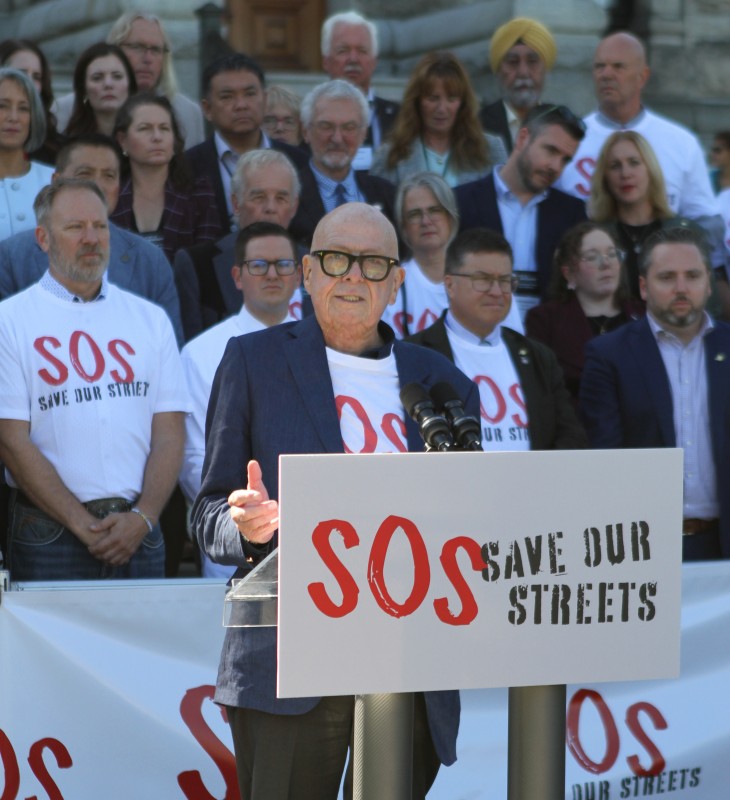
Jess Ketchum is the co-founder of Save Our Streets (SOS), a non-partisan group of over 120 plus community and business organizations representing every corner of British Columbia including the BC Chamber of Commerce, BC Restaurants and Food Services Association, BC Hotel Association, Retail Council of Canada and the Tourism Industry Association of BC.
He says the move from the Ministry of Health to pause the opening of the overdose prevention site in downtown Vancouver echoes frustrations felt in communities across the province.
“We can’t lose sight of the fact that this is not just a Vancouver problem,” said Ketchum. “I think we sometimes confuse the immediate need of the person suffering from addictions, we confuse that with the longer-term need. What we are saying is much of the short-term need would be dealt with if people had that long-term need dealt with.”
He said detox and recovery facilities like the Red Fish Healing Centre for Mental Health and Addictions in Kwikwetlem First Nation (Coquitlam) should be available in every community in B.C.
“We need to take care of these people. The problem only goes away when we do take care of these people and give them reason to get off the streets. We know a tremendous amount of shoplifting that goes on provincewide is people feeding their drug habits,” he said.
“The overriding issue is that someone is addicted to drugs and their lives are ruined as a result of that addiction,” Ketchum continued. “The solution is getting off of (the) addiction. How do I do that? That takes detox, treatment and recovery. We have to do more of that.”
Vancouver Mayor Ken Sim thinks so too. He moved to block the proposed overdose prevention site and said the city has seen “zero” of 400 mandatory care beds the premier promised over a year and a half ago.
“Vancouver will not support solutions that fail both those who are struggling and the communities around them,” said Sim in a media release. “We have seen the disastrous impact when overdose prevention sites are introduced without the right planning, oversight and accountability.”
Harry also said more detox beds are “absolutely” needed.
“The wait time is long,” he said. “Our window is small. We have a very small window as an outreach worker. We get that one client who will say, ‘I want to go now, let’s do this, let’s go’, and you make that call and you get a two, three sometime four-week wait.”
He’d love to see more “positive, single-room occupancy” or “sober homes” created with staff that really care.
“Staying sober is changing the habit of drugs into something positive,” said Harry.
Like many non-profits these days, Harry says the All Nations Outreach Society is in “survival” mode, just playing it year to year, while their long-term goal is to eventually have a detox and recovery home to call their own.
“Our staff do an amazing job. All our staff are people in recovery. Everybody knows. The best person for the job is someone who has been through that battle,” said Harry.
They end each weekly staff meeting with a team motto: “let’s go out there and save some lives.”
Vancouver BC Place is hosting seven FIFA World Cup 2026 matches and games will also be broadcast live in Hastings Park (also known as PNE) from June 11 to July 19.
The latest projected nets costs for the tournament are $114 million, according to the B.C. Government. Host city event costs are being offset by the provincially established 2.5 per cent Major Events Municipal and Regional District Tax (ME-MRDT), which is funded by travellers through a tax paid on short-term accommodation in Vancouver, for a seven-year term. ME-MRDT revenue is estimated to generate $250 to $260 million from 2023 to 2030.
In 2025, 78 per cent of unregulated drug deaths in the province were male, according to the B.C. Coroners Service.