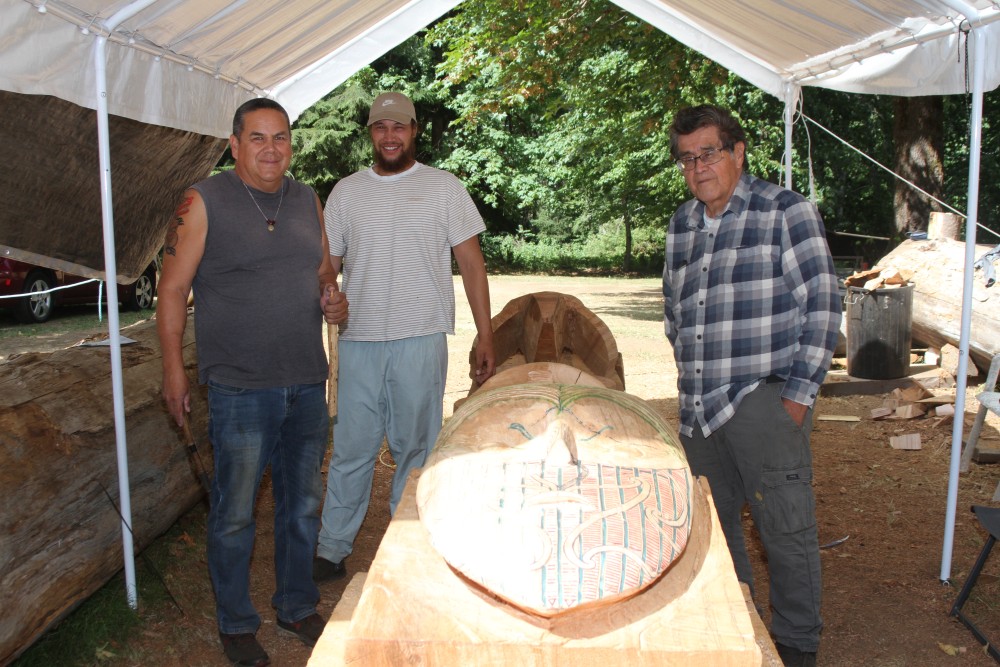
Tsu-tsii-in(Alton Watts), tyee ha'wilth (hereditary chief) of Hupačasath First Nation in the Alberni Valley, publicly demanded on Sept. 23 that Atlantic salmon farming company Cermaq close their Boot Lagoon hatchery operation near Port Alberni by the end of the year.
Watts says Cermaq is polluting Nuu-chah-nulth waters and bringing disease to the fish that swim up their rivers. He says cutting off the hatchery is one way to make sure their fish farms cease operations.
“I just want them gone and hopefully they clean up their mess and we never have to deal with them again,” said Watts.
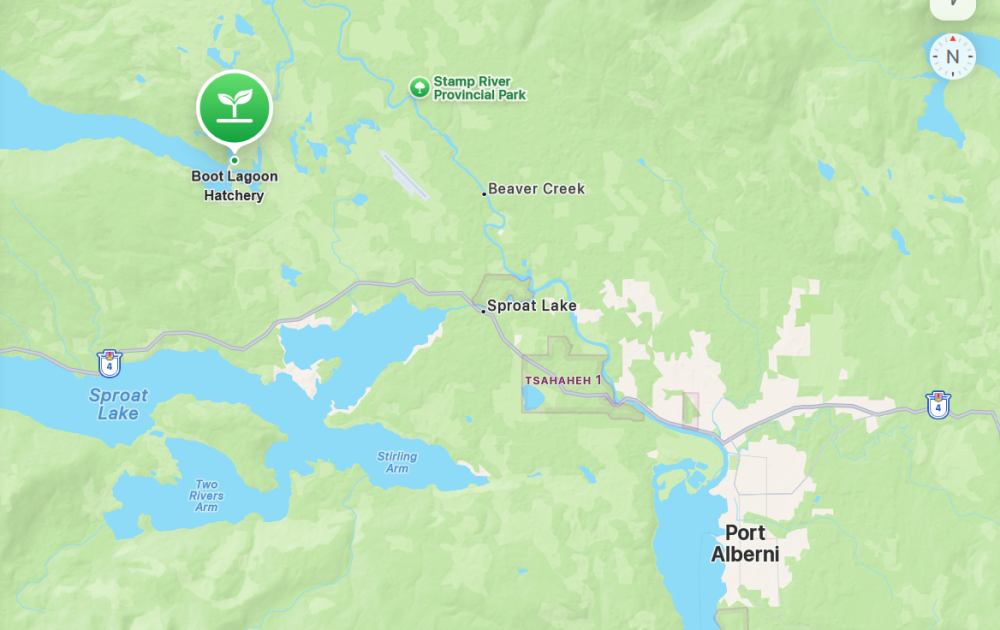
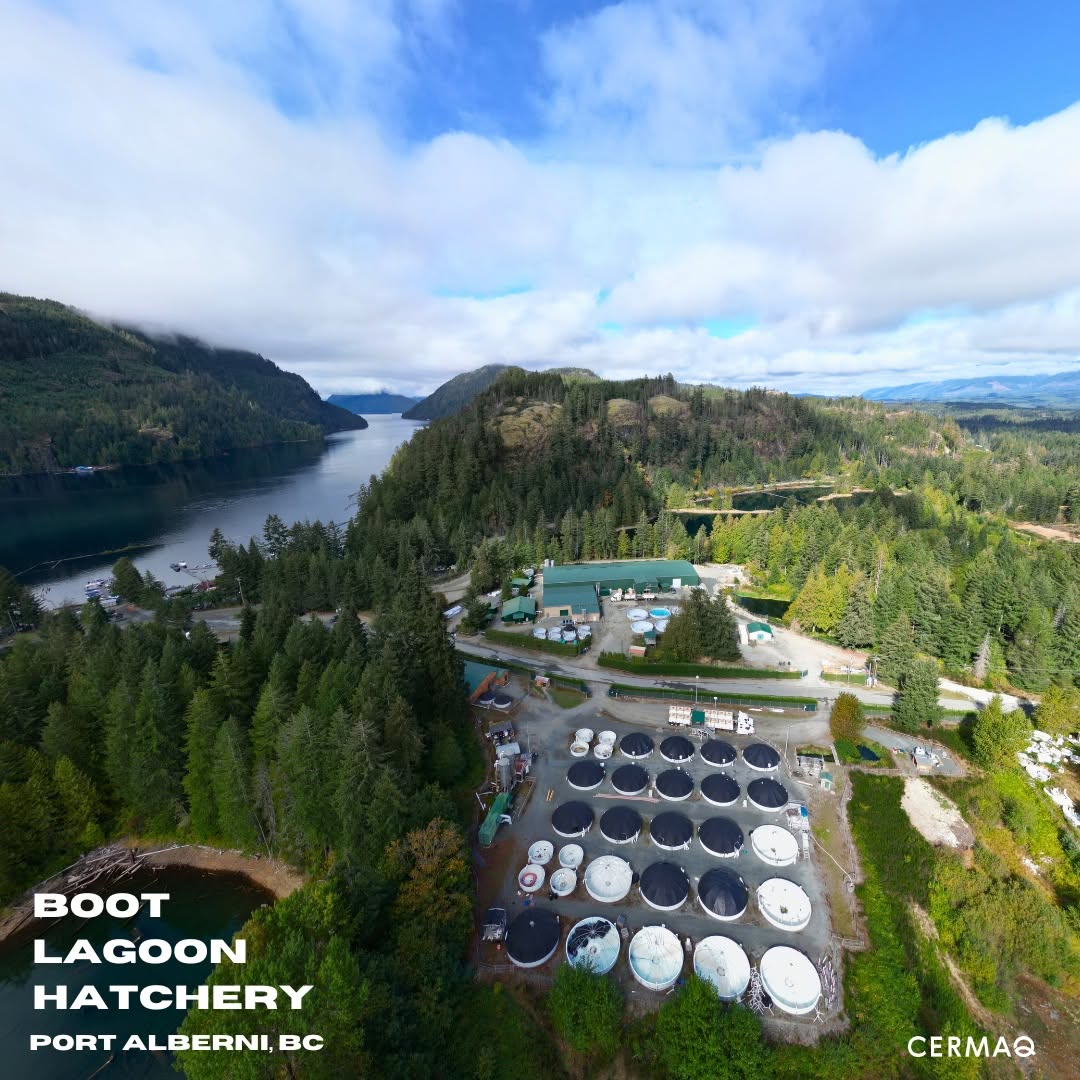
Located on Hupačasath traditional territory by Great Central Lake, roughly an hours’ drive from Port Alberni on the west coast of Vancouver Island, the Boot Lagoon hatchery rears young juvenile Atlantic salmon, or smolts. Once the smolts are ready to leave fresh water for the ocean, they are transferred to the aquaculture company’s 14 open-net pen facilities in Ahousaht First Nation territorial waters.
“These are Atlantic salmon. They don’t belong on the west coast. No matter what you offer me, if you offered me $10 million dollars, I’d say no,” Watts continued.
Hupačasath does not have a protocol agreement with Cermaq, according to Watts. He says the aquaculture company, which is 100 per cent owned by the Mitsubishi Corporation, was never given permission by to Hupačasath hereditary chiefs to operate on their territory.
“Zero dollars. Zero permissions. Zero anything at all,” said Watts. “My late father (Hugh “Tuffy” Watts) didn’t have (a protocol) and I never had one.”
Cermaq renewed a five-year protocol agreement with Ahousaht First Nation hereditary chiefs in 2022. According to Ahousaht leadership, the protocol agreement benefits the nation with about $6 million annually for the term of agreement. They say the funds from the aquaculture operations support land back initiatives, restoration work, business expansion and other community programs.
Ahousaht First Nation Hashekumiss (Richard George) declined to provide a comment for this story. Hashekumiss is the son of Ahousaht tyee ha’wilth Maquinna (Lewis George).
Ahousaht First Nation’s territorial waters flow through Clayoquot Sound and are sandwiched between Tla-o-qui-aht territory to the south and Hesquiaht territory to the north.
Hesquiaht hereditary chiefs Vince Ambrose and Steve Tom alongside elected chief councillor Mariah Charleson want open-net pen fish farms removed from the Pacific Coast to safeguard wild salmon.
“Wild salmon are central to the ecological health, culture and economy of British Columbia. Immediate and meaningful action is required to protect them for future generations,” wrote Hesquiaht leaders in Jan. 2026 a letter to the Government of Canada.
Chief Ho’miskanis (Don Svanvik) is a hereditary chief and elected chief councillor for ʼNa̱mǥis First Nation on the north coast of Vancouver Island and centred around Alert Bay.
Following a decade of protests and research, Svanvik shared that the three Broughton First Nations (Mamalilikulla, Namgis and Kwikwasut’inuxw Haxwa’mis) were able to reach an agreement with the federal and provincial government to systematically remove 17 open-net fish farms located within their territory.
The wild salmon returns after the farms were removed from the Broughton were a “resounding success”, Svanvik said.
“Holy cow. The fish are starting to come back like crazy. Since there were all kind of systems there that were only down to the hundreds and now they are up to the thousands,” he said.
Svanvik went on to express his support for nations having jurisdiction over their own territories but raised the issue of wild fish migration.
“Fish that swim through their territory are not their fish,” said Svanvik.
“Whatever fish end up swimming by their farms, whatever pathogens and diseases that come from there are floating out in the ocean to infect these fish. They can’t stop the rest of fish from swimming through their territory, and they can’t stop the farms from releasing these pathogens,” he continued.
“It’s like if your neighbour had an outhouse that was leaking into your yard. Is it ok because the outhouse is in his yard for the shit to come into your yard?” said Svanvik.
Watts’ bold move of demanding that Cermaq close its Boot Lagoon hatchery follows the Government of Canada’s June 2024 policy statement to transition B.C.’s aquaculture industry by June 30, 2029.
The federal policy requires new salmon aquaculture licences to utilize closed containment technology and for active open-net pen salmon aquaculture operations to move to closed containment on land or in the ocean.
“Throughout the transition process, the government engaged extensively with First Nations, communities, industry and other stakeholders in British Columbia. Feedback received through these consultations has informed ongoing government deliberations regarding salmon aquaculture in the province,” said Alison Reilander, media relations liaison for Innovation, Science and Economic Development Canada.
“Any future decisions related to salmon aquaculture transition will be communicated by the Government of Canada at the appropriate time,” she continued.
Currently, B.C.’s salmon farming industry generates $1.2 billion in economic output, $483 million in GDP across Canada and supports 4,051 full-time jobs, according to BC Salmon Farmers Association.
“This policy, as it stands, has been shown to be unworkable from an investment perspective and goes against peer-reviewed science and the federal government's own science showing that salmon farming as practiced today is not a risk to wild salmon,” said Andrew Nixon, BC Salmon Farmers community engagement coordinator.
“The BC Salmon Farmers Association is supporting the sector in advocating for an outcomes-based decision that will allow innovation without prescribing a specific closed containment technology,” said Nixon.
Globally, BC Salmon Farmers states that more than half of all seafood comes from aquaculture, and production is expected to almost double by 2050. The majority of B.C. farmed salmon is exported to the USA and Asia as well as domestically, according to Nixon.
Mitsubishi entered the salmon farming business in Chile in 2011, building on its seafood processing and distribution operations in Japan. In 2014, Mitsubishi made Cermaq a wholly-owned subsidiary. Most recently, in July 2025, Cermaq acquired three additional farming salmon operations in under Grieg Seafood; the operations are located in northern Norway, the east and west Coasts of Canada.
Through the acquisition of Grieg Seafood, Cermaq’s production volume is expected to increase to approximately 280 thousand tons in fiscal year 2027—about 1.4 times the volume produced in fiscal year 2024, according to Mitsubishi.
Watts told the Ha-Shilth-Sa he has yet to receive a reply from Cermaq since making his public demand to close its Boot Lagoon hatchery.
Hupačasath elected chief Brandy Lauder and Cermaq British Columbia’s communications and community relations manager Shannon Mobley could not be reached.