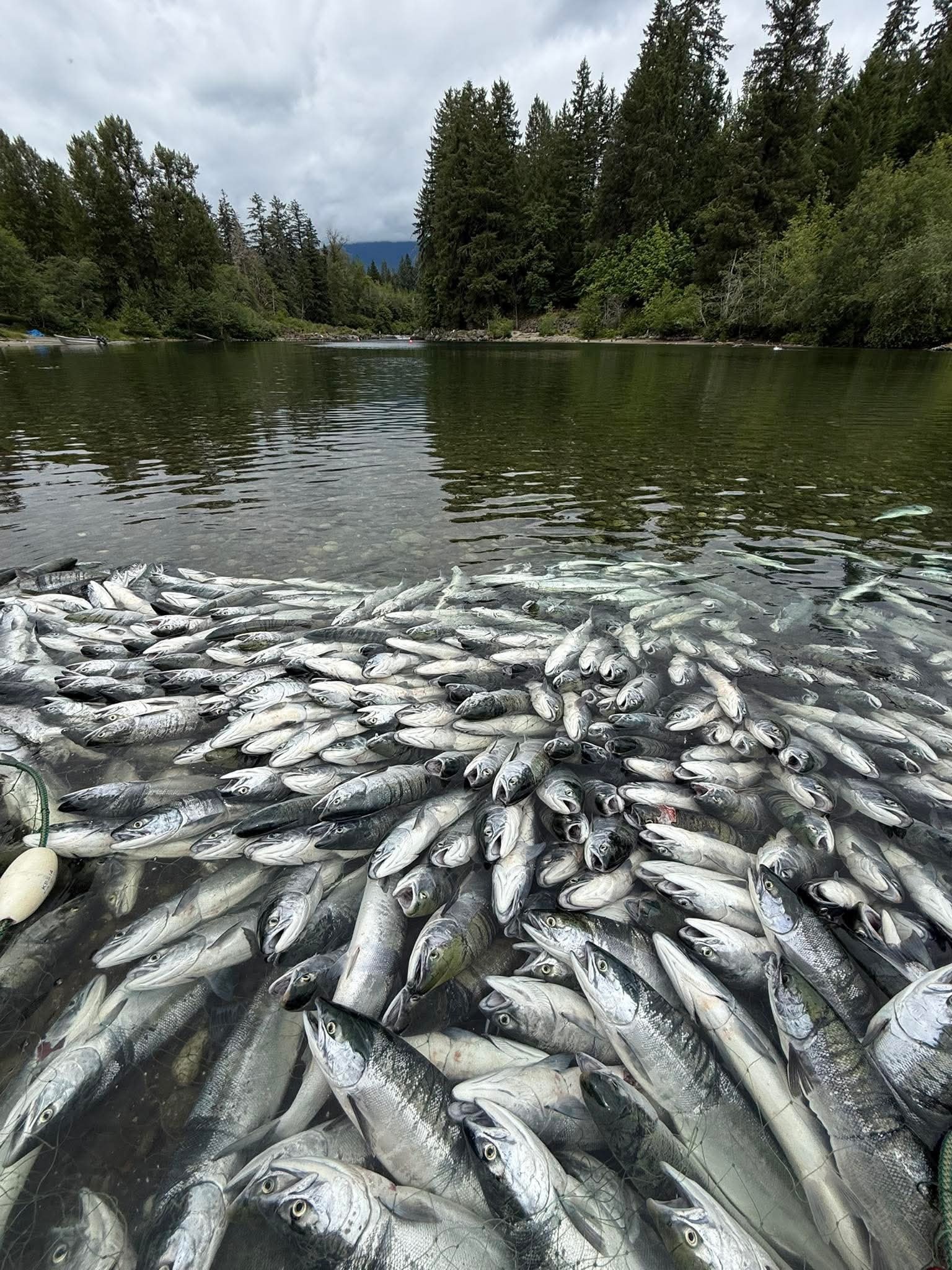
Canning jars are filled and freezers are stuffed with fresh sockeye salmon after a fortunate spell of cool weather sparked an abundant late-June return up the Somass River.
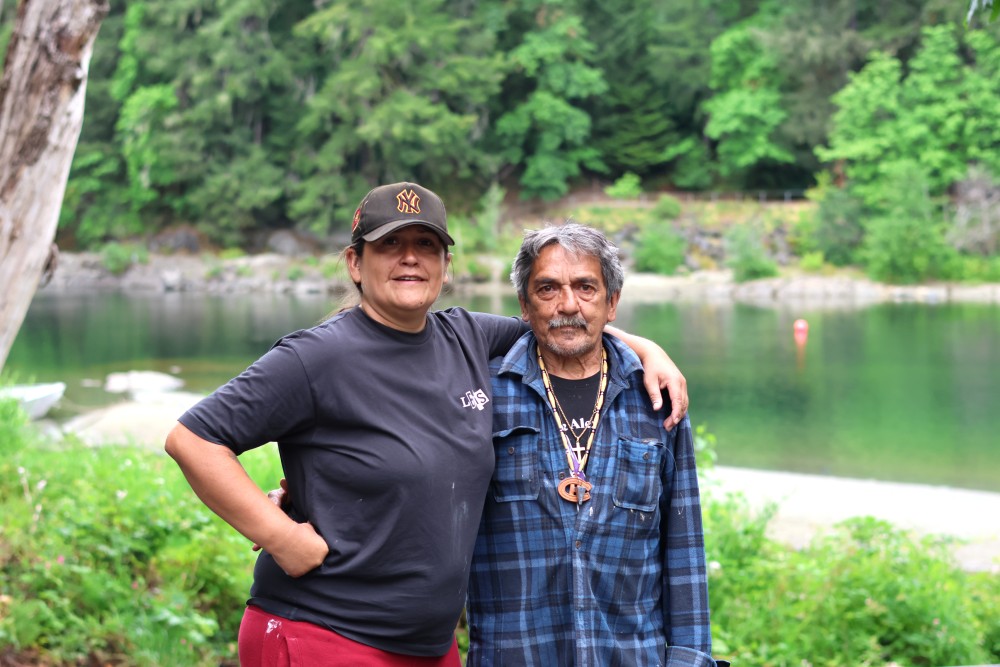
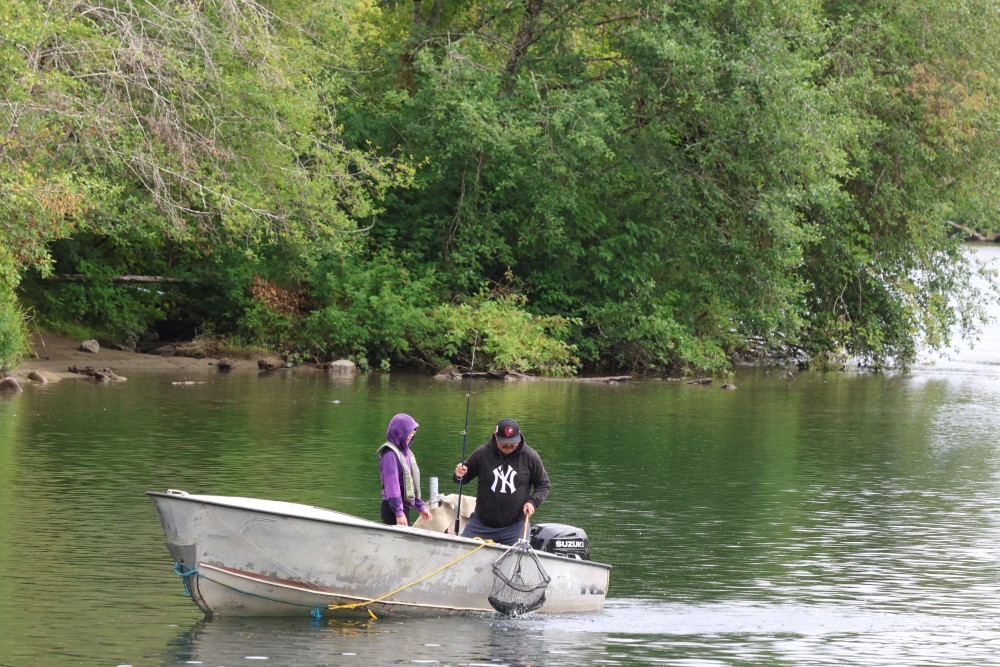
Tseshaht First Nation fisher Shae Doiron netted almost 1,000 fish in a single set with her father Chuck and two deckhands. The lifelong fisher said the June 28 catch was the best she’s ever had.
Chuck simply described the big pay day as “paradise”.
“Grateful and blessed,” Shae adds. “We are taken care of for the winter.”
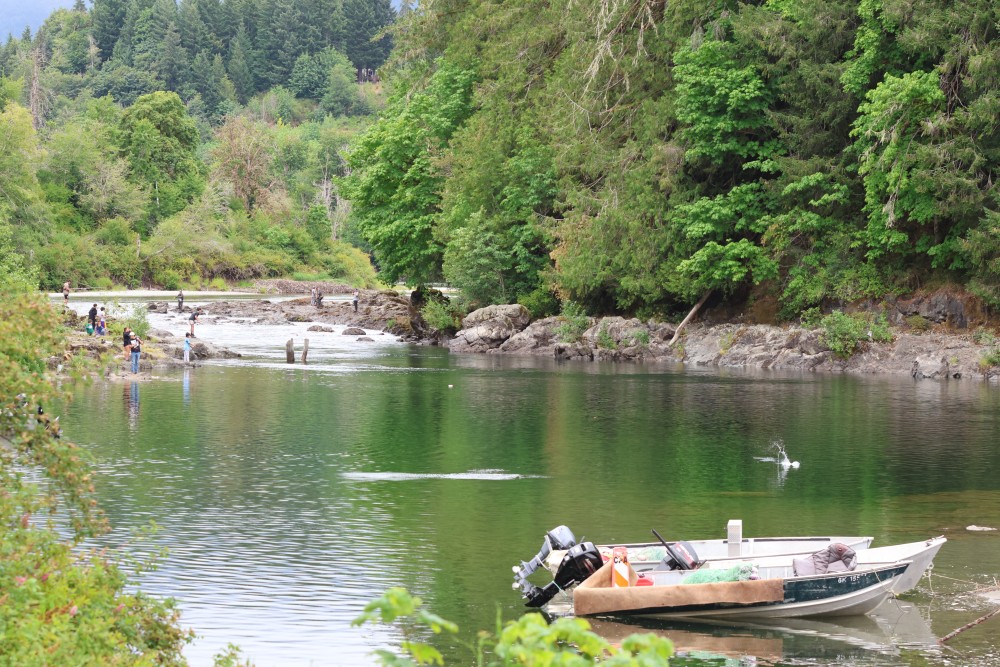
Located in Port Alberni, Tseshaht and Hupačasath First Nations have an Economic Opportunity (EO) agreement with the Department of Fisheries and Oceans (DFO) to gill net in the upper Alberni Inlet and the tidal portion of the Somass River. During the month of June, DFO opened the EO fishery for two days at a time over the span of three weeks (June 28 to June 30, June 21 to June 23 and June 14 to June 16).
Shae slept in her truck at the Paper Mill Dam to ensure her boat was the first in line for the Sunday, June 28 opening.
“That was a rush. It’s all hit or miss too, when the fish show-up. The lifestyle of us waiting to get to the rush was almost like we did it back in the day without DFO telling us when to go,” said Shae.
“I don’t like to fish anywhere else. Sometimes we wait a week to get a set like that,” she continued. “We did not anticipate to catch that amount of fish.”
The spot, which is locally known as ‘the dam’, is dear to Shae. In 2022, a drug overdose claimed the life of her brother Charles. She shared that they scattered his ashes at the dam. Her sockeye net is also dedicated to his memory and overdose awareness with purple corks floating along the line.
This year’s pre-season forecast for the Great Central and Sproat Lake was ranked “high” with an estimated 700,000 to 1,000,000 sockeye returning. The Hucuktlis Lake (formerly Henderson Lake) sockeye stock was forecast in the “low” zone with 15,000 to 25,000 returning.
With a low snow pack and hot weather, Graham Murrell, fisheries manager with the Hupačasath First Nation, says the two nations scaled back fishing efforts by “about half” early in the season, knowing the drought conditions could reduce the flow of fish.
“There were lots of sacrifices made by the nations among their fisheries. We wanted to make sure we were doing what we could,” said Murrell.
“We were expecting the worst this year, but we have been saved with the cool weather. I’d say we are in a good place right now. Lots of fish are moving. We are in a lot better place than most thought we would be at this time,” he continued.
DFO closed the EO fishery and hook and line food fishing at the Paper Mill Dam spot for a week from July 3 to July 9 in effort to boost the escapement to Sproat Lake.
“We still have a big issue of river levels, but we are working the tools we have,” said Murrell.
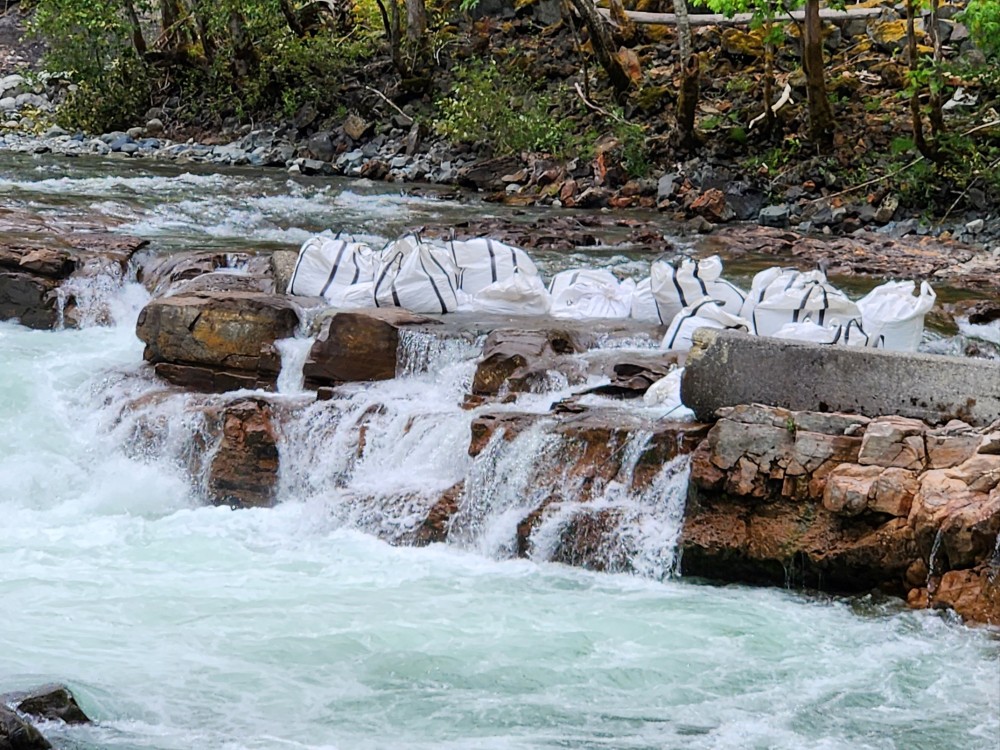
He shared that Hupačasath worked with DFO to create a temporary wall at Stamp falls after infrastructure that pushes the water towards the fishway was knocked out over the winter.
By the end of the day on June 29, Murrell said that 35,289 adult sockeye had swam through the Sproat River fishway, while a total of 99,632 had made their way through the Stamp River. He noted that the number of fish that pass through these rivers fluctuates daily.
Shae said it’s good move to close the Paper Mill Dam spot for a stint, even when it comes to hook and line fishing for community members.
“There is absolutely nothing wrong with closing for a week,” said Shae on July 2, a day before the closure came into effect.
“It’s not DFO saying (close it), it’s the weather. It’s lack of snow and overfishing. We get into this unhealthy mentality where we think we have to fight DFO. If the fish are struggling already, they are not going to get up,” she said.
Looking into July and August, Murrell says the chinook salmon forecast is “high” this year.
“Hopefully we will have good chinook fishing as well,” he said.