A Nuu-chah-nulth woman is the first Indigenous person to earn a PhD from the University of Victoria (UVic) English Department, according to the department chair.
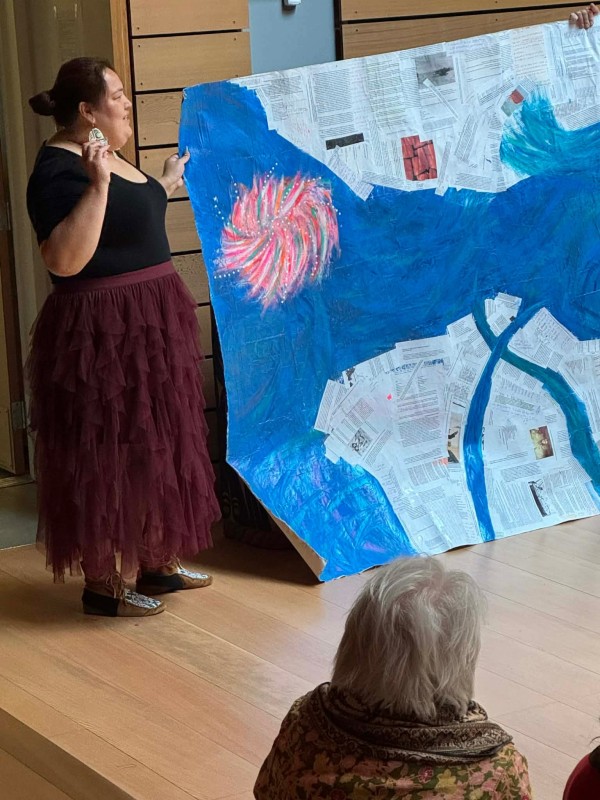
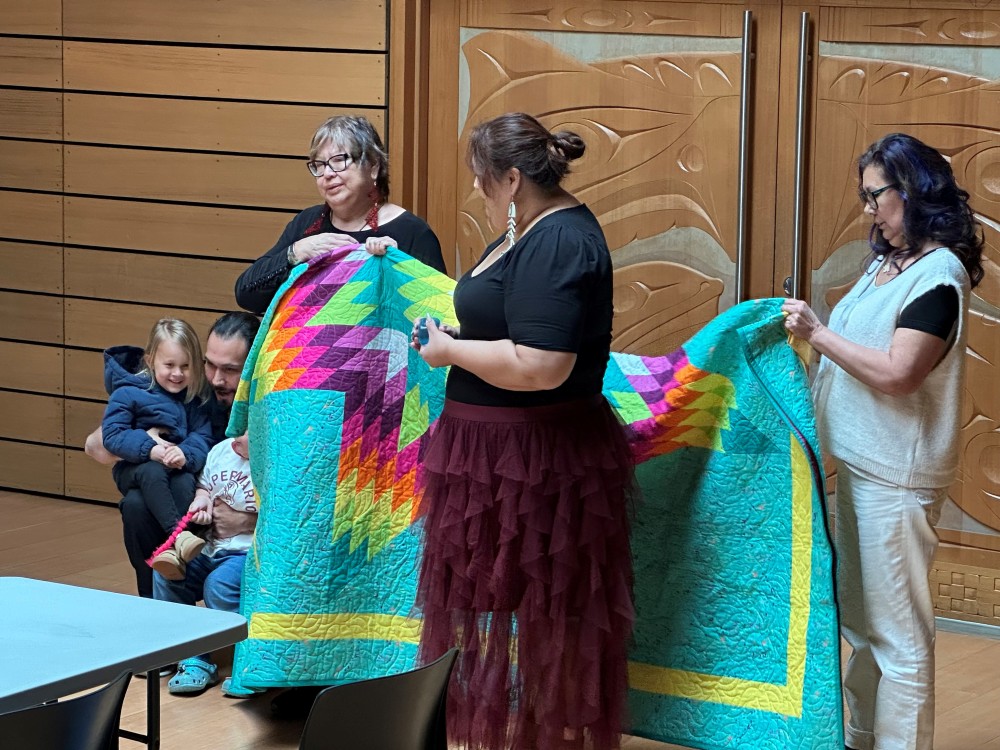
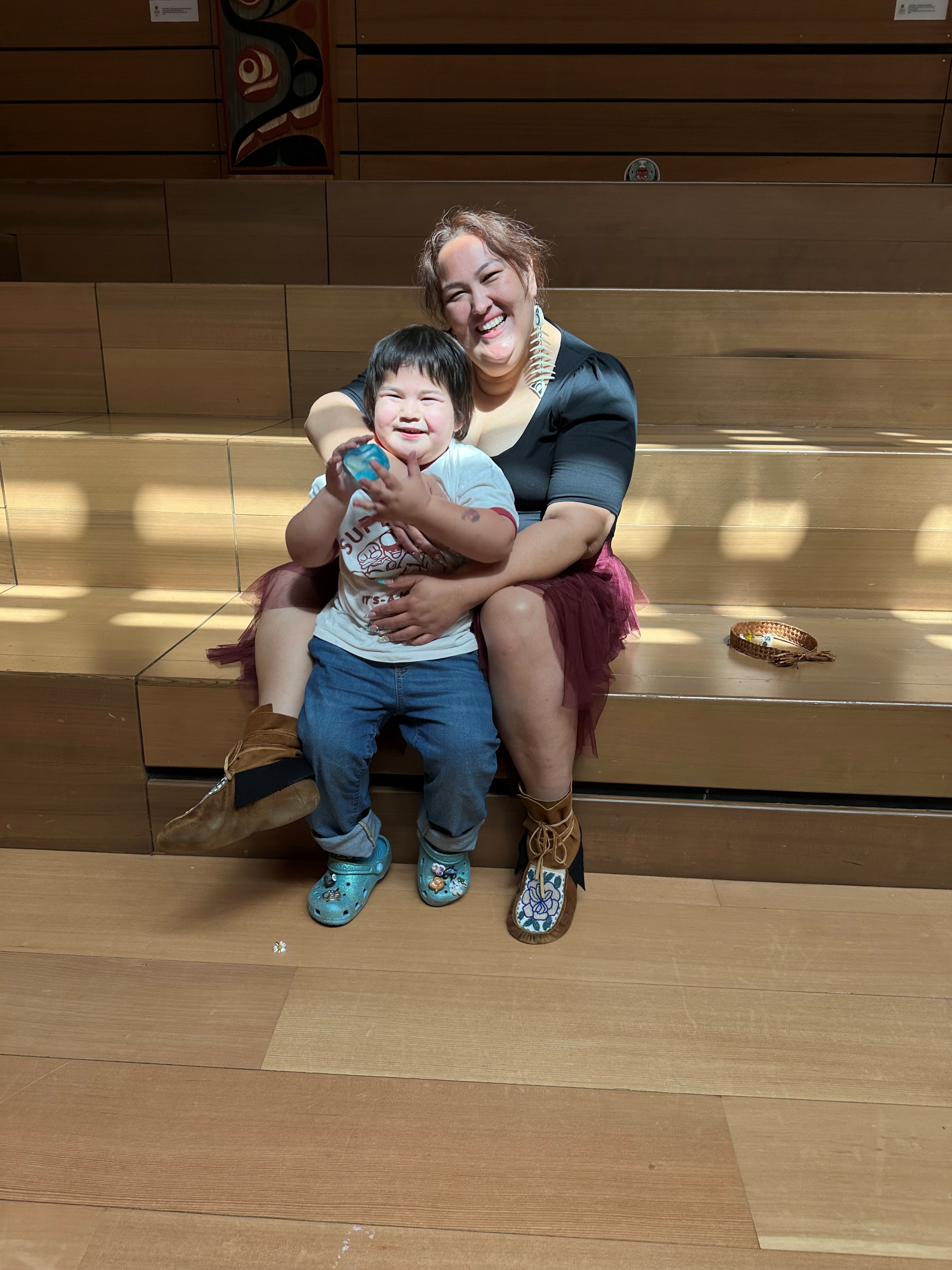
Alana Sayers, 38, successfully defended her dissertation about what it means to be Nuu-chah-nulth on April 15, with her four-year-old son Taryn and her niece and nephew looking on.
“That was important to me, wanting them to be there to witness that, because that’s how we do things, you bring the young people,” said Sayers, who is from Hupačasath First Nation in Port Alberni on Vancouver Island and Alexander First Nation near Edmonton, Alberta.
“I feel like the strongest version of myself and I’m glad that it was this version of me that wrote,” she said. “I was able to work with some really amazing people, and they are the reason I made it through.”
Sayers’ dissertation is titled ‘Revitalizing Hupač̓asatḥ Navigational Knowledge: Mapping the Waters of Settler-Colonialism Using a Critical, Coastal, Community-Based Consciousness’. It’s about being from a reserve, the colonization of coastal First Nations and simply working with the current realities of how things are for Indigenous people. Sayers now has a Doctor of Philosophy degree (PhD) from the UVic English department.
Dr. Adrienne Williams Boyarin, UVic English professor and Humanities Associate Dean of Research, was Sayers’ grad advisor for several years. She called Sayers’ dissertation defence, which was held at the Ceremonial Hall of UVic’s First Peoples House, a “joyful experience”.
“There was drumming and song, family, children, and many supporters in attendance. It was also the day of Elder Dr. Skip Dick’s funeral, so there were remembrances of Dr. Dick’s legacy and his huge impact on UVic,” said Boyarin.
In a statement, UVic wrote that Dr. Skip was “a guiding light, a teacher, a Knowledge Keeper and an advocate for Indigenous education, culture and community.”
“His life’s work left an everlasting mark on this university, Camosun College, the Victoria Native Friendship Centre and across communities throughout these territories and beyond,” UVic’s statement said.
The university flag was lowered on the day of his funeral, April 15.
Boyarin went on to congratulate Sayers, who can now be called Dr. Sayers, for defending her work “brilliantly”.
“Alana is a trailblazer in many ways, and English literature as a discipline—like many academic disciplines, founded on colonial, nationalist, and exclusionary canons—has changed a lot in the last few decades, opening up what it means to study literary traditions and methodologies. Alana is part of that change,” Boyarin said.
UVic English Department an ‘alienating’ experience
Sayers says she grew up learning from her great uncle Bert Mack and great aunt Jesse Hamilton about the importance of education. They were both hereditary chiefs.
“They knew that we were going to be entering the ‘Paper Wars’ and they wanted us to be able and go get the training that we needed so that we can fight back the best that we could,” said Sayers.
As a child, Sayers went to Haahuupayak Elementary School on the Tseshaht First Nation reserve and was taught Nuu-chah-nulth culture and language alongside other students.
“Nuu-chah-nulth-aht were the heart and centre of the education and that laid the foundation for me,” shared Sayers.
But she says that sense of Nuu-chah-nulth community quickly went away when she switched over to Alberni District middle school and secondary school.
“That’s where racism began. Everything changed. All of a sudden, everything I knew wasn’t valued. It wasn’t centered,” said Sayers.
Flashforward to her years-long pursuit of a PhD at the University of Victoria and Sayers expresses a similar hardship tied to an “ongoing pattern of racism” within the English Department.
In one incident during her Masters, Sayers said she called a male professor out for using all the assigned readings in an Indigenous Literature class being written by Caucasian anthropologists. She said the professor changed the location of the classroom because he thought he “wasn’t safe”, without notifying her and another Indigenous student.
“We were registered students in this class just having a discussion about the text in there. You wouldn’t think that would happen. They do,” she said.
At another time, she said she was asked to braid her hair to attend teachers’ office hours.
“It was very, very creepy,” said Sayers.
She said the hardest part of pursuing her doctoral degree wasn’t the academic part, it was the “regular racism” she experienced on campus.
“I want other people to know that. It’s okay to not make it through, it’s okay to try. It’s alienating, it’s isolating, it’s lonely,” she shared. “Taryn is the reason I was able to push through and make it to the end.”
On behalf of the UVic English Department, Boyarin acknowledged that “challenges and systemic barriers continue to exist for Indigenous students throughout the post-secondary sector in Canada.”
“The University of Victoria is not immune to this issue, and we are working to address it,” said Boyarin.
Within the English Department, Boyarin says the university hired an Indigenous literature scholar (who will start in 2027) and introduced the position of Indigenous Storyteller-in-Residence in 2024. Individual instructors have also worked to “decolonize their syllabuses and create new opportunities for Indigenous students”, according to Boyarin.
In 2023, UVic published an updated ‘Indigenous Plan’, which reinforces the institution’s commitment to “implement responsibilities and calls to action from all levels of government in support of the rights and sovereignties of Indigenous Peoples, including the BC Declaration on the Rights of Indigenous Peoples Act (DRIPA Act).”
UVic’s Indigenous Plan, or Xʷkʷənəŋistəl | W̱ȻENEṈISTEL meaning ‘Helping to move each other forward’ in Coast Salish (SENĆOŦEN) language, features a welcome message from Dr. Skip Dick.
“Our people are not just carving the wood on the doors; the doors themselves are all opening up, all over, in a really good way. Our advice is no longer staying on the bottom shelf collecting dust; we are ensuring that the university’s ears are listening, and that we are stepping outside our comfort zone to feel what it’s like to listen in a different way,” wrote Dr. Skip.
UVic currently has about 85 Indigenous faculty members, according to Boyarin.
Sayers is a single mom and was raised by a single mom, Cloy-e-iis (Judith Sayers), Nuu-chah-nulth Tribal Council president. With her doctoral complete, she says she’s looking at opportunities that could keep her at home in Hupačasath.
“My dream teaching position would be able to work with Indigenous graduate students and go into their community,” said Sayers.
She shared that her academic journey took her to places like Hawaii and New Zealand to connect with other scholars and present her work.
“These experiences really changed my life,” she said.