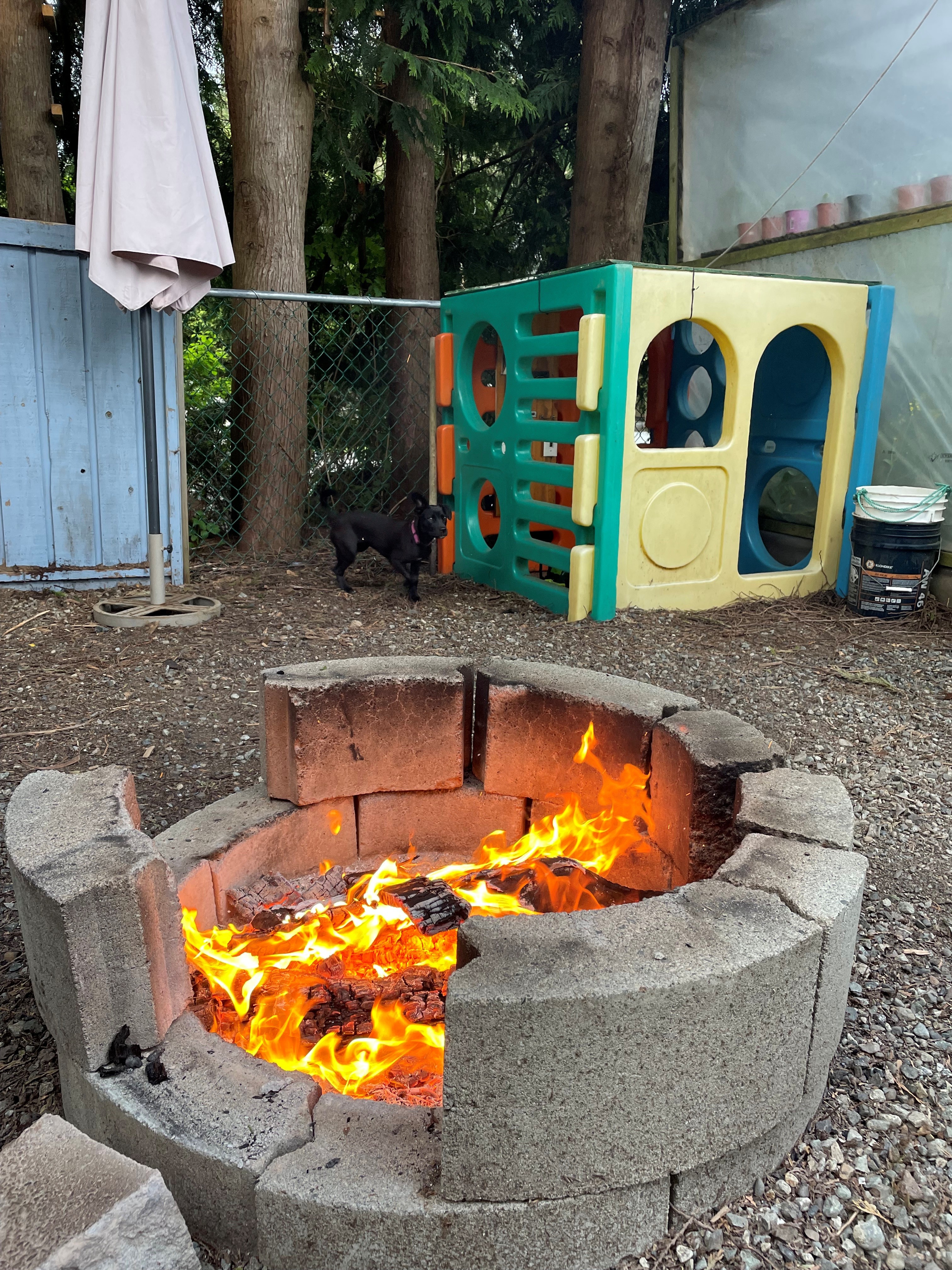
As of noon today, camping trips on B.C.’s coast will entail empty fire pits.
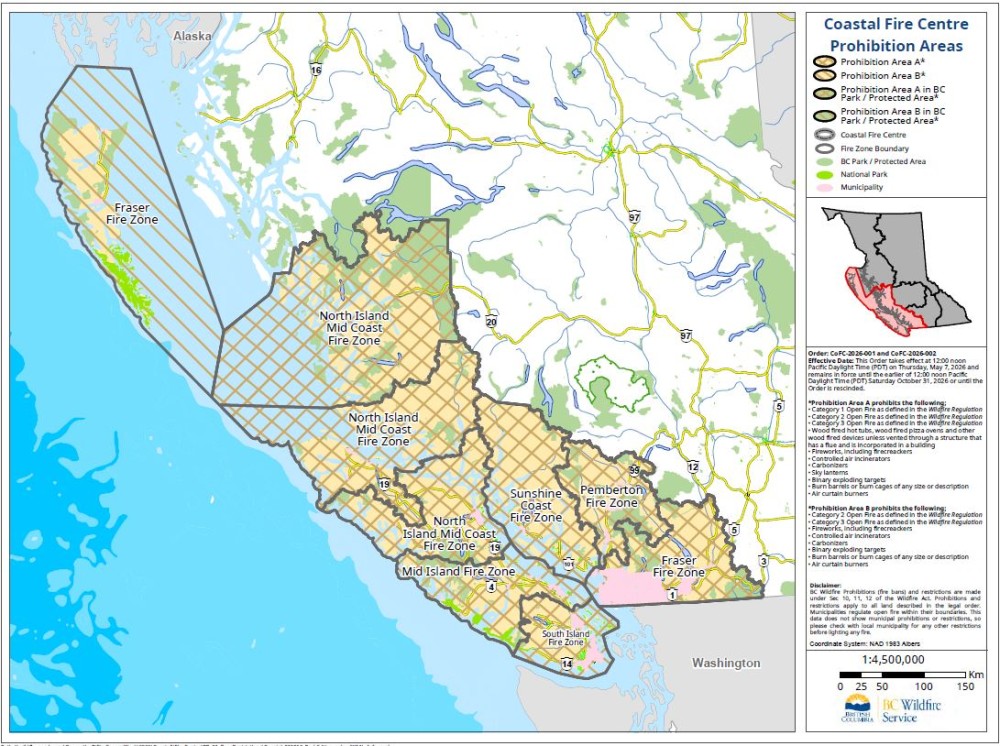
The provincial government says open fires throughout the Coastal Fire Centre’s jurisdiction, with exceptions for Haida Gwaii, are prohibited. The prohibition will be in place until October 31, 2026, or until the order is rescinded.
“It’s the earliest ever, but at the same time it’s certainly dry out there. After last year we certainly don’t want any more wildfires,” said Sproat Lake Volunteer Fire Department Chief Mike Cann.
B.C.’s Coastal Fire Centre covers the Lower Mainland, Sea-to-Sky corridor, the Sunshine Coast, Vancouver Island, the Central Coast and Haida Gwaii.
Last year, the Coastal Fire Centre’s campfire ban didn’t take effect until July 17. In 2024, the fire ban landed around the same time on July 12 and in 2023, the fire ban was early on June 8.
“It’s earlier than typical for the area,” said Erika Berg, fire information officer for Coastal Fire Centre.
“Coming into the May long weekend as well we are going to have a lot of people visiting the Island, so just to limit that risk of human-caused wildfires we made the decision to implement the prohibition a little earlier than usual,” said Berg.
Most of the area within the Coastal Fire Centre has a Moderate or High fire danger rating, including the ‘West Coast Fog Zone’, a two-kilometre-deep strip of land along the outer coast of Vancouver Island. In the past, this fog belt was exempt from open burning restrictions.
BC Wildfire opted to remove the exemption in 2019 to reduce confusion and limit the risk of human-caused wildfire.
“During the 2018 fire season, which was the last year the Fog Zone was in place, 23 per cent of suspected campfire-caused wildfires on Vancouver Island were located within the Fog Zone boundaries,” said Berg.
Cann adds that the coastal region has lots of afternoon winds.
“Be careful of anything you burn. Cigarettes are horrible for causing wildfires. You have to be careful on ATVs and dirtbikes if they don’t have spark arrestors, and leaving cars idling on grass fields could cause a fire,” he said.
The Coastal Fire Centre ban prohibits open fires used for recreational activities, fires used for ceremonial purposes, larger burn piles used for disposing of grass or stubble and burn barrels. It also prohibits fireworks and any wood fire devices that aren’t vented through a structure that has a flue and is incorporated in a building.
In the Haida Gwaii Forest District campfires (Category 1) are still permitted while larger burn piles (Category 2 and Category 3) fires are prohibited.
Cann says the most important message he wants to share with the public is to FireSmart their own properties.
He said the Alberni-Clayoquot Regional District (ACRD) offers a FireSmart program for residents living in Tseshaht First Nation, Hupacasath First Nation, Beaver Creek, Cherry Creek, Sproat Lake, Beaufort and the City of Port Alberni.
The Sproat Lake Volunteer Fire Department sells WASP Gutter Mount Sprinkler Brackets for $199, Cann notes. The WASP sprinkler kits include two gutter mount sprinklers and two 50-foot hoses that hook up to garden taps.
“Hook it up and just drop it into the gutter of your house. Put the tap on and it sprays water around,” said Cann.
“If there is a fire in your neighbourhood, you want sprinklers up high on your house. You want to be careful you don’t cause water damage to your house, but at the same time you want to raise the humidity level; you want to build a humidity dome around your property,” he said.
Last August, the Mount Underwood wildfire broke out near China Creek Marina just outside of Port Alberni on the Bamfield Main Road. The ACRD said it was the worst wildfire in their history. Power to the western communities of Anacla, Bamfield and Nitinaht was cut for 12 days, as crews worked to safely access the area to repair the fire-damaged poles and power lines.
At the end of July last summer, the Wesley Ridge wildfire burned on the opposite side of Cameron Lake from Highway 4. The highway remained opened as crews tackled the fire for weeks and an evacuation order was issued for the area.
“We sent a crew up to Wesley Ridge for five days,” said Cann. “During that time we also had a three-person crew as an initial attack for the Alberni Valley and the West Coast because all the forestry people were busy with the Wesley Ridge fire.”
He said his department is ready for the hot and dry summer ahead.
“We put together a forestry trailer with a bunch of forestry pumps and hose to do the initial take care of our neighbourhoods if something does happen,” said Cann.
Campers can still cook on outdoor stoves fueled with gas or briquettes, with limitations. Berg says to check local advisories before heading out as some parks may have additional restrictions that prohibit camp stoves.
She said Coastal Fire Centre is already trending towards a record-high wildfire season with 30 total wildfires resulting in 140 total hectares since April 1.
“That is over double our 10-year average and the majority of those have been human-caused,” she said.
“It’s still early to make strong conclusions or comparisons, but we just don’t want to be trending in that direction. If we can limit some of that, it will set us up for success. We know it’s no fun having (campfires) restricted, but ultimately, it’s to prevent wildfires so we can enjoy the outdoors for longer and not have smoke impacted skies,” said Berg.
Campfires are currently still permitted in all the remaining fire centres in the province: Cariboo, Kamloops, Northwest, Prince George and Southeast.
To report a wildfire, call 1-800-663-5555 toll-free or *5555 on a cell phone or report via the BC Wildfire Service App.
- With a file from Denise Titian