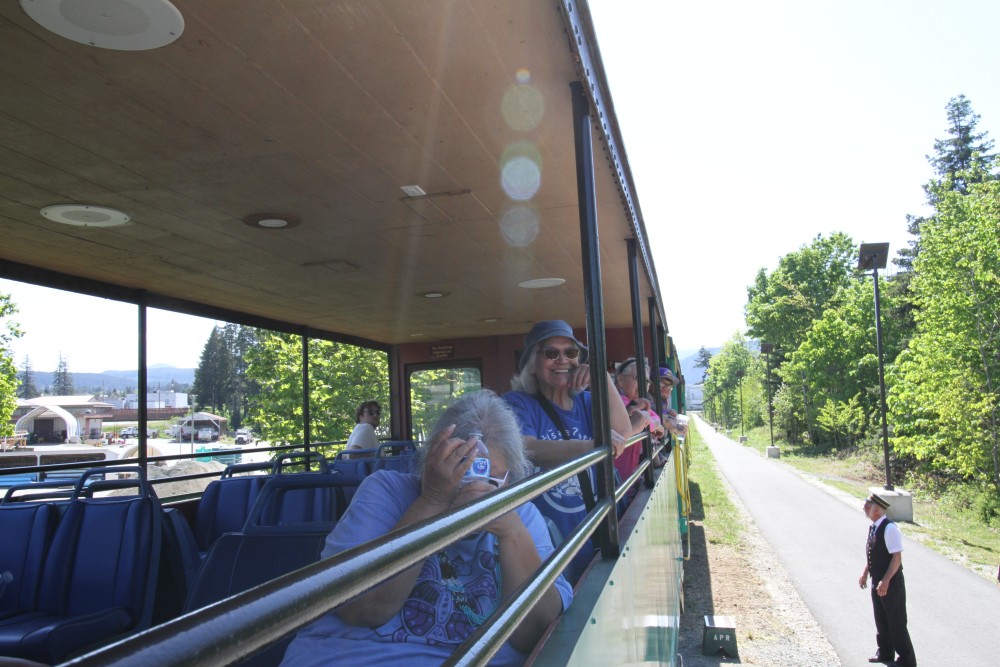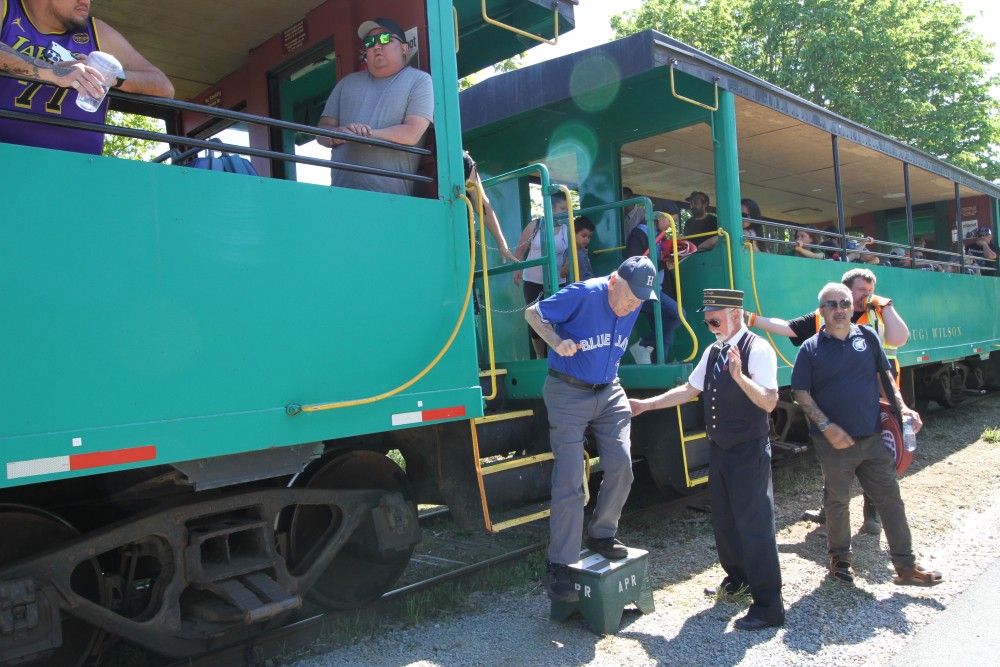
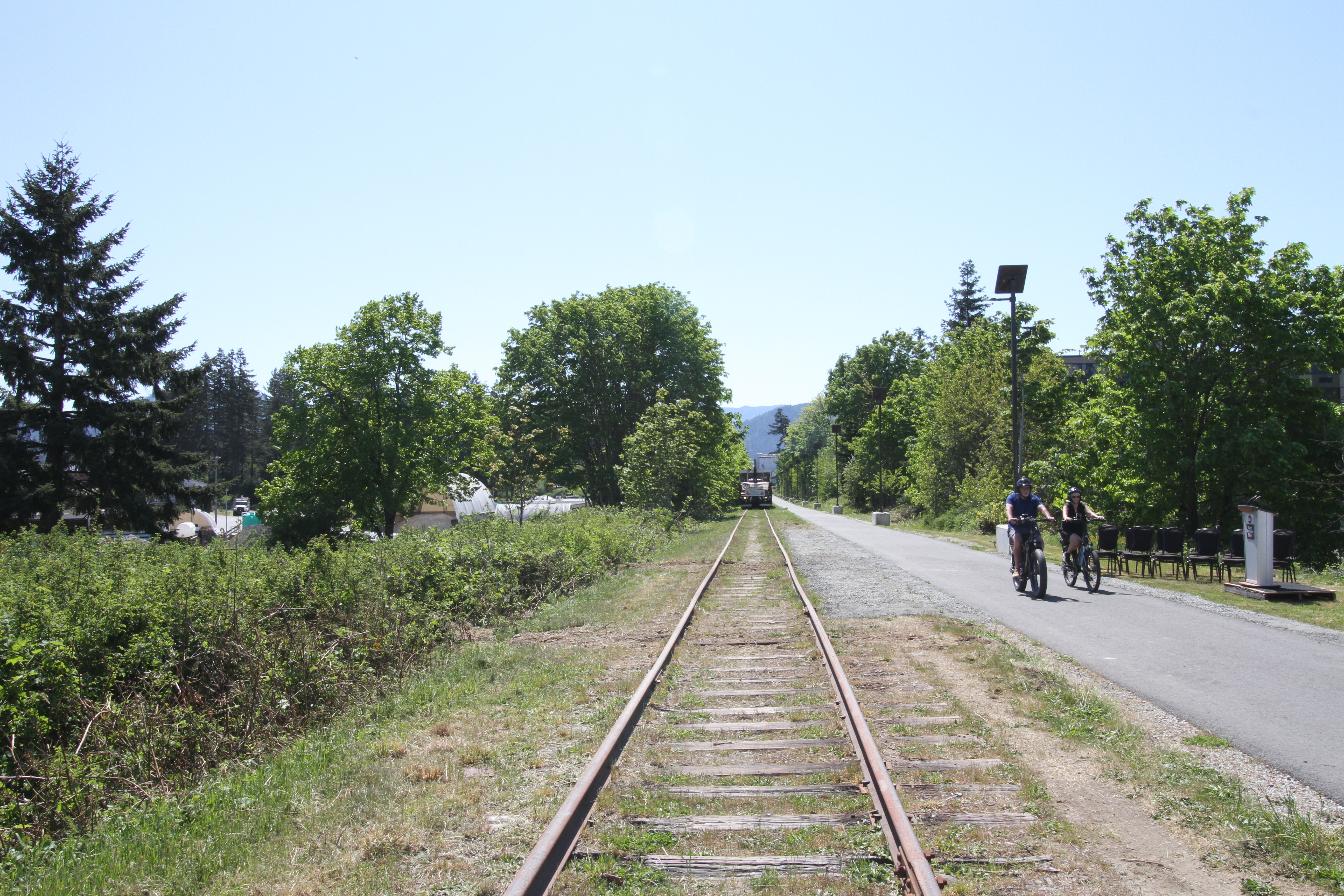
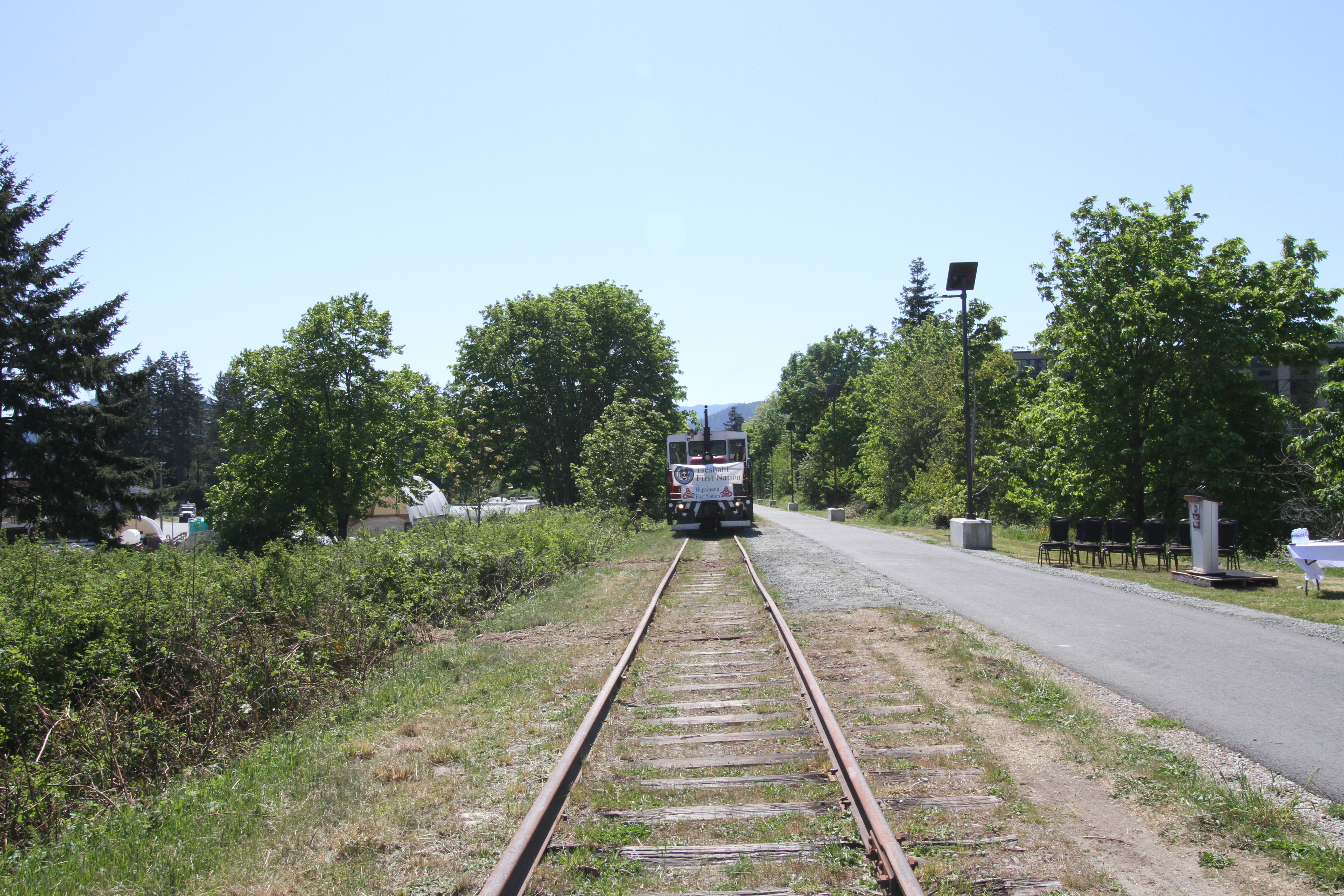
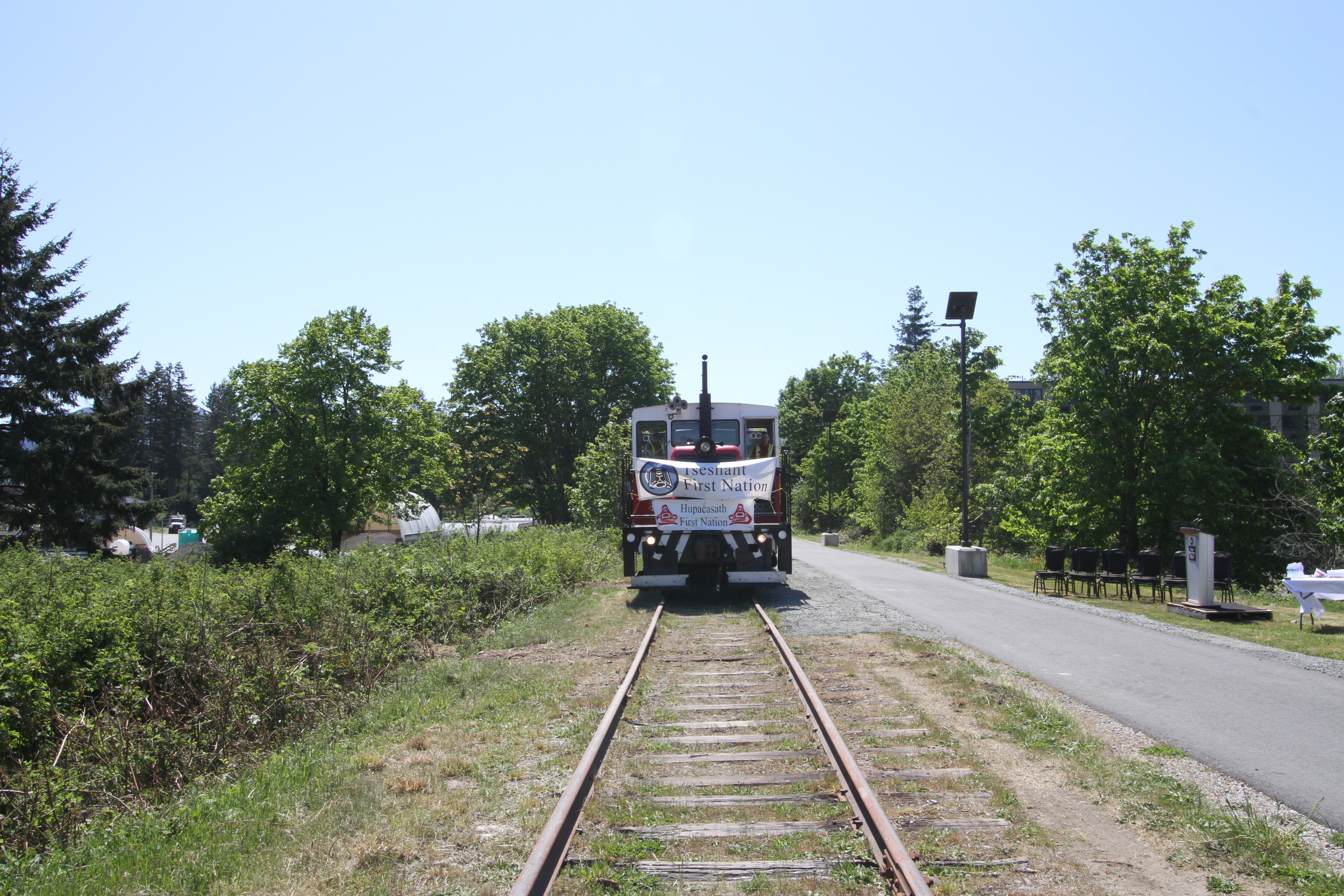
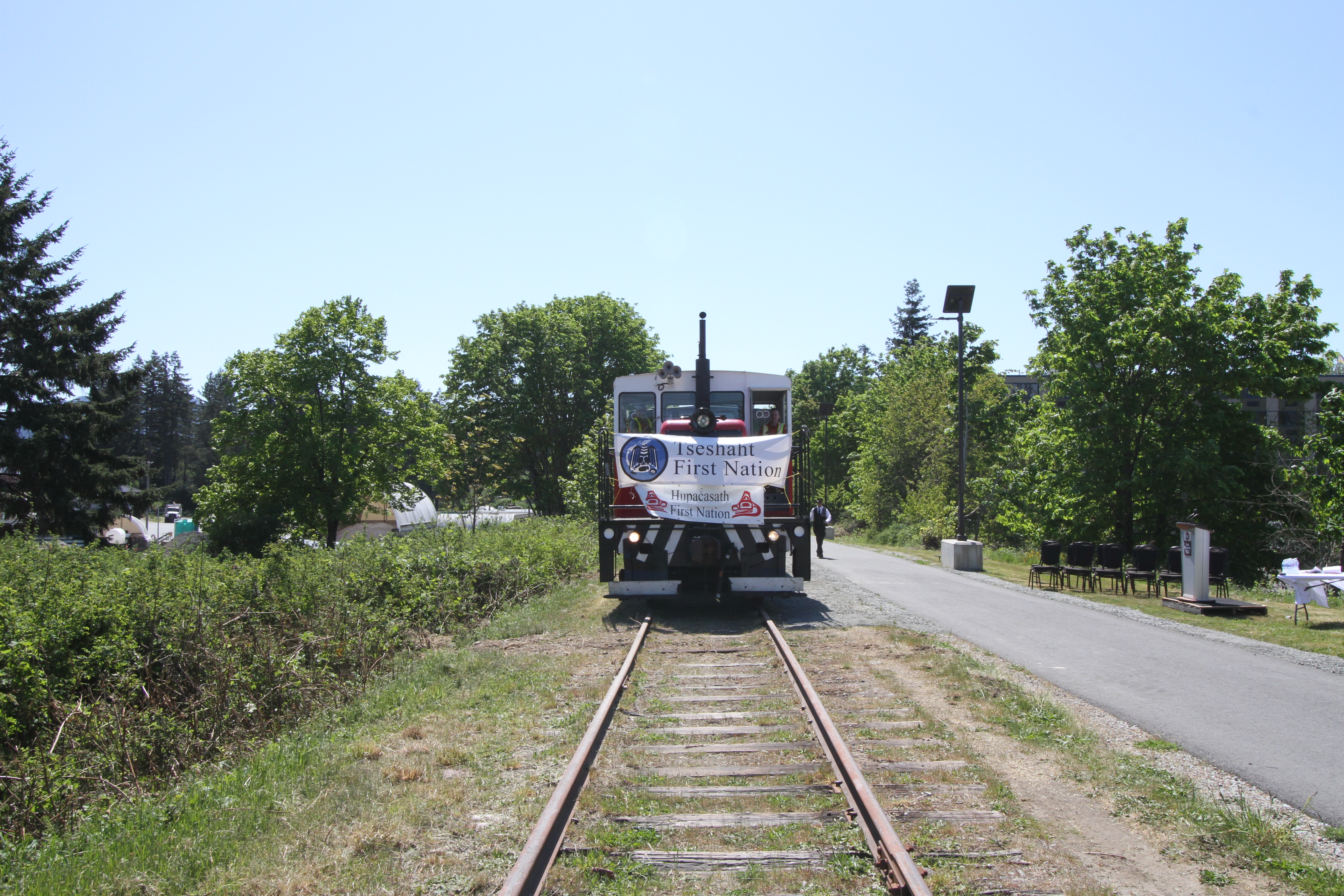
After two years of running a short stint along Port Alberni’s waterfront, the historic train extended its route today to the Barclay hotel - with hopes of eventually running the attraction to the eastern extent of Nuu-chah-nulth territory at Cameron Lake.
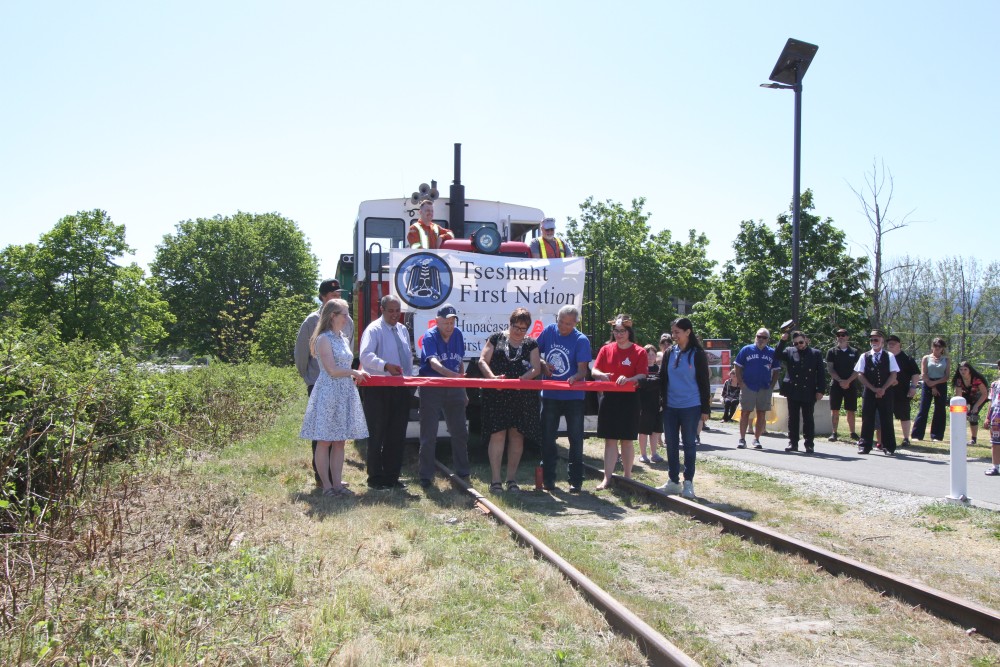
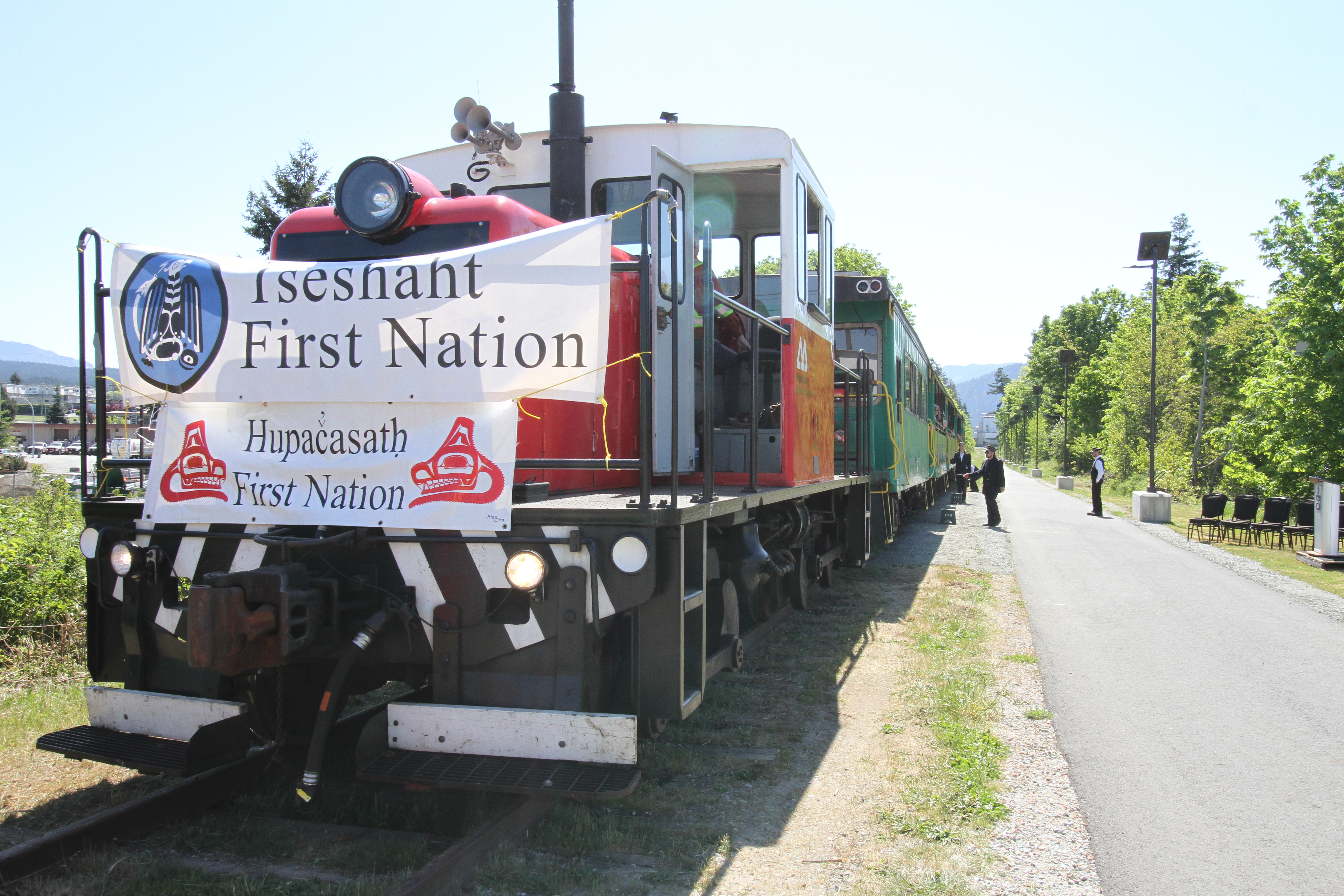
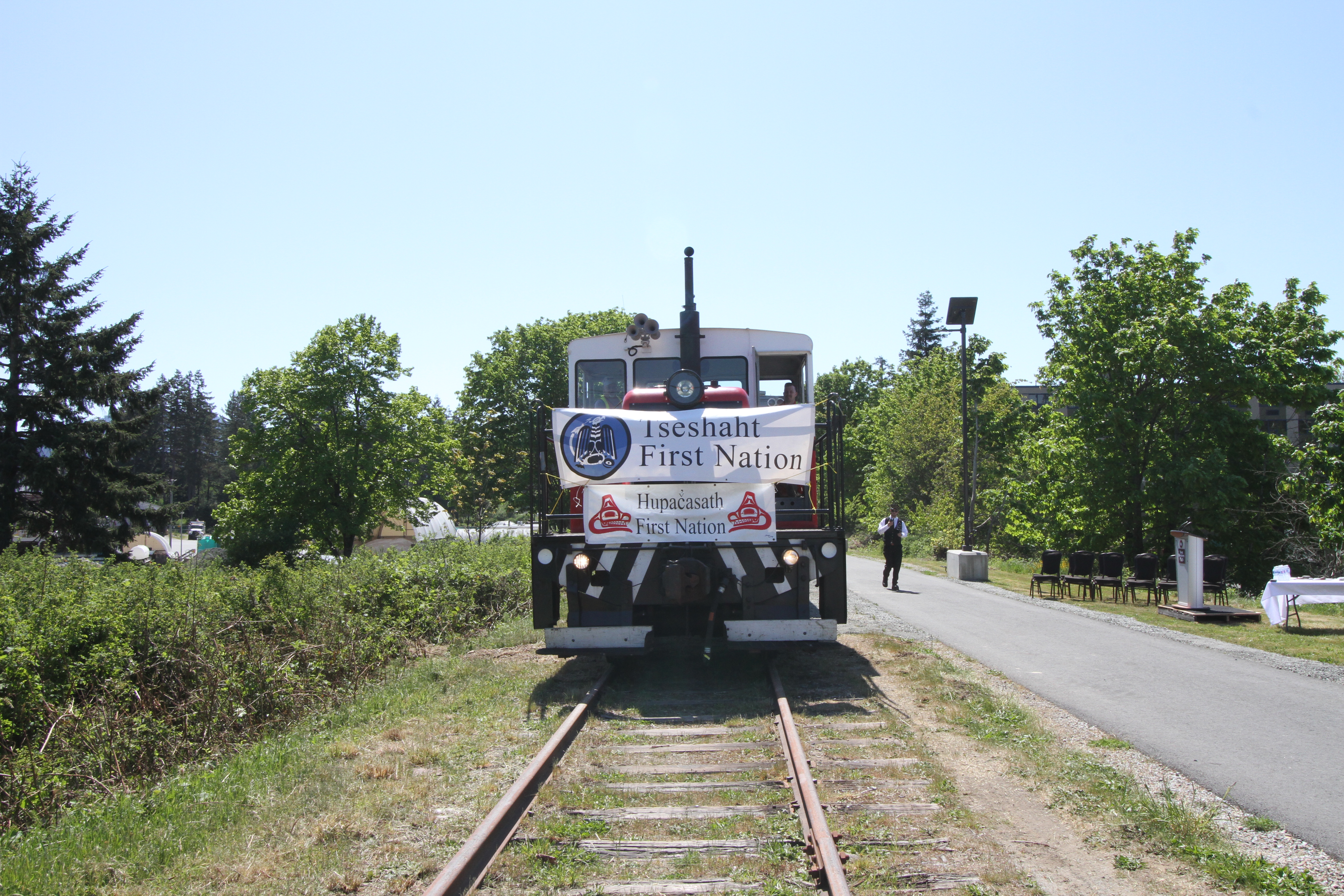
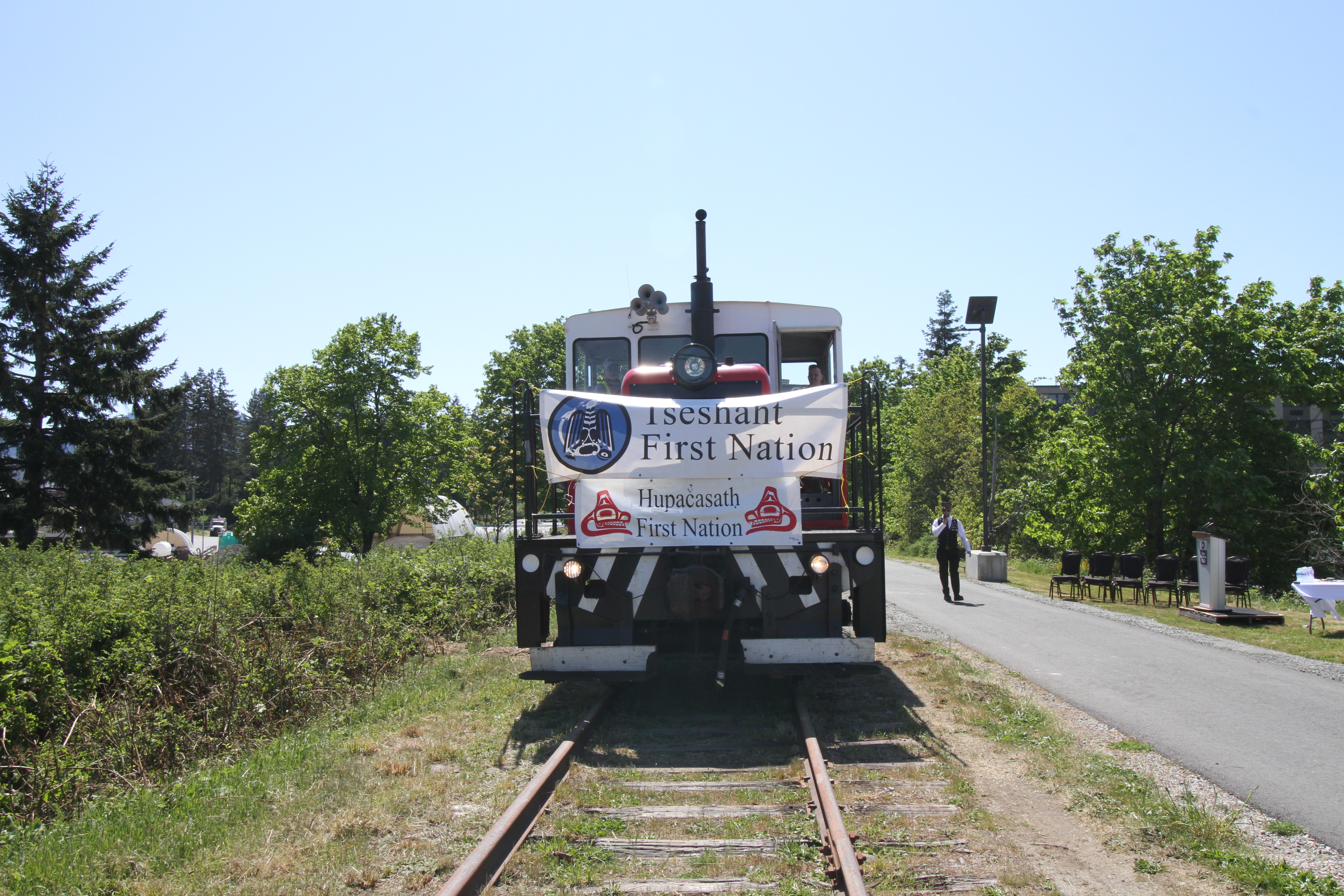
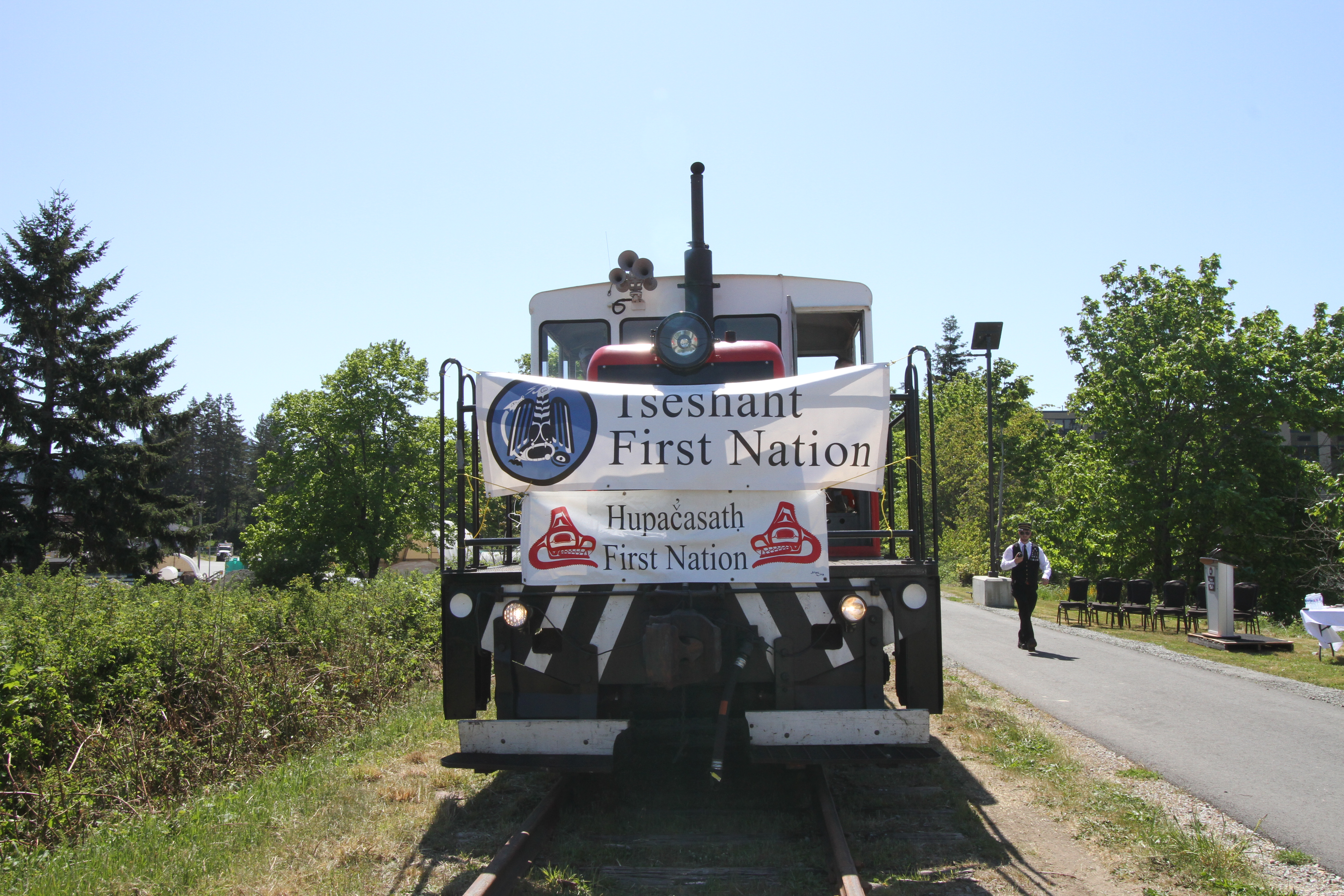
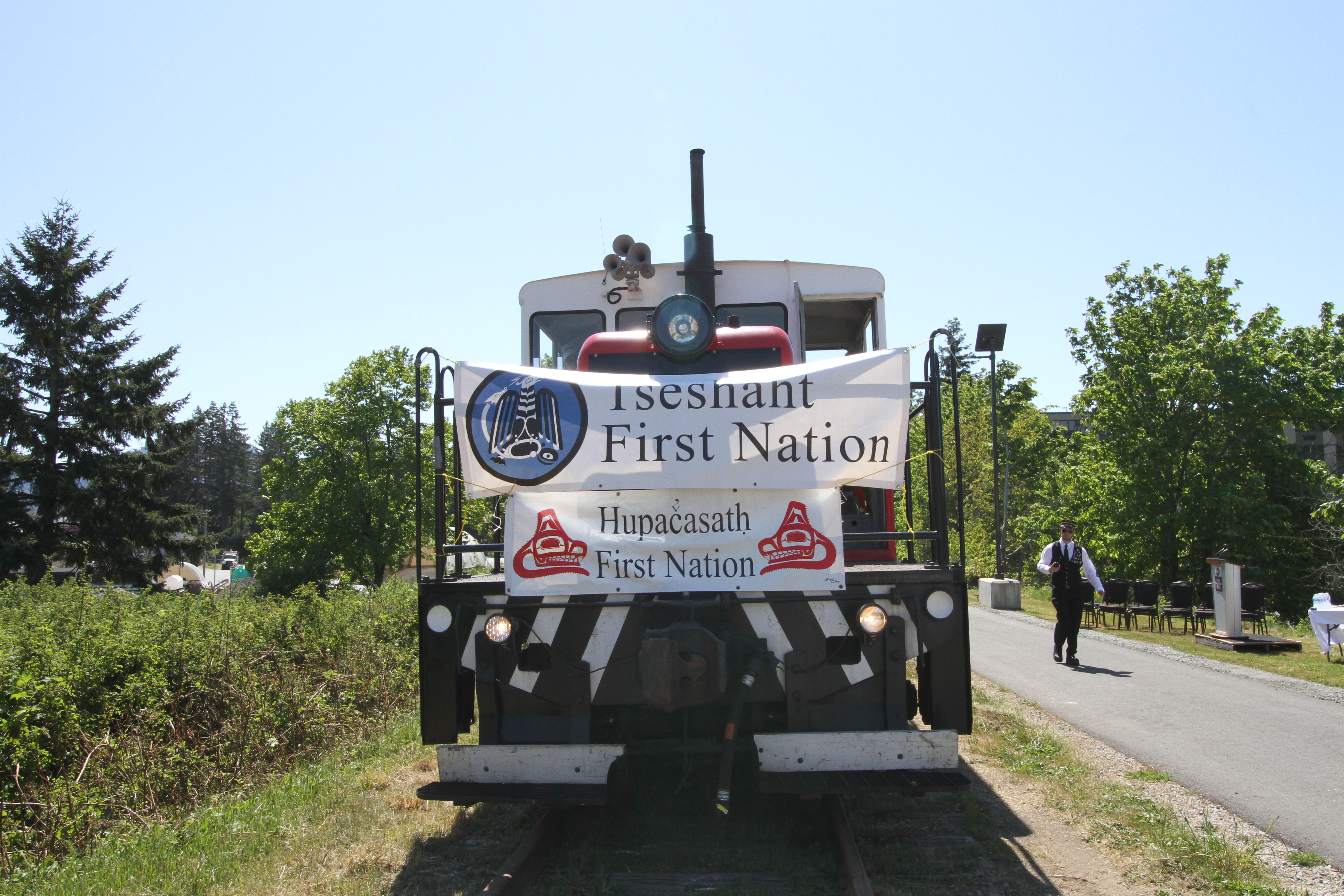
The Alberni Pacific Railway’s No. 11 1954 diesel locomotive pulled up to the tracks by the Best Western Barclay Hotel early in the afternoon on May 2, the furthest that the train has carried passengers since in halted trips to the McLean Mill National Historic Site in 2018. Stretched across the front of the locomotive were banners for the Tseshaht and Hupacasath First Nations, recognition of the local Indigenous communities’ recent involvement in the effort to revive the railway.
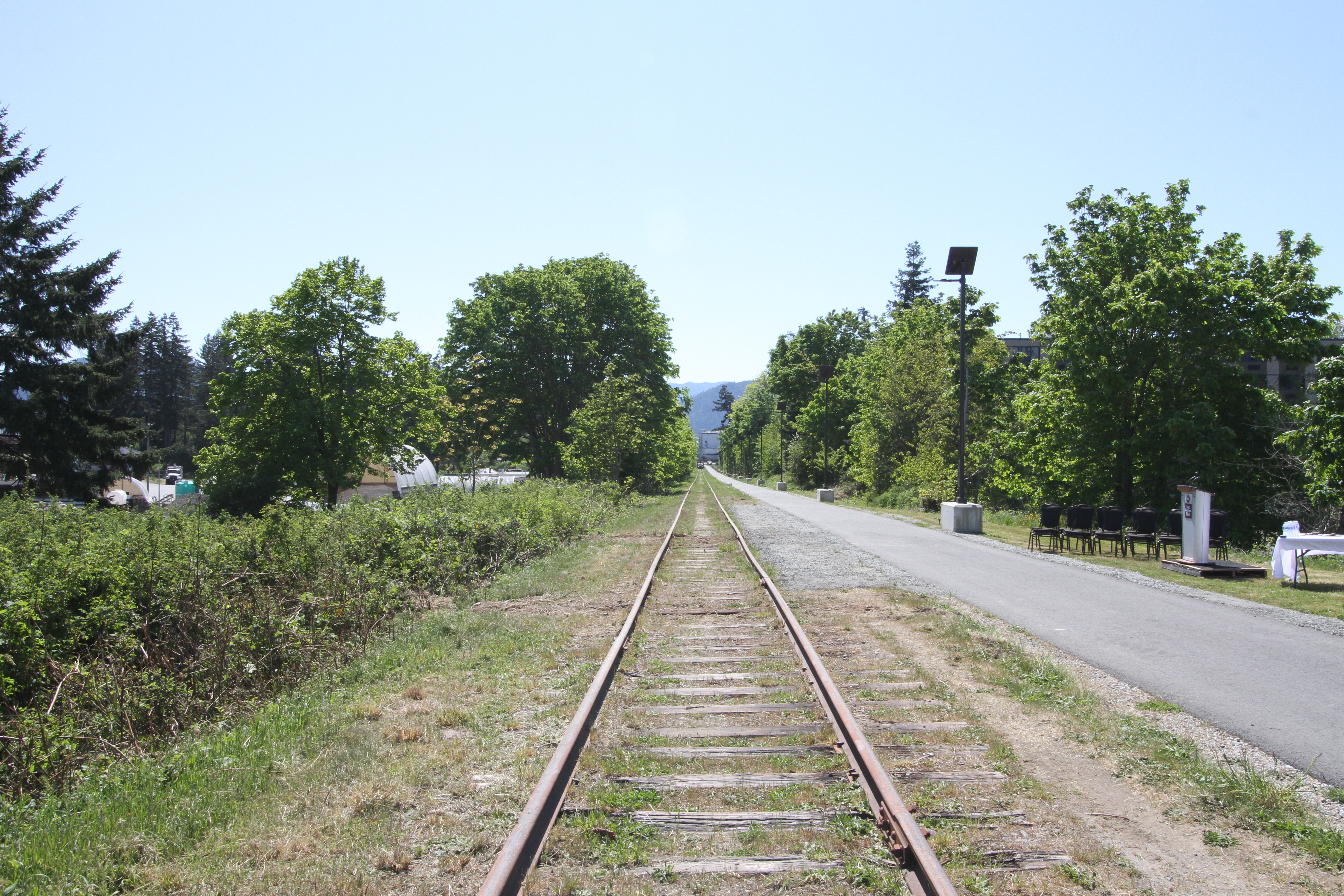
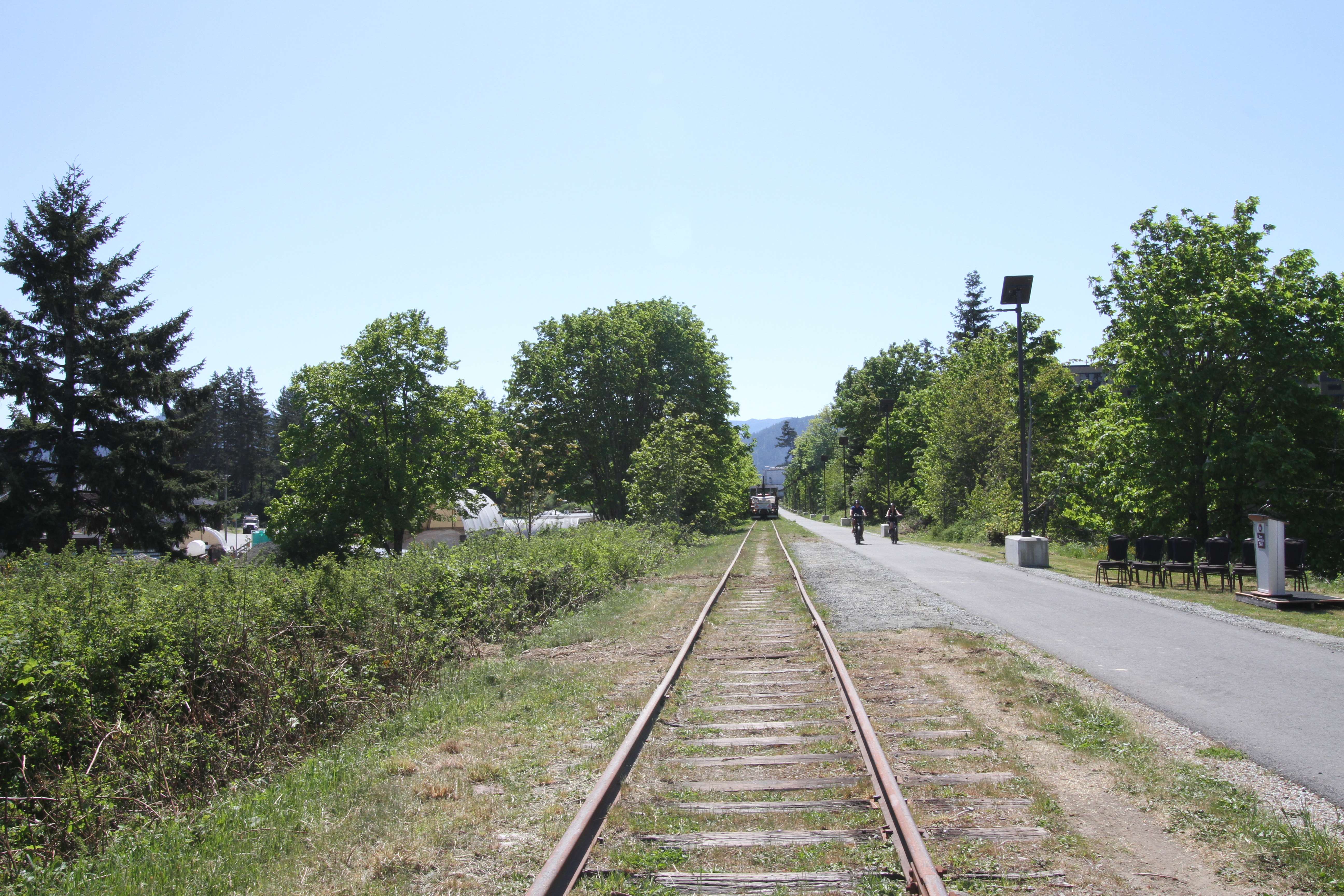
To restore the route as far as Roger Street Tseshaht members cut hedges to improve sightlines for the train, while the Hupacasath’s contracting company worked to replace railway ties and improve the track area around hotel. Restoring the whole extension to the Barclay cost approximately $20,000, shared equally by the Western Vancouver Island Industrial Heritage Society that operates the railway and the Island Corridor Foundation, a partnership of 14 First Nations and five regional districts.
“Most of the work was done around Stamp Avenue crossing. The signals haven’t been used in about eight years, so they need full inspections,” said Richard Spencer, the Alberni Pacific Railway’s operations manager. “The entire corridor around here was maintained up until 2018, so the track is still in quite good condition.”
In the early 20th century rail was an integral part of establishing industrial forestry in the Alberni Valley. Up until 2001 trains crossed the middle of Vancouver Island to reach the paper mill, after which time a growing reliance on highway transport came to replace industrial use of the railway. But the Industrial Heritage Society kept the railway active as an attraction, using their iconic steam engine as a tourist draw for trips out to the McLean Mill.
In 2018 these trips ceased when three boiler tubes in the No. 7 steam engine ruptured, putting the locomotive out of service for the rest of the summer. Then in early 2019 Port Alberni City Council opted to not fund the operation, facing the prospect of a $192,500 cost and a potential property tax increase to shoulder it.
“The business plan was not evolving at that time, so there needed to be some change,” noted Spencer.
By the summer of 2024 the city was able to find some funds to bring the service back with the diesel engine running a short 1.3 kilometres along the waterfront, and eventually the No. 7 locomotive was also once again whistling steam through the valley. The Alberni Pacific Railway hopes to have the steam engine running this year by Canada Day and every other weekend through the rest of the summer, said Spencer.
“We’ve had some problems with its boiler, so very minor maintenance issues that are just taking our volunteers a little bit longer than expected to do the repairs to,” he said. “There is always a lot of work involved in anything with old equipment. The steam engine specifically takes very skilled and knowledgeable people which don’t really exist that often in the world anymore.”
To some the appearance of the Tseshaht and Hupacasath banners on the front of the locomotive will bring a hint of irony, as the Vancouver Island railway corridor was cut through First Nation’s territory without their consent - “the product of a 19th century land grant that alienated two million acres of traditional territories,” stated the Island Corridor Foundation.
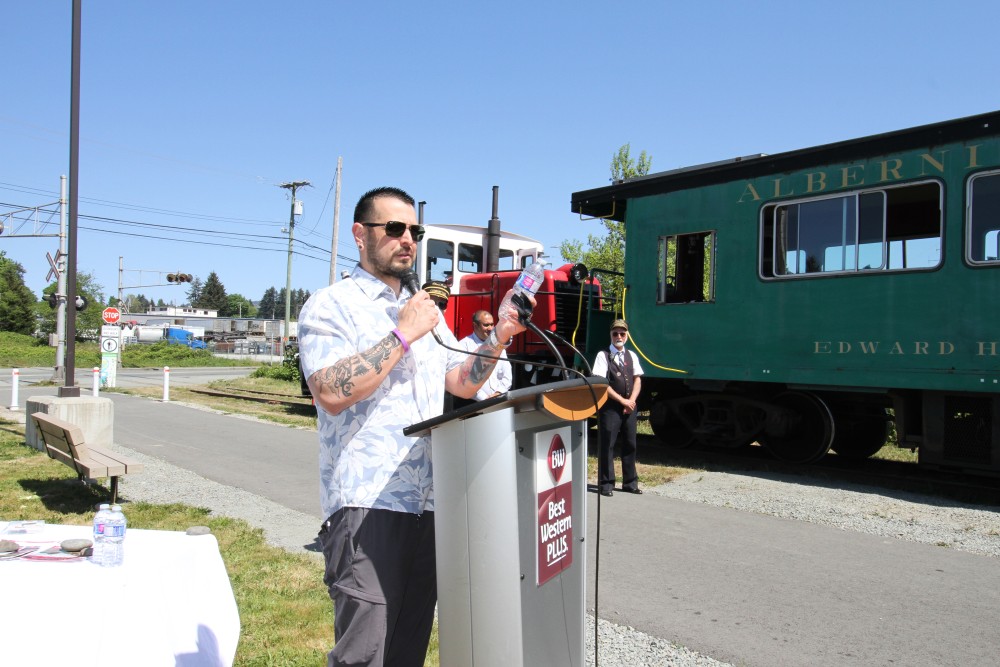
“The rail does have a history in terms of our territory that was taken from us, but we do see opportunities to work together so that we can all benefit from this,” mentioned Tseshaht Chief Councillor Ken Watts after the train reached the Barclay on May 2. “I was just sitting with our economic development officer, talking about the visitors that can come here and see certain parts of our territory, and the opportunity for our nations to share our history on this rail.”
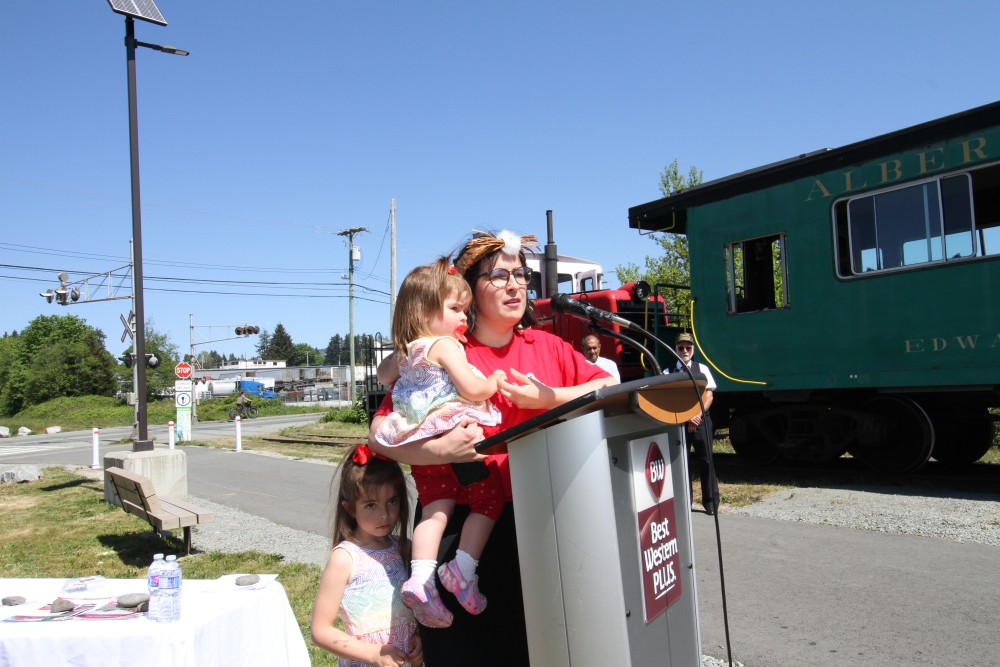
“Even with a challenging history, I think there’s opportunity to build a new path forward in a strong way,” added Hupacasath Councillor Serena Mayer, whose family has been enjoying the train since it re-opened. “It’s such an incredible way to experience our territory.”
Spencer admits that, until now, the involvement of the local First Nations has been a lacking component of the Alberni Pacific Railway.
“It is a portion of our program that has been missed for many years. It’s better late than never, I guess,” he said, noting that First Nations are a major part of the area’s history. “It’s ideal for tourism, it’s something unique about Port Alberni and the nations have so much to offer in that.”
Although there is considerable work ahead to restore the rest of the route, Spencer is confident that the train will once again run north of the city to McLean Mill. But others foresee the train going further east to Cameron Lake, reviving tracks that have not carried a locomotive in more than two decades.
“Everybody in the Valley would love to see this train go all the way out to Cameron Lake,” said Watts. “We’re going to do what we can to help support that vision.”
Port Alberni City Councillor Charles Mealey spoke of the tourist potential for such an extension to rail service, tapping into the popular attraction of Cathedral Grove’s old growth trees by Cameron Lake.
“Come to Cathedral Grove, get on a train, come to Port Alberni, stay here, spend some money and get back out on a train,” he said.