
From a shared house in Medellín, Colombia, Koyah Morgan-Banke from the Toquaht and Secwépemc First Nations says all her career aspirations are going to be impacted by AI.
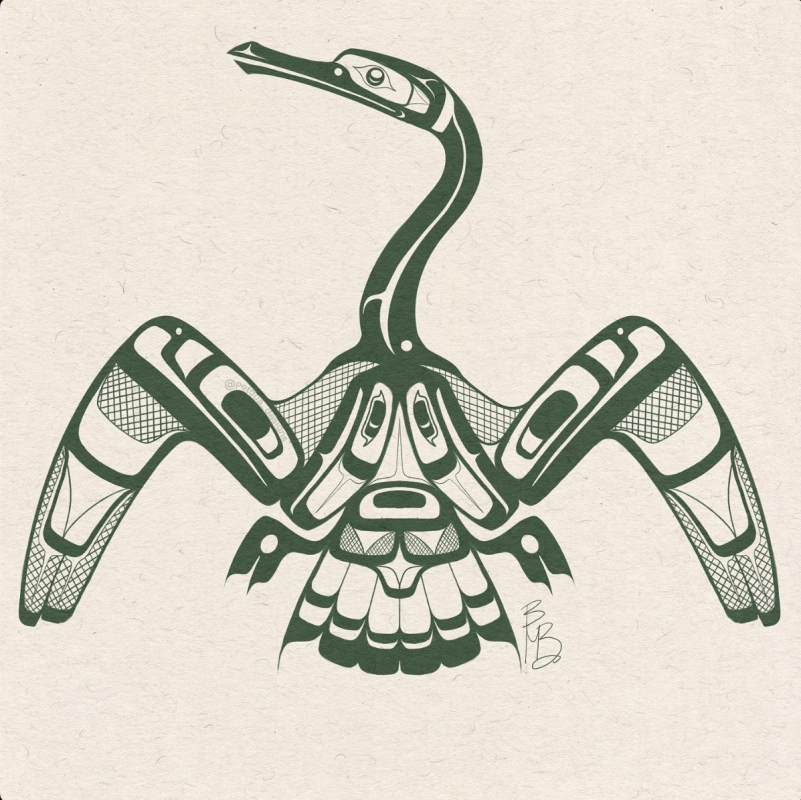
The 20-year-old is spending the summer in South America after signing with a modelling agency. The Ucluelet Secondary School graduate also specializes in Indigenous formline design and is studying Neuroscience at the University of British Columbia (UBC).
“In science, AI excites me because data analysis is so much easier now. In every other facet, specifically creative, it’s horrifying. It’s very, very scary,” said Morgan-Banke over Facetime.
When it comes to the modelling industry in 2026, Morgan-Banke says she is competing with computer generated models for gigs, and she has to be vigilant when signing contracts.
“I have to be careful because I don’t speak Spanish very well. I could definitely sign a form and two years later I’m on a diaper ad,” she said.
Some contracts request permission from the model to create an AI rendition of their likeness and then just pay the model a flat rate, according to Morgan-Banke.
“Me and the girls living in the house, we talk about it. It’s so creepy. You lose a lot of autonomy. You don’t know what people are going to use these images for,” she said.
Artistically speaking, Morgan-Banke is contracted by several organizations, including the Nuu-chah-nulth Tribal Council and UBC, for her Indigenous drawings. One of her designs was the emblem for Pink Shirt Day Canada’s 2023 campaign and she also has an orange shirt featured on Tourism Tofino’s Makuw̓as market.
Today there are dozens of free AI art generators that can quickly produce formline designs. The real artists behind the work are not compensated and the art is currently not required to be labelled as AI-generated content.
“That is horrifying. I don’t think a lot of people know how much effort goes into these designs and how much culture is actually present in them,” said Morgan-Banke. “Art is the expression of a person. In my mind, it’s supposed to be something only a human can make. When AI is making it, it kind of takes out the light and joy. It’s formline vomit.”
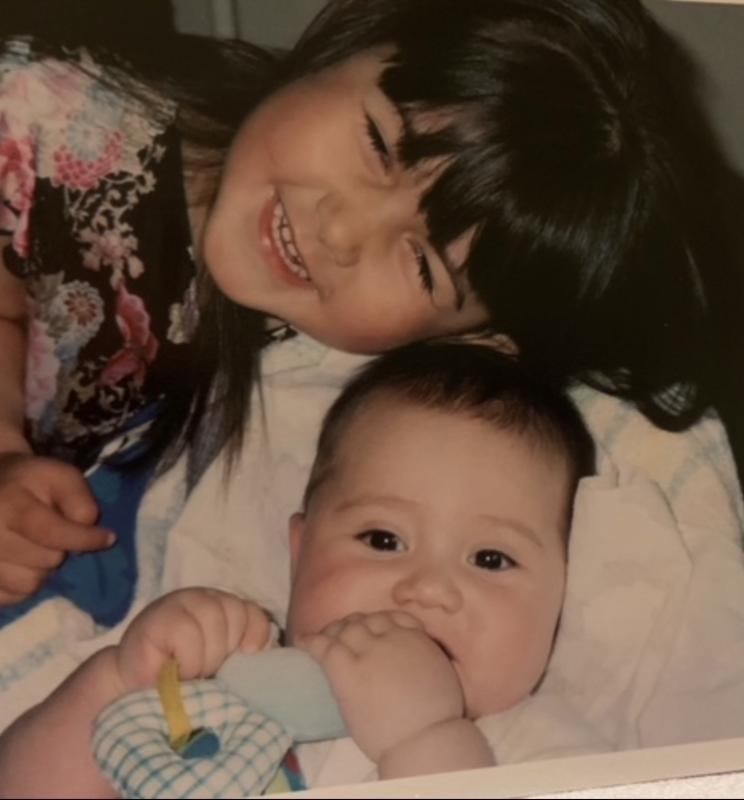
Morgan-Banke was taught the traditional method of formline drawing by her older sister, Bayja, who is a full-time illustrator for Indigenous Marketing Solutions. The company does a lot of graphic design and communications for Indigenous businesses or companies that want to appeal more to an Indigenous audience.
“We will never send AI to a client. No drafts, no preliminaries, no finals. We do not produce AI, ever,” said the older sister.
Bayja, 24, explained that formline is a method used by many coastal Indigenous cultures in Canada and in the U.S. She said the formline refers to the line that connects everything in the drawing.
“For me the process of the art is a lot of storytelling. I think a lot of that is lost when there is so much single-use purchase junk out there,” said Bayja.
She thinks it should be illegal for people or businesses not to disclose when something is created by AI.
“That might sound a little bit extreme, but I don’t think it’s fair to anyone consuming it. I don’t think we should have to be so skeptical browsing the internet,” said Bayja.
On June 4, Prime Minister Mark Carney launched ‘AI For All’, Canada’s new national AI strategy. The federal approach is to use the technology more and aims to position Canada as an AI innovator.
“We envision a Canada where AI is not a threat, but a critical piece of technology which enhances everyday life for Canadians. Done right, AI can be a powerful force – harnessed with innovation and deployed with intention for the betterment of society,” reads the government document.
Canada’s new “responsive and adaptive” AI strategy outlines six pillars; the first is centred on protecting Canadians and safeguarding democracy. One key action item under the first pillar is to “work on AI transparency, including capabilities like watermarking of AI-generated content, so Canadians can better understand when they are interacting with AI systems and AI-generated content.”
The Carney government also says it will update laws to protect “vulnerable groups from online violence and algorithmic biases,” including providing Canadians with legal tools to combat deepfakes, which are when AI replicates someone’s likeness – often in the form of a video without their permission.
Bayja says the introduction of AI-generated art takes jobs from an already small pool or opportunities. She hopes the technology triggers a “renaissance” that makes real artwork all the more valuable.
“I’m really proud of artists who are not buying into AI and who are continuing to practice their culture and teachings,” she said. “I think of art as a very safe area to be in. I’ve been very fortunate to not have to go through addiction in my life, but every time something hard happens to me, I turn to art as a place to go when I need something.”
“AI erases the experience of doing (art) and having that calm space for yourself. I want to say to all the artists who have gone through struggles that I am really proud of you for sticking with it and turning pain into something beautiful and worthwhile. I hope more people can turn to that,” Bayja continued.
Koyah wants to see artists compensated when their art is replicated by AI – and she wants to see AI tools culpable for “basically stealing” work from Indigenous creators who are already largely underrepresented.
“It’s very easy to start using AI, especially for something like making a cute poster for a BBQ. But when it comes to something like art, that should be way more regulated. Should you be even able to use AI for things that are supposed to be authentic?” said Koyah.
Bayja, who grew up with her sister in the artistic town of Tofino, B.C. where creativity was encouraged, expressed concerns about children using the technology.
“I worry mostly about children growing up around this. They are missing a whole learning curve,” she said.