A new study from Light House, a Canada-based non-profit focused on regenerative building practices, analyzed how demolition-bound homes could be relocated and repurposed as a housing alternative during the housing shortage crisis.
According to the study, A Second Life for Canada’s Homes, approximately 90,000 single-family homes will be demolished across seven major Canadian cities over the next decade.
The Assembly of First Nations estimates more than 108,000 additional housing units are needed nationally, with strong housing needs among First Nations communities in B.C., Alberta and Ontario — three provinces with the strongest potential source market for relocated homes.
According to the Aboriginal Housing Management Association (AHMA), a housing authority that advocates broadly for Indigenous housing, several factors contribute to the housing shortage. For example, most government housing programs are designed with municipalities in mind, not non-profit or Indigenous housing providers. In addition, some programs require providers to cover 20–30 percent of a project’s cost themselves — municipalities can draw on tax revenue to cover that, but non-profit housing providers usually cannot.
AHMA says that building more houses does not automatically help those facing housing insecurity, as units priced 20 percent “below market” are still out of reach for low-income families.
Young people under 25 and older adults (aged over 55) face higher housing vulnerability. Housing insecurity tends to hit hardest for people with limited income, fixed income, or limited access to affordable housing.
The study, in support of the Research Knowledge Initiative (RKI) by Housing, Infrastructure, Communities, explores home relocation options — physically moving existing homes from a redevelopment site to new locations to be renewed for continued use — across Vancouver, Victoria, Calgary, Edmonton, Hamilton, Toronto and Ottawa.
Many of the homes slated for removal still have years of life, and some are abandoned or need to be removed to build multi-unit residential buildings. Using a conservative, industry-informed estimate, approximately 20 per cent of homes selected for demolition may be chosen for relocation after checking their quality and mobility, offering a potential supply of roughly 18,000 homes over the next decade.
The criteria for considering a demolition-bound house for relocation include two factors: structural integrity and mobility. Cosmetic elements like appliances can be replaceable, but the structural aspects of the home, like the roof, framing, and foundations, should be solid enough for a home to qualify for a second chance.
The second aspect is how accessible it is to move a house from one place to another, accounting for dense urban surroundings, whether the project is financially accessible after coordination costs are included, and whether the home matches First Nations housing needs. While some neighbourhoods are impossible to access, Vancouver Island has enough space to rescue homes, with several moving companies ready for the work.
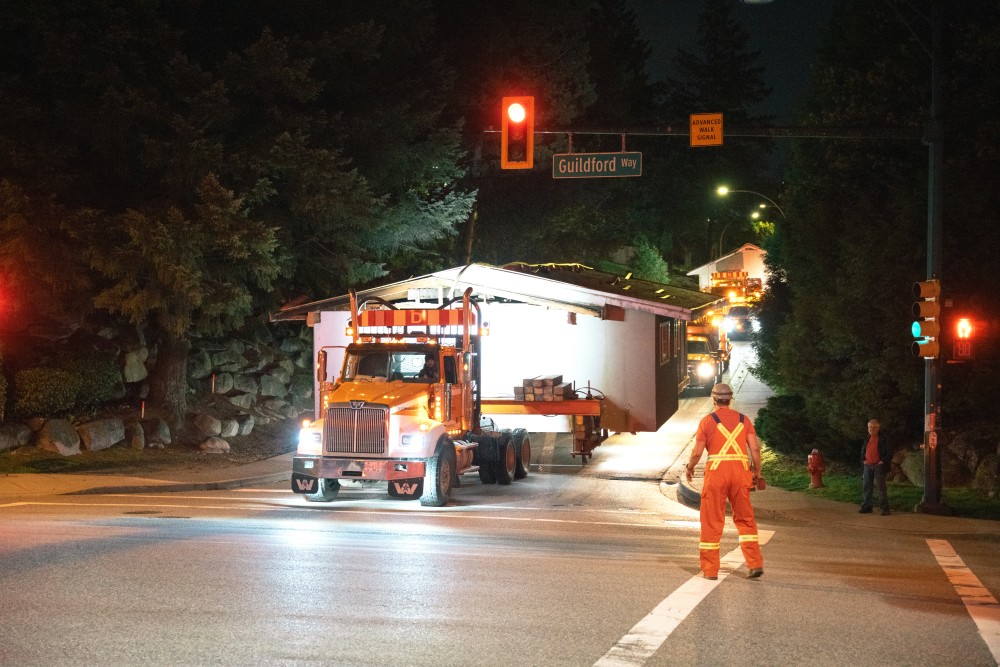
To move a house, the moving company needs multiple permits and approvals, depending on the city, involving utility companies, ecological protection measures, or police escorts. Usually, the moving company sells it to a buyer or stores it.
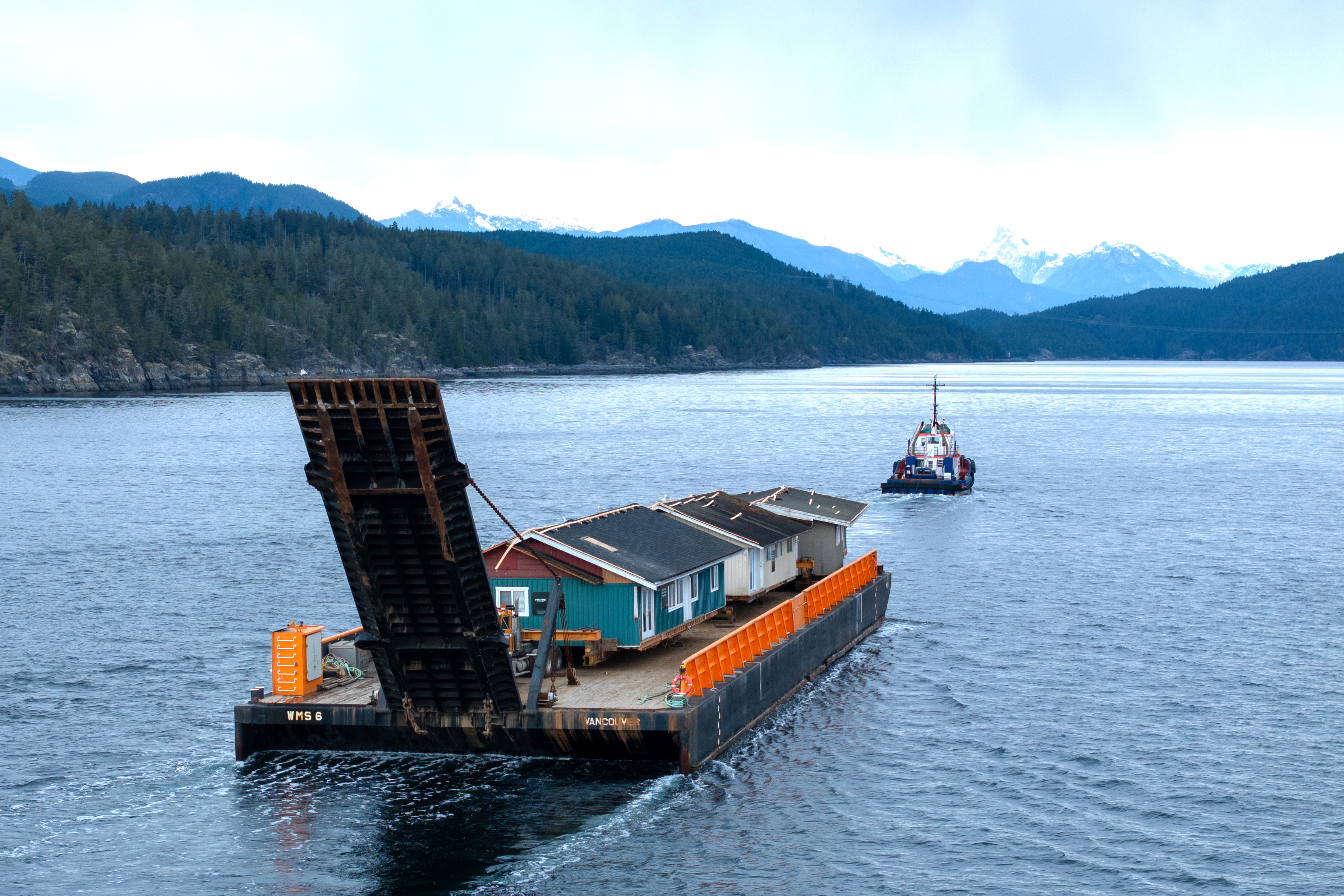
However, Renewal Development (Renewal) — a Vancouver-based company specialized in relocating and repurposing homes — goes beyond the standard. Renewal matches homes slated for demolition in First Nations communities, prepares receiving sites by pouring foundations, installing utility connections, and overseeing the restoration process.
“Any relocated homes to First Nations have to be Nation-driven. First Nations are [involved] in every aspect of the process. [They] select the homes, determine where they’re going to be located on their lands, and what kind of improvements are going to be made. There’s consultation with them all along the way,” said Gil Yaron, Managing Director of Light House.
The model is technically feasible across all seven cities studied, with limitations for each city, but under the right circumstances it could provide practical housing at a reduced cost, reduce carbon emissions and waste and be faster than conventional construction.
British Columbia is a prime example of the study’s effectiveness. Renewal has successfully delivered 32 relocated homes to four First Nations communities — shíshálh Nation, Sts’ailes Nation, ʼNa̱mǥis Nation and the Squamish Nation — at the request and expectation of each nation through the Home Relocation and Repurposing Program (HRRP).
The model also offers environmental advantages. A typical 1300-square-foot home represents approximately 49 tonnes of building material and 23 tonnes of embodied carbon, the emissions generated from producing and transporting materials used to build it. Relocating existing homes allows material reuse, reduces demolition waste, and avoids new emissions from manufacturing materials for replacement housing.
“We have a policy crisis that we’re facing today. We’ve a housing crisis, a waste crisis, and a climate crisis. Any strategies to preserve and provide housing that reduces waste and also addresses climate by reducing carbon emissions is something that we think is worthy of consideration by government and industry,” said Yaron. “We are bringing this forward as a strategy to incorporate into Canada’s National housing policy to provide housing, especially to rural communities and First Nations Communities.”
All levels of government need to work collaboratively with Indigenous governments, municipalities, and community-based housing organizations to address the housing shortage, as no single level of government can address the affordable housing crisis on its own.
AHMA calls on the government to root housing policy in a human-right-to-housing and Indigenous-governance approach. That means treating housing as a fundamental right; redirecting resources to those with the greatest need; recognizing Indigenous governance and jurisdiction at every stage of the process; designing funding that reflects the financial realities non-profit and Indigenous housing providers actually face; and ensuring governments protect the affordable housing that already exists.
“From a social housing perspective, housing is a right and people should have access to quality homes. We are perpetuating a situation of inequality and disadvantage. When you don’t have adequate housing, you cannot move forward to other aspects of your life because you’re focused on meeting your basic needs,” said Yaron.
The next step is for every party involved—government, the building industry and communities—to create the adequate conditions for home relocation on a wider scale. This involves identifying potential homes that still offer a second chance, matching them with the communities that need and want them, and addressing the permitting, financing and regulatory barriers.