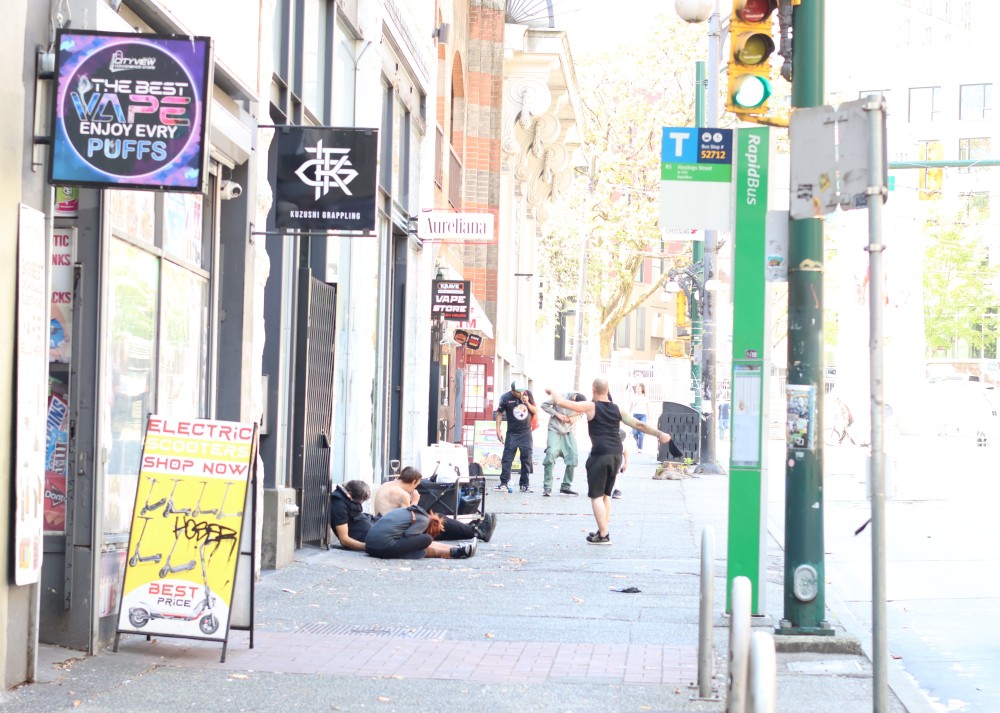
Across the street from Pigeon Park in Vancouver’s Downtown Eastside (DTES), a large orange feather pops into view from a storefront window.
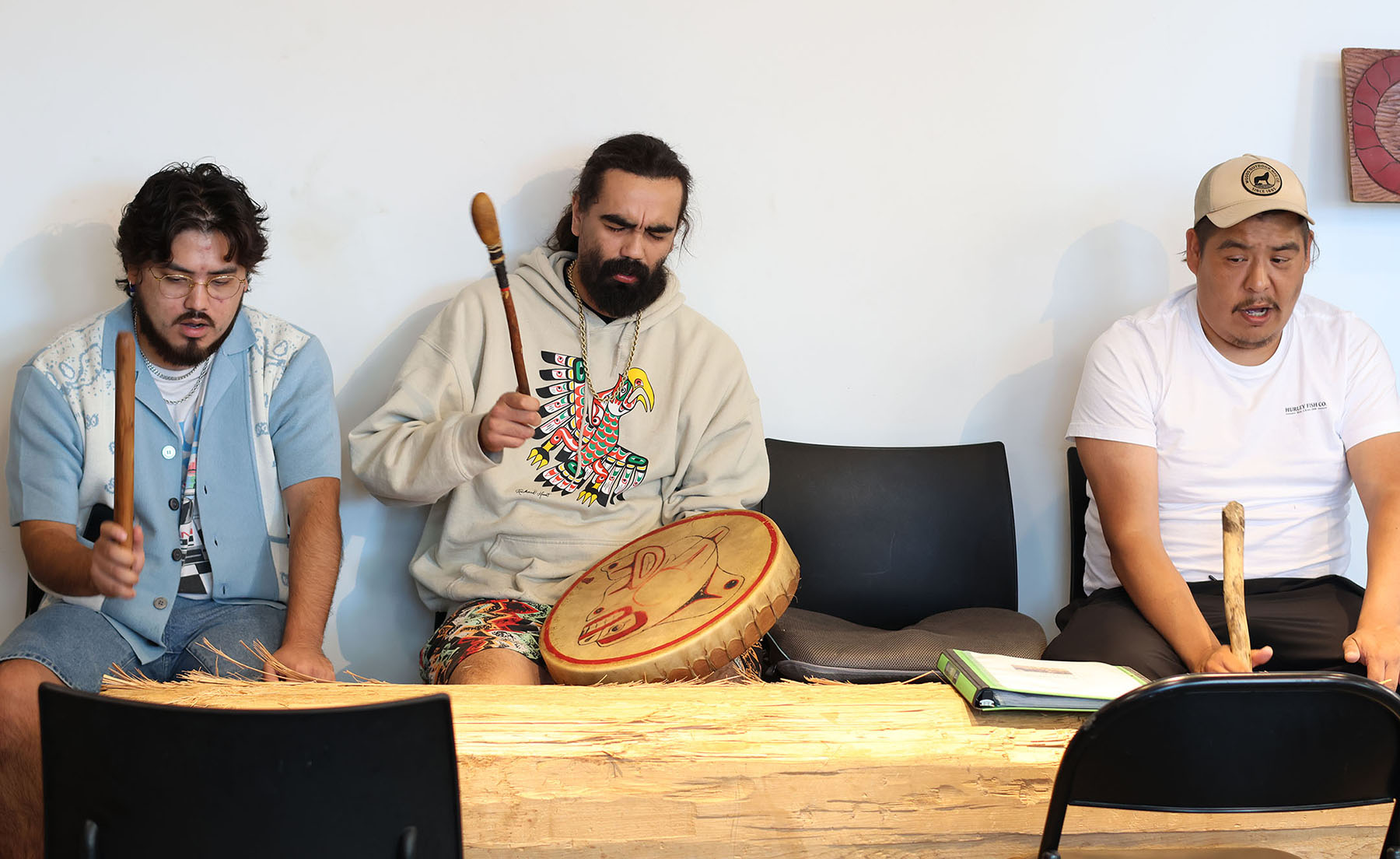
As one gets closer, the deep sound of traditional drumming bellows out the open door, inviting the country’s most marginalized in for a cup of coffee, a sandwich and a safe place for people to just sit and be.
Welcome to Culture Saves Lives, a movement founded by Patrick Smith in response to the tragic death of a young Indigenous woman named Paige.
Paige died in April 2013 of a drug overdose in a communal washroom adjacent to Oppenheimer Park in the DTES. She was just 19-years-old.
A report entitled “Paige’s Story: Abuse, Indifference and a Young Life Discarded”, came out in 2015 that chronicles the years of neglect by the child protection system, health care system, social services agencies, the education system and police that led to her death.
Between the ages of 16 and 19, Paige drifted through more than 50 locations, mostly in the DTES – among homeless shelters, safe houses, youth detox centres, temporary accommodations with relatives and friends, two ministry foster homes and various DTES SRO (single-room occupancy) hotels, according to the report.
“The system in Canada failed her. Shortly after aging out, she ended up in the community here and passing away. It was really upsetting,” said harm reduction leader Cody Hunt, who is of Kwakiutl First Nation (Fort Rupert) descent.
Hunt has been supporting people in the DTES community since 2018.
“Our culture is really complicated and when it comes to supporting people down here, you can’t make things super complicated,” Hunt explained.
“Really, when I boil our culture down at its most simplest form, absolutely every single part of our culture is all about connection; our connection to our Ancestors, the connection to the land, the connection to each other,” he continued.
If Paige had known who she was and had a strong foundation, Hunt thinks she wouldn’t have passed away so young.
“That’s one of the biggest things that community members are missing is connection. They don’t have a foundation of cultural connection, which is why culture saves lives. It gives us the ability and the context to connect with everything at a deep level and when you’re connected with everything you are not alone and you have a support system,” Hunt said.
During her years in the DTES, Paige had one very short period of attachment to a resource service called Young Wolves Lodge. The Young Wolves Lodge “appeared to understand (her) needs and be a positive reflection of culture,” notes the report. The program was a voluntary treatment centre for young Indigenous women that embraced First Nations ceremonies, traditions and teachings. It was closed in 2015 due to withdrawal of funding.
‘We welcome all people, not just First Nations people’
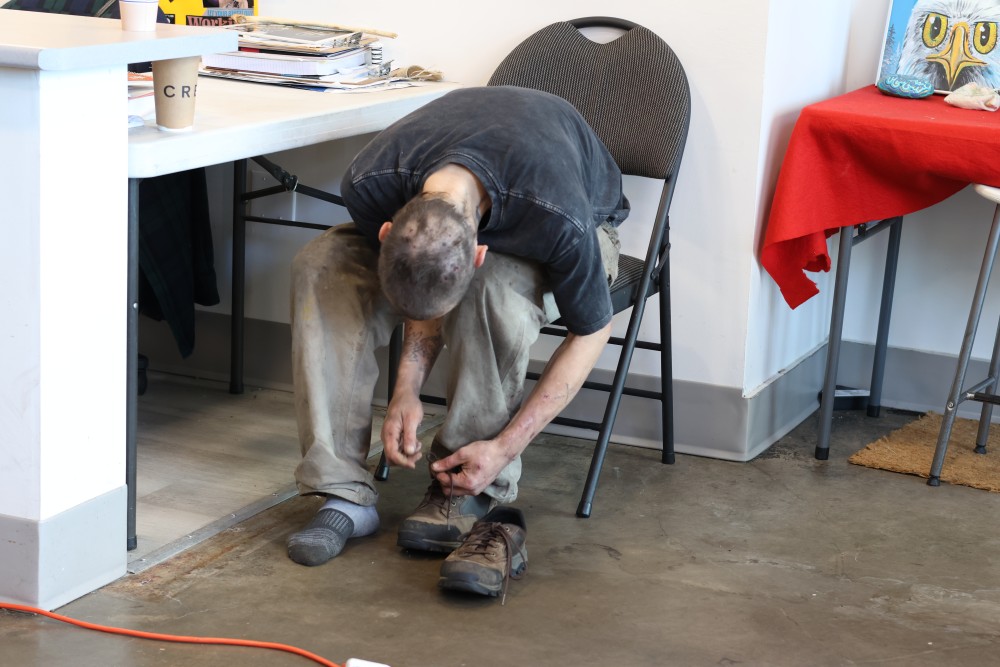
Three weeks of the month, Culture Saves Lives feeds the DTES community a meal, like sockeye salmon, potato salad and bannock. The singing and drum circles occur daily and as winter sets in, they offer workshops in language, cedar weaving and more. They also give out clothing, shoes and bedding.
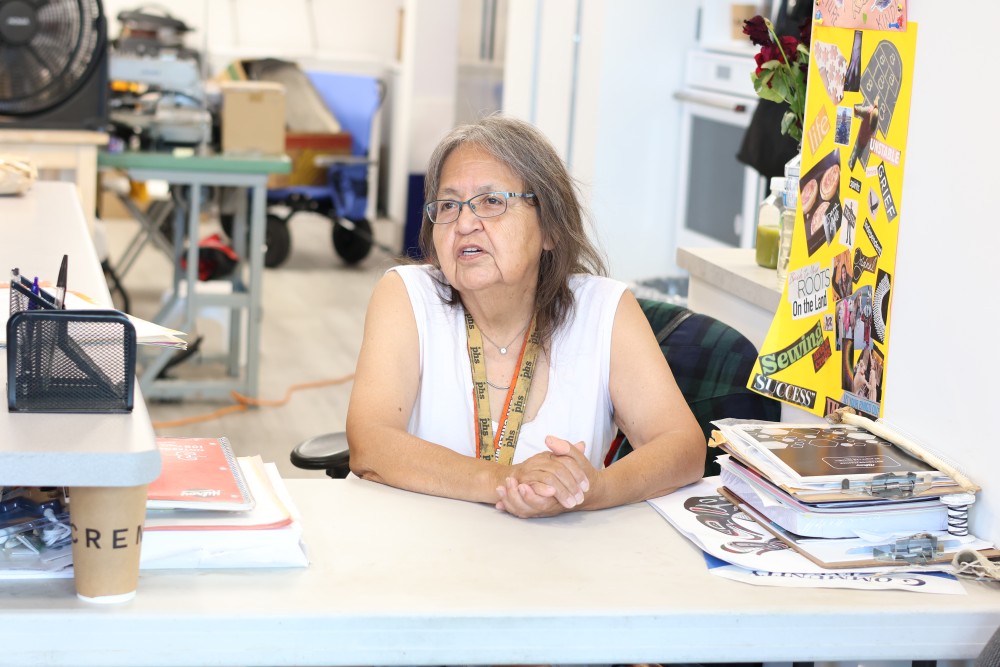
Mary (Lo) Durocher volunteers with Cultural Saves Lives. She is an urban Nuu-chah-nulth member from Ditidaht territory.
“I understand what the people are going through because I was on the streets at the age of 17. I hung out on Hastings for six years. I know what it’s like to crave and to bury the actual feelings that you need to deal with,” she shared.
“We welcome all people, not just First Nations people. We share our ears and we listen. If they want to know something, we give them feedback. If they want to clean up and go back home, we try to help them,” she said.
Durocher has three of her own children living in addictions in the DTES.
“There are so many young people down here, it’s scary,” she says. “Don’t ever give up on your children if they’re down here. I see a lot of Nuu-chah-nulth people every day.”
When asked what would support Cultural Saves Lives and the work they do, Hunter took a long pause.
“Sometimes… sometimes it’s really, really sad. You’ll see a young girl show up across the street and she looks 15-years-old. They’ll come in and we’ll be able feed them, and then they’ll want to go out and you’ll see them the next day all strung out,” Hunter shared.
“It’s such a tough thing because why is that girl running away from home? Are they running away from sexual abuse at home that nobody stuck up for them? How do I support them? If we had a proper channel of communication with different nations, we could make contact and get them out of here like right now,” he said.
“And that’s not something we need to ask for, really. It’s something everyone at home needs to look each other in the mirror and say, ‘How do I put my ego down to support people?” Hunter said.
Culture Saves Lives is one of several services offered by the PHS Community Services Society. It is a partnership with Indigenous and Northern Affairs Canada, Vancouver Coastal Health, First Nations Health Authority and the City of Vancouver.
Located at the tail end of the DTES at 30 West Hastings Street, Culture Saves Lives is 100 per cent Indigenous-run and open for drop-in Monday to Friday, 10 a.m. to 3 p.m. On Mondays, they serve pancakes.