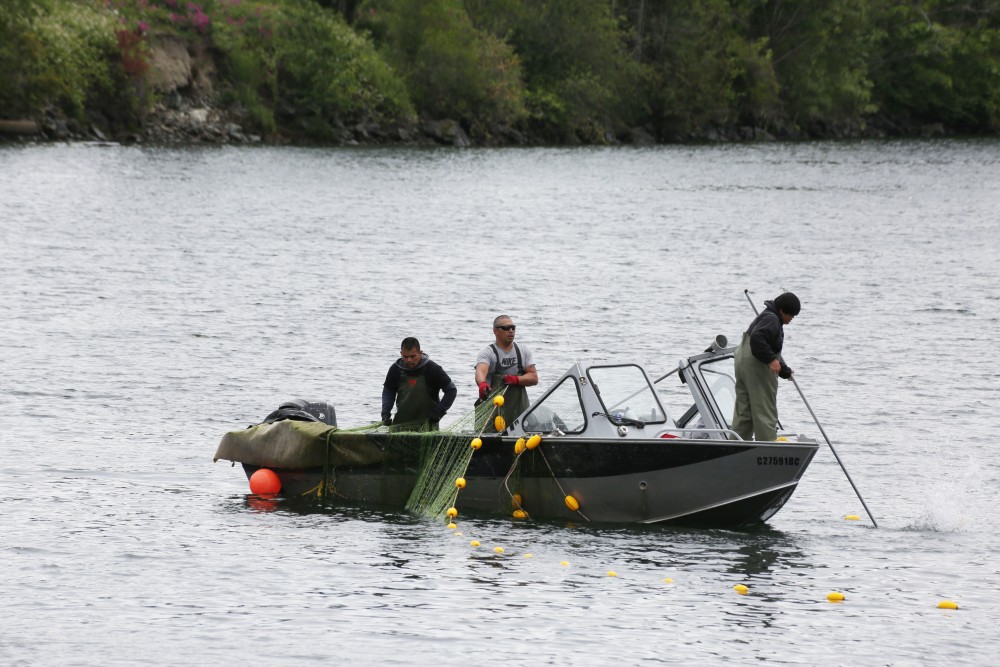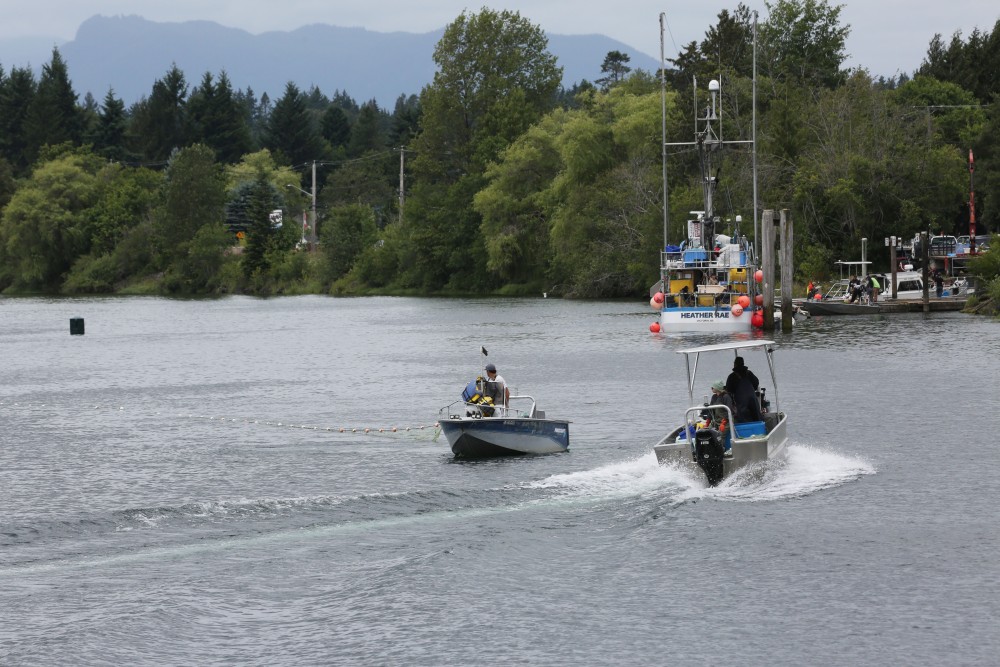
On August 26 the provincial government provided the First Nations Fisheries Council of British Columbia (FNFC) with $2 million in capacity funding over three years to support wild Pacific salmon recovery.
The project funding—part of a long-term collaboration between First Nations and the province—will support FNFC’s province-wide organization and capacity work for the next three years, helping First Nations engage in important joint initiatives related to fish (including wild salmon), water, aquatic ecosystems, and coastal health.
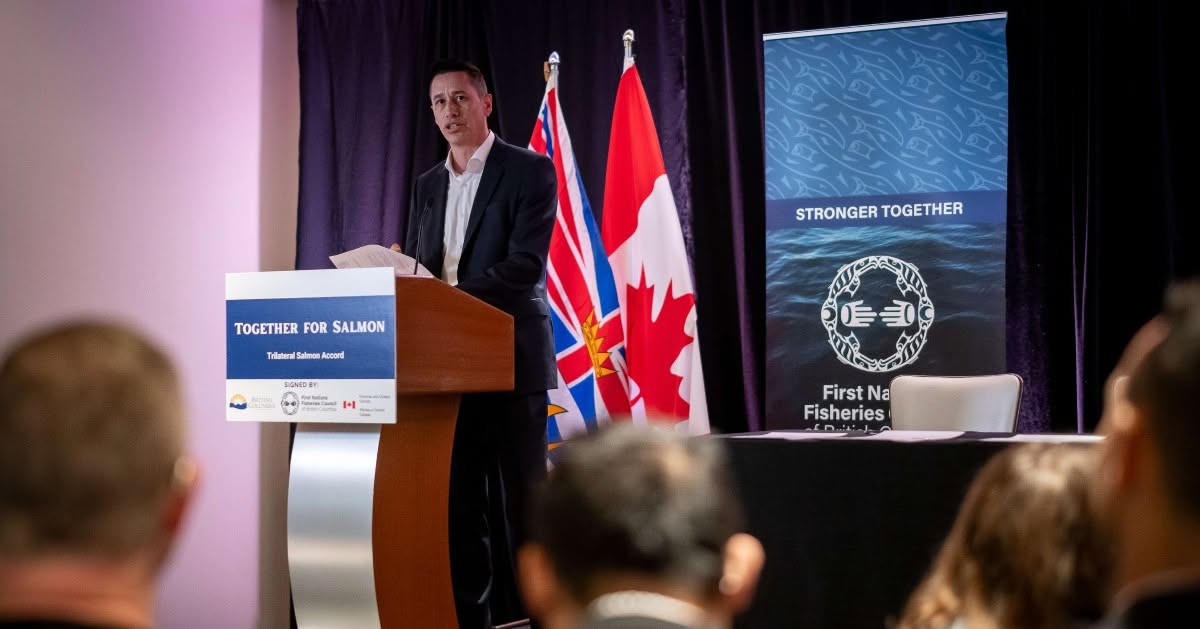
“Governments, and the people who work in them, change often. First Nations do not,” said Stu Barnes, executive director of the First Nations Fisheries Council of B.C. “This funding helps us build the kind of long-term capacity that lets Nations keep showing up at these tables year after year, so the momentum doesn’t reset every time there’s a change on the other side.”
Though wild salmon recovery is a key goal of the work, especially with the Trilateral Salmon Accord, the $2 million is meant for project funding rather than individual on-the-ground salmon restoration projects. This supports FNFC’s capacity to assist First Nations’ involvement in all collaborative processes.
“This isn’t funding for a single project; it’s funding for coordination and continuity, which is what these processes run on,” said Barnes. “It means our teams can stay engaged in the Water Table and Water Caucus, the Trilateral Salmon Accord and the Coastal Marine Strategy consistently, instead of scrambling to rebuild capacity every time a new process opens.”
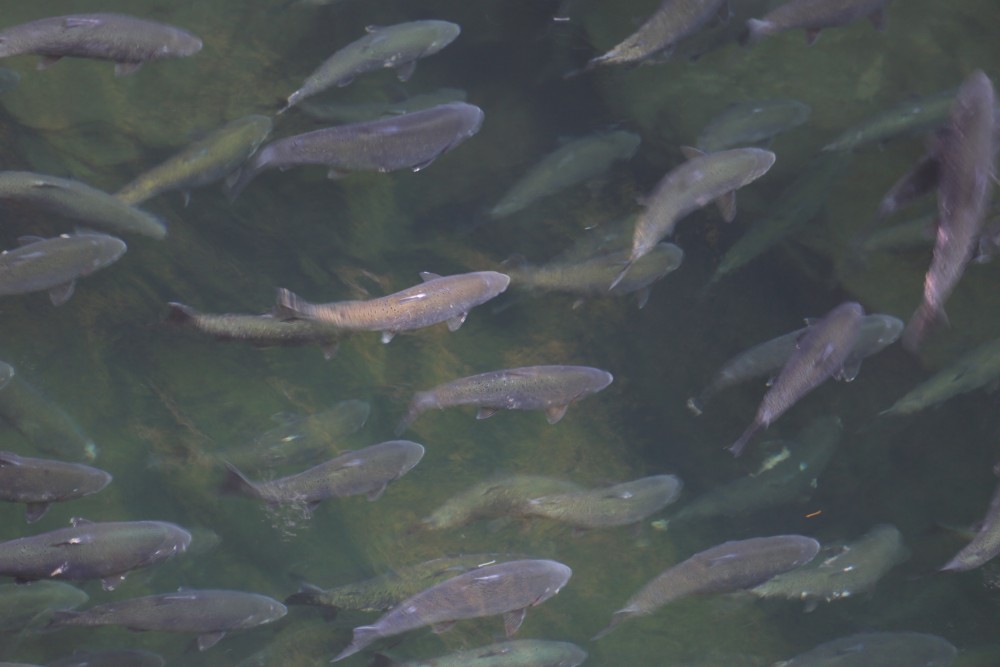
In 2025, the Pacific Salmon Foundation (PSF) State of Salmon Report—which tracks trends across all species of wild Pacific salmon and steelhead throughout B.C. and Yukon—found that 70 per cent of species are below their long-term average. While some species like chinook have seen promising recovery in southern regions, most salmon populations on the North and Central Coast remain in decline.
Salmon are key to freshwater and forest ecosystems, carrying nutrients upstream that feed the flora and fauna along the river while remaining central to the economic and social life of coastal communities.
Beyond their ecological and economic importance, salmon are fundamental for First Nations’ traditional practices and are key for their health. Research led by FNFC indicates that the decline of wild salmon is both an ecological crisis and a public health emergency. When salmon disappear, food insecurity grows, chronic disease risks among First Nations increase, stress rises, and cultural connection is disrupted. According to the FNFC, salmon population restoration is health equity work; when salmon thrive, people thrive.
Addressing the decline of salmon populations requires coordinated action across jurisdictions, ecosystems and all stages of the salmon life cycle. The FNFC’s role is to ensure First Nations are significantly involved in decision-making that affects salmon, their habitat, water, and the ecosystem they depend on province-wide, rather than being consulted afterwards.
“First Nations are at the forefront of conversations about the stewardship of fish, water and aquatic ecosystems within their territories,” said Barnes. “For that participation to be meaningful, co-ordination and resources need to be in place, and capacity funding from the government allows us to provide that support to First Nations.”
The Trilateral Salmon Accord—signed in 2024 by the province, Fisheries and Oceans Canada (DFO) and the FNFC—is a long-term collaborative commitment for all three parties to work together towards the protection, restoration and conservation of wild salmon and its ecosystem. They have identified several potential areas needed to aid the wild salmon population, such as climate adaptation, habitat restoration, watershed security, ecosystem monitoring, and rebuilding plans.
While the specific actions are still in development, the committee has identified First Nations priorities for salmon recovery. More work with the province and DFO is needed to find common ground and agree on shared priorities, which will shape the action plan.
Other initiatives are closely connected to the wild salmon population recovery goal by focusing on salmon habitat health.
In the B.C.-First Nations Water Table, First Nations and the province work together on freshwater and watershed security areas that affect the streams and rivers that salmon depend on for survival. Alternatively, the B.C. Coastal Marine Strategy does the same work for coastal and marine ecosystems that salmon depend on during other stages of their life cycle.
In 2019, the province and the FNFC signed an MOU that supports First Nations involvement in provincial ministries to support healthy marine and freshwater species, build the resilience of aquatic ecosystems, and promote the sustainable use of natural resources. The PSF and the FNFC worked together to protect, conserve, and restore wild salmon abundance in B.C. by relying on science, Indigenous knowledge, and data to advance habitat restoration and climate adaptation.
No initiative works in isolation, as Wild Pacific salmon depend on healthy freshwater, watershed, coastal, and marine environments throughout their life cycle; bringing all areas together in positive collaboration supports a more connected approach to the long-term health of salmon and their ecosystem.
The multi-year funding helps long-term, complex initiatives that require constant engagement. With three years of support, the FNFC can maintain coordination and administrative capacity across each process. Sustained funding helps maintain continuity between meetings, so Nations can be better supported during long-term, technical, cross-government work, leading to better outcomes for fish and First Nations in B.C.
“Working in partnership with the First Nations Fisheries Council of B.C. to increase our healthy fish populations benefits all British Columbians,” said Randene Neill, minister of Water, Land and Resource Stewardship. “This funding will help FNFC build on the work they have already done to restore and maintain aquatic and coastal ecosystems and promote sustainable use and conservation for future generations.”